This map plots the settings and references in Bel Canto
To start exploring, click a red pin


 Lima at Night - Credit:
Micah MacAllen
 Lima street - Credit:
Joseph Brent
Bel Canto takes place in the vice president's residence in an unnamed South American country. There is good reason to think, however, that the country is Peru and the city is Lima:
1. Ann Patchett has stated that the inspiration for the book was the terrorist takeover of the Japanese Embassy in Lima by Tupac Amaru in 1996.
2. The "host country" is described as "a poor country", "mad for soap operas", farming "coca leaves and blackhearted poppies". It has a president of Japanese ethnicity and the maids are "Indian". The "south of the country" is "near the ocean".
3. The capital is "not far from the jungle" and is afflicted by the garúa, "more than mist and less than drizzle", "from April through November".
4. The domestic terrorists speak Quechua, and refer to a "high-altitude prison".
 Lima colonial architecture - Credit:
Herwig Reidlinger
Quechua is spoken in Peru, Bolivia, Colombia, Ecuador, Chile and Argentina. But Bolivia is land-locked, and Colombia and Ecuador have inland southern regions. Chile is not generally considered a poor country. Most coca is grown in Colombia, Peru and Bolivia. The garúa is found on the lower western slopes of the Andes, where Lima is situated. Argentina's capital, Buenos Aires, is on the opposite side of the continent. Peru has a large ethnic Japanese population, and at the time Patchett was writing had an ethnically Japanese president. The country has both jungle and high-altitude terrain. Soap operas are very popular in Peru.
Admittedly, Lima is not particularly close to "the jungle", and it is odd that there is no mention of the coast. However, no other Latin capital fits the bill, so we can conclude that Patchett's unnamed capital is, or is based on, Lima.
Founded in 1535 by the conquistador Francisco Pizarro, Lima is now the fifth largest city in Latin America, with around 9 million inhabitants. It is situated in a desert at the foot of the Andes, on the Pacific coast.
Lima has been devastated by earthquakes at various points in its long history, but still has plenty of fine colonial architecture. The historic centre is a UNESCO World Heritage Site.
 Plaza Mayor, Lima - Credit:
Dozenist, Wikimedia Commons
Also known as Tokyo Bunka Kaikan, this important arts venue opened in 1961 to provide a centre for opera and ballet performance in the city. A striking example of modern brutalist architecture, it possesses a Main Hall (seating an audience of 2,303) and a Recital Hall (seating 649) which is used for recitals and chamber music. There is also a restaurant, café, florist, gift shop and Music Library. Tokyo Bunka Kaikan enjoys hosting both domestic performers and renowned international groups.
The 1998 Winter Olympics were held in Nagano, Japan.
It was the first time snowboarding and curling were included in the Olympics.
 The Acropolis - Credit:
AJ Alfieri-Crispin
Athens' most famous monument is the Parthenon on the Acropolis, a flat-topped rock that rises high above the city.
The Parthenon is a temple dedicated to the goddess Athena.

 The Parthenon by Night - Credit:
Demos
 The Areopagus from the Acropolis - Credit:
AJ Alfieri-Crispin
Assuming we're in Lima, Peru, Messner is probably talking about Machu Picchu, or one of the other Inca sites.
 Machu Picchu - Credit:
Pedro Szekely
Machu Picchu is an abandoned fifteenth century Incan town in Peru. Its beautiful situation high up in the mountains above the Urubamba Valley, combined with its impressive state of preservation, make it one of the most popular tourist destinations in the country.
Machu Picchu was voted one of the Seven Wonders of the Modern World in 2007. The site is an extremely lucrative source of income for Peru, but in recent years concerns have mounted over the impact high volumes of tourists are having on Machu Picchu's preservation. UNESCO, who gave the site World Heritage status, are currently considering putting it on the list of endangered heritage sites.

 Lipp's Brasserie Menu - Credit:
Bolshakov
Brasserie Lipp, in Saint-Germain, Paris, was founded by Leonard Lipp in 1880.
Amongst those who showed their appreciation for the restaurant's Art Deco charms were such literary regulars as Hemingway, Proust and Verlaine. Today, despite varied reports regarding the brasserie's menu, it continues to draw famous names from the political arena and world of celebrity alike.
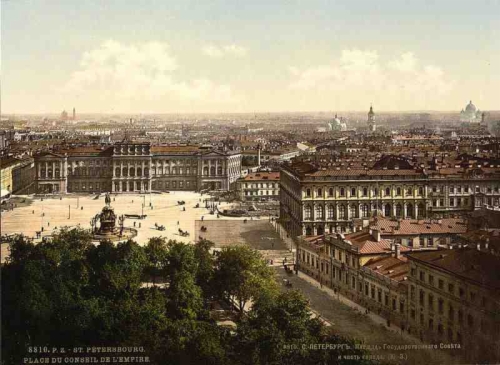

Saint Petersburg is a city in Russia, the second largest after Moscow. In 1914, the name of the city was changed to Petrograd. When Vladimir Lenin died in 1924, the city was renamed Leningrad.
The city's name reverted back to Saint Petersburg in 1991. It is now an important cultural centre. Its museum of art, The Hermitage, is the largest in the world.
 Lucca - Credit:
Giusy Amaro
Lucca is an ancient city in Tuscany, Italy, with Roman remains and Renaissance walls.
 Lucca - Credit:
bongo vongo