


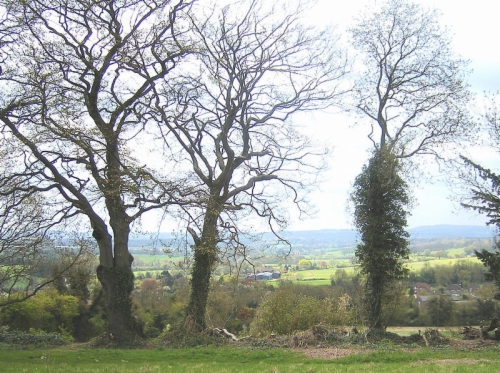
 Hog's Back, North Downs - Credit: Steve Parker
The Hog's Back is a stretch of the North Downs in Surrey, a narrow ridge between Guildford and Farnham. The views to north and south on a clear day are beautiful. The top road, an ancient route mentioned in a letter by Jane Austen, is now part of the A31.

The RAF lost 1,023 fighters during the Battle of Britain. Fighter Command would continue to take heavy losses in 1941, as the battle moved to the skies over France.
But Fighter Command's losses were dwarfed by the sacrifice made by Bomber Command in the later stages of the war.
Bomber Command losses:
55,573 killed out of a total of 125,000 aircrew (a 44.4% death rate)
8,403 wounded in action
9,838 taken prisoners of war
A Bomber Command crew member had a worse chance of survival than an infantry officer in World War I.


 V-J Day Kiss - Credit: Lt. Victor Jorgensen
British wartime contraception consisted mostly of douches or coitus interruptus, as condoms were rare and IUDs (intra-uterine devices) not widely available. The Pill was still only an idea in the laboratory.
Unwanted pregnancies were common, resulting in many backstreet abortions and adoptions.
The practical demands of wartime changed social customs beyond all recognition. People enjoyed far greater social freedom than before, with more opportunities for encounters with members of the opposite sex, and a sense that normal rules did not apply in the face of so much imminent danger. BBC UK History - Women At War
As a consequence of the changing social patterns brought about by the war, sex education became more explicit. Nevertheless, there was a considerable increase in single mothers during the war.