

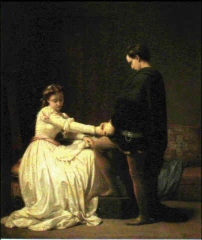
 'The Proposal' (1860) - a painting by Alfred W. Elmore (1815-1881) - Credit: Alfred W. Elmore
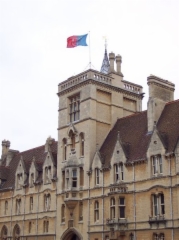
 Balliol College, Oxford - Credit: Andrew Telfer, Wikimedia Commons
Balliol is a college of the University of Oxford, founded in 1263.
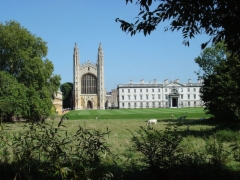
 King's College, Cambridge - Credit: Oxyman, Wikimedia Commons
Its alumni include three British prime ministers: Herbert Asquith; Harold Macmillan; and Edward Heath.
Kings is a college of the University of Cambridge, founded in 1441. Its alumni include Rupert Brooke, E.M Forster and Salman Rushdie
To 'endow a fellowship' is to provide the financial wherewithal for a graduate student to pursue post-graduate studies and obtain a doctorate.
The British Museum in London is a museum of human history and culture, founded in 1753.
 British Museum, London - Credit: Steff, Wikimedia Commons
Amongst its most famous exhibits are the Rosetta Stone, the Elgin marbles, and the Sutton Hoo treasure.
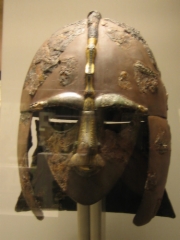
 An item from the Sutton Hoo treasure collection - Credit: Rachel Scott Halls, Flickr
When Virginia Woolf wrote A Room of one's own, the 'national collection' of books was housed at the British Museum and it was possible for researchers (like the narrator) to consult them in 'the Reading Room'. The collection was subsequently moved to the British Library at St. Pancras, London.
Bloomsbury is an area of central London, situated in the London borough of Camden, which is home to many important academic institutions and hospitals.
It gave its name to the 'Bloomsbury group', a circle of writers, intellectuals, and artists amongst which Virginia Woolf and her sister, Vanessa Bell, were prominent figures. Other members of the group included Lytton Strachey, John Maynard Keynes, and E.M. Forster.
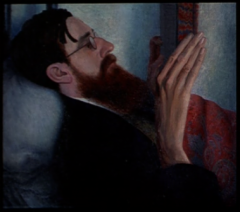 Lytton Strachey by Dora Carrington - Credit: Dora Carrington
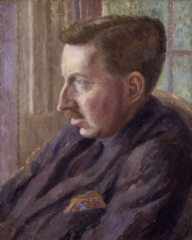 E.M. Forster by Dora Carrington (1924/5) - Credit: Dora Carrington
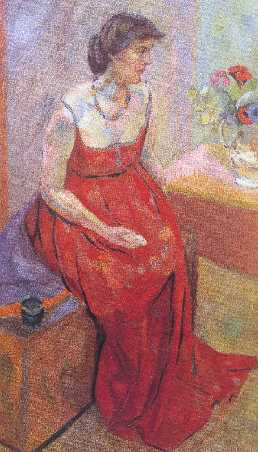 Vanessa Bell by Roger Fry, 1916 - Credit: Roger Fry
 Agave americana - Credit: Digigalos, Wikimedia Commons
 Aloe vera - Credit: Sten Porse, Wikimedia Commons
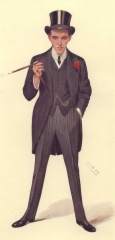 Caricature of F.E.Smith (1st. Earl of Birkenhead) - Credit: Leslie Ward (1851-1922)
Lord Birkenhead (1872-1930), or Frederick Edwin Smith, 1st. Earl of Birkenhead, was a lawyer and Conservative politician who was Lord Chancellor (1919-1922) under the premiership of Lloyd George, and Secretary of State for India (1924-1928) under the premiership of Stanley Baldwin.
He is dramatised in the film 'Chariots of Fire' (1981) where he appears as an official of the British Olympic Committee.
 William Ralph Inge during his period as Dean of St. Pauls - Credit: author unknown
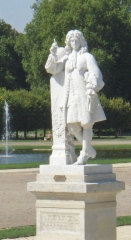 Statue of La Bruyère by Gabriel Jules Thomas (1824-1905) at the Château de Chantilly - Credit: Mel22, Wikimedia Commons
Jean de La Bruyère (1645-1696) was a French moralist and essayist. His best known work is entitled 'Caractères'.
A television film entitled 'Les caractères de La Bruyère', directed by Eric Rohmer, was produced in 1965.
A little later in the text there is a quotation from the work of La Bruyère: 'Les femmes sont extrèmes;elles sont meilleures ou pires que les hommes' ('Women are extremes; they are either better or worse than men).
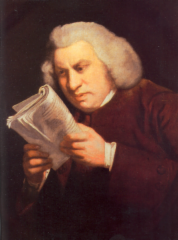 Samuel Johnson by Joshua Reynolds (1885) - Credit: Sir Joshua Reynolds (1723-1792)
Samuel Johnson (1709-1784), usually referred to as 'Dr Johnson', was a prolific author who published widely as a poet, essayist, moralist, literary critic, biographer, and lexicographer (creator of dictionaries).
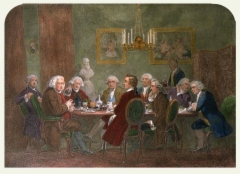 A literary party at Sir Joshua Reynolds' house including Johnson and Boswell (1851) - Credit: D. George Thomson after James William Edmund Doyle
His Johnson's Dictionary of the English Language (1755) is considered one of his greatest achievements.
A much-admired biography of his life was written by James Boswell (a personal friend of Dr. Johnson) under the title, James Boswell's Life of Samuel Johnson (1891).
Later on in the text, Virginia Woolf's narrator notes that Dr. Johnson believed that women were 'capable of education'. Indeed, as is pointed out in the footnote to p.34, Johnson suggested that women were in fact superior to men, a comment noted by Boswell in The Journal of a Tour to the Hebrides.
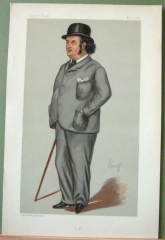 Caricature of Oscar Browning (1888) - Credit: "Hay" (unidentified)
Oscar Browning (1837-1923) was a writer, historian, and educational reformer. He is partly remembered because of the references to him in A Room of one's own, particularly the reference later in the text to his saying (in the context of marking examination papers), 'the best woman was intellectually the inferior of the worst man'.
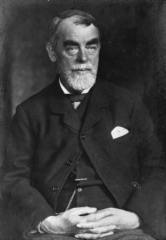 Samuel Butler - Credit: unknown
Samuel Butler (1835-1902) was a free-thinking Victorian author. Amongst his best known works are Erewhon, an Utopian satire published anonymously in 1872, and the semi-autobiographical novel, The Way of All Flesh, published posthumously in 1903.
 Alexander Pope (c.1742) by Jean-Baptiste Van Loo (1684-1745) - Credit: J-Baptiste Van Loo
'Here thou, great Anna, whom three realms obey
Dost sometimes counsel take, and sometimes tea.'
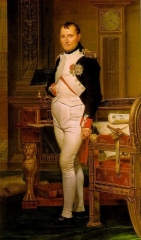 Napoleon in his study (1812) by Jacques-Louis David - Credit: Jacques-Louis David (1748-1825)
He was responsible for establishing a legal structure in France known as the 'Napoleonic Code'. One aspect of the Code was the enshrinement in law of the supremacy of a husband over his wife and children.
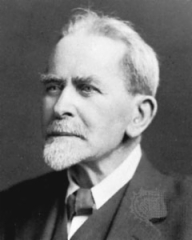 Sir James George Frazer (1933) - Credit: unknown
Sir James George Frazer (1854-1941) was a social anthropologist with a particular interest in the study of comparative religion and mythology.
His most well-known work is The Golden Bough, which looked at the similarities in magical and religious belief-systems in different cultures throughout the world.
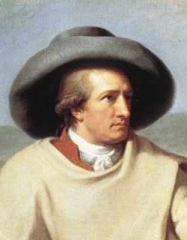 Detail of a portrait of Goethe (1787) by Tischbein - Credit: Johann Heinrich Wilhelm Tischbein (1751-1829)
Johann Wolfgang von Goethe (1749-1832) was an eclectic German writer whose work spanned the fields of literature, poetry, drama, philosophy and science.
Amongst his best known works are the novel The Sorrows of Young Werther, and the drama Faust, both of which idealise women.
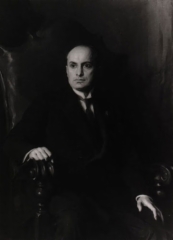 Benito Mussolini by de László (1923) - Credit: Philip Alexius de László (1869-1937)
In discussing the attitudes of various famous men towards women, the narrator in A Room of one's own has tended to draw heavily on the opinions of historical literary and political figures. However, in the case of Mussolini she is referring to an important contemporary figure.
Benito Mussolini (1883-1945) was an Italian politician who played a key role in the rise of fascism in Europe. In 1922 he became Prime Minister of Italy where he operated a fascist dictatorship. He began using the title Il Duce (It. The Leader) in 1925.
Part of Mussolini's plan for the development of Italy was to increase the population, and this meant that he placed great emphasis on the role of women as wives and mothers.
Listen to Italian children of the Fascist period singing a patriotic song celebrating Il Duce:
The narrator facetiously creates an imaginary author and an imaginary book title. They are meant to convey the type of male author, and the type of negative material about women, she is coming across in her research.
The debate continues ...
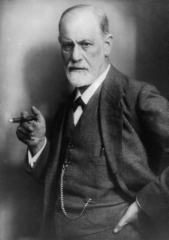 Sigmund Freud (1922) - Credit: Max Halberstadt (1882-1940)
Here the narrator indicates that knowledge about the theories of Sigmund Freud, the Austrian physician who founded psychoanalysis, was part of the cultural climate of the period.
Specifically, this is a reference to Freud's belief that very early experiences in the life of an infant are highly influential in his/her emotional development.
Freud's work was available in English from 1913 onwards when his Die Traumdeutung (1899) was published in English translation under the title The Interpretation of Dreams. Interestingly, from 1924 onwards, the Hogarth Press, which was owned by Virginia Woolf and her husband Leonard Woolf, became the authorised publishers of the work of Sigmund Freud in England.
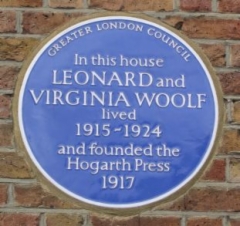 Hogarth Press commemorative plaque, Richmond, Surrey - Credit: taken by Mark Barker - original uploader:MaxHund at en.wikipedia, Wikimedia Commons
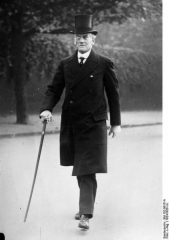 Joseph Austen Chamberlain (1924) - Credit: Deutsches Bundesarchiv, Wikimedia Commons
Sir Joseph Austen Chamberlain (1863-1937) was a highly-regarded British statesmen who served as Foreign Secretary from 1924-1929 under the premiership of Stanley Baldwin. During this period he achieved significant successes in the field of international diplomacy, and was awarded a Nobel Peace Prize in 1925.
(for 'ribbon', see: glossary)
George Romney (1734-1802) was an English portrait painter who set up business in London in 1762. He became well-known for his portraits of the local aristocracy and of well known figures of the period. He painted numerous potraits of Lady Hamilton (the mistress of Lord Nelson) for whom he developed something of an obsession.
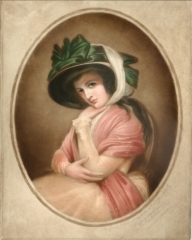 Emma, Lady Hamilton, by George Romney - Credit: George Romney
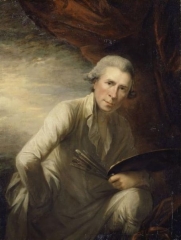 Self portrait by George Romney - Credit: George Romney
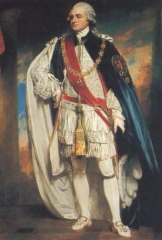 George Spencer, 4th. Duke of Marlborough by George Romney - Credit: George Romney
Rebecca West was the pen name of Cicely Isabel Fairfield (1892-1983), an author, journalist, literary critic and travel writer, renowned for her liberal and feminist views.
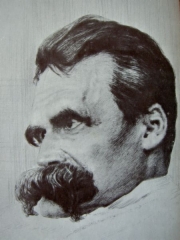 Friedrich Nietzsche drawn by Hans Olde - Credit: Hans Olde
The concept of the 'superman' or 'overman' (ger. übermensch) was created by Friedrich Nietzsche (1844-1900) in his work Thus Spoke Zarathustra.
George Bernard Shaw made use of this Nietzschian concept in his play Man and Superman.
In Nietzsche's philosophy the 'superman' broadly represents a human being who strives in his personal existence for the enhancement of all mankind (although the precise meaning of the term, as used by Nietzsche, is open to debate).
The meaning of 'Fingers of Destiny' in this context is not clear:
In palmistry, the middle finger, also known as 'Saturn's finger' is sometimes given the name 'the Finger of Destiny';
'Finger of Destiny' was also the title of a 1915 film directed by Charles Raymond.
However, neither of these ideas explains Virginia Woolf's use of 'Fingers of Destiny'.
Can anybody help?
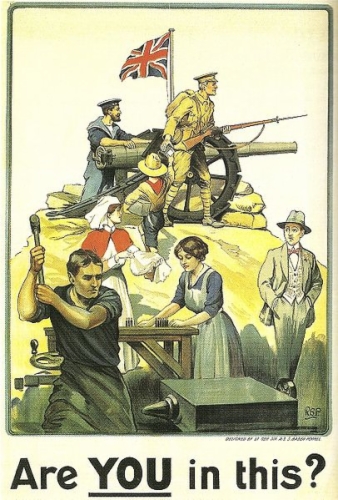 Government Poster, 1915 - Credit: Robert Baden-Powell
The First World War had been a turning point in the employment of women as circumstances obliged them to take over many jobs which had traditionally been the sole preserve of men. However, progress made during this period was not sustained in the aftermath of the war, and did not affect the continuing paucity of women employed at higher levels in public and business life.
As the narrator dates the changes in women's employment to the end of the First World War, she may also be referring to differences brought about by their being partially granted the franchise in 1918.
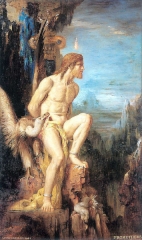 Prometheus - from a painting by Moreau (1868) - Credit: Gustave Moreau (1826-1898)
 Admiralty Arch, London - Credit: Mister Weiss, Wikimedia Commons
Admiralty Arch is part of a large office building in London which adjoins the Old Admiralty Building. It is situated at the point where The Mall meets Trafalgar Square.
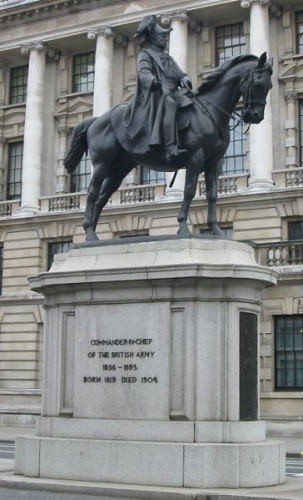 Statue of the Duke of Cambridge on Whitehall - Credit: Man vyi, Wikimedia Commons
Prince George, Duke of Cambridge (1819-1904)
 John Milton, Temple of British Worthies, Stowe - Credit: Philip Halling, Wikimedia Commons
It is not clear what 'large and imposing figure of a gentleman' was recommended for 'perpetual adoration' by Milton, although it has been suggested that it might be God, or Milton himself, representing a patriarchal society.
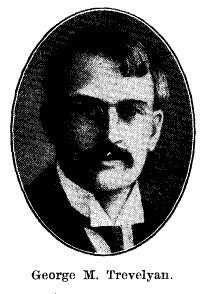 G.M. Trevelyan - Credit: unknown
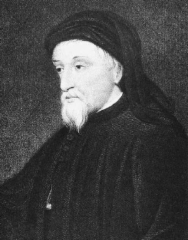 Geoffrey Chaucer (1380) - Credit: unknown
Geoffrey Chaucer (1343-1400) was an English writer and poet, best remembered for his narrative The Canterbury Tales. He is sometimes known as 'the father of English literature', and is considered as having broken new ground in his literary use of the native English of his period.
Listen to the Prologue to the Canterbury Tales in Middle English on Spotify.
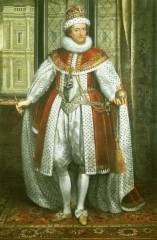 King James lst. of England (c.1620) - Credit: Paul van Somer (1576-1621/22)
The House of Stuart was founded by Robert II of Scotland, and nine Stuart monarchs ruled Scotland between 1371 and 1603. In 1603, following the union of the English and Scottish crowns, the ninth monarch, James VI of Scotland became James I, 'King of Great Britain'. Subsequently, a further 5 Stuart monarchs* held the joint crown, the last of the Stuart dynasty being Queen Anne who succeeded to the throne in 1702.
*William and Mary are considered as 'one monarch'.
 Claydon House:ancestral seat of the Verney family owned by the National Trust - Credit: mym, modified by Sir Gawain, Wikimedia Commons
Frances Parthenope Verney (1819-1890), the elder sister of Florence Nightingale, was a Victorian writer and journalist. Using papers kept at her husband's family home, Claydon House, she produced Memoirs of the Verney Family during the 17th century. These were corrected and abridged by Margaret M. Verney, and published in two volumes in 1904.
 Lucy Hutchinson - Credit: unknown
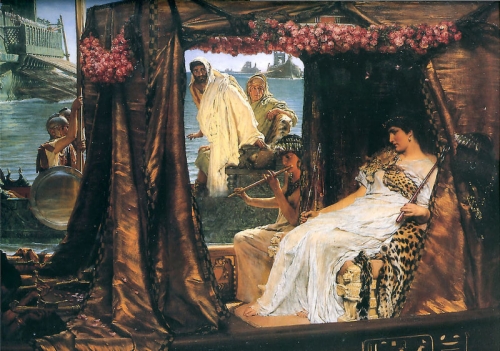 'Anthony and Cleopatra' by Lawrence Alma-Tadema (1885) - Credit: Lawrence Alma-Tadema (1836-1912)
She is remembered for her love affair with Mark Anthony, with whom she had two children. Both Cleopatra and Mark Anthony committed suicide following Mark Anthony's defeat at the Battle of Actium.
Shakespeare wrote a play based on these events entitled Anthony and Cleopatra.
Lady Macbeth is a character in Shakespeare's play Macbeth where she persuades her husband to murder King Duncan so that he may become king.
Macbeth was a real historical figure who ascended the throne of Scotland in 1040, but the events of the play are not historically correct. Similarly, although Macbeth had a wife, Queen Gruoch, the events of her life do not match those of Lady Macbeth.
Jane Lapotaire playing the sleep-walking scene from Macbeth:
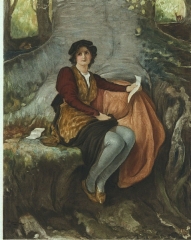 'Rosalind' by Robert Walker Macbeth (1888) - Credit: Robert Walker Macbeth (1848-1910)
Rosalind is the name of the heroine in Shakespeare's romantic comedy As You Like It who has a flair for witty repartee.
During the course of the play, she disguises herself as a young man and takes the name, Ganymede. This allows her to challenge Orlando (who is in love with her) as to whether his appearance is really that of a love-sick suitor:
'Then, your hose should be ungartered, your bonnet unbanded, your sleeve unbuttoned, your shoe untied, and everything about you demonstrating a careless desolation'.
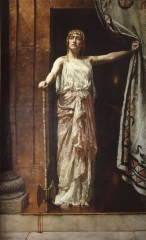 'Clytemnestra after the murder' (1882) - Credit: John Maler Collier (1850-1934)
CLYTEMNESTRA is a figure in Greek mythology, and one of the main characters in Aeschylus' Oresteia, a drama in three parts. In the first part she murders her husband, Agamemnon, and in the second, she herself is murdered.
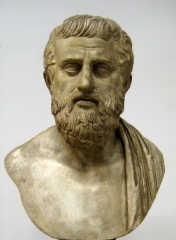 Bust of the Greek playwright, Sophocles - Credit: user:shakko, Wikimedia Commons
ANTIGONE is the name given to two figures in Greek mythology: the daughter of Oedipus, and the daughter of Eurytion.
Antigone is also the title of a play by Sophocles written before or during 442 BC.
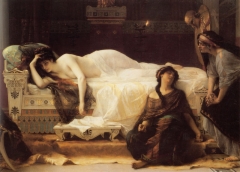 'Phèdre' (Phaedra) by Cabanel (1880) - Credit: Alexandre Cabanel (1823-1889)
PHAEDRA (PHÈDRE) was the wife of Theseus, who fell in love with his son by a previous marriage and then falsely accused him of rape, leading to his death.
She was the subject of works by the Greek playwright, Euripedes, the Roman playwright, Seneca, and the French playwright, Jean Racine (1639-1699).
CRESSIDA is the lover of Troilus in one of Shakespeare's tragedies, Troilus and Cressida, which is set during the period of the Trojan War. It has been described by Joyce Carol Oates as one the most 'vexing and ambiguous of Shakespeare's plays'.
Geoffrey Chaucer also wrote a poem entitled Troilus and Criseyde which was partly the source for Shakespeare's play.
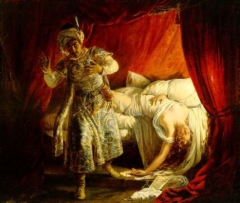 'Othello and Desdemona' by Alexandre-Marie Colin (1829) - Credit: Alexandre-Marie Colin (1798-1875)
DESDEMONA is Othello's wife in Shakespeare's tragedy Othello. She is murdered by her husband after he is misled by his malicious servant, Iago, into thinking that she has been unfaithful to him.
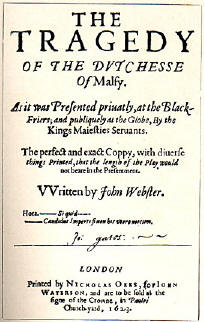 Title page of 'The Duchess of Malfi' (1612-13) - Credit: John Webster
THE DUCHESS OF MALFI is the main character in a tragedy by the English playwright John Webster (1580-1634). It is based partly on true events recorded in William Painter's The Palace of Pleasure (1567.
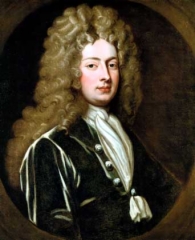 Portrait of William Congreve by Godfrey Kneller - Credit: Godfrey Kneller (1646-1723)
MILLAMANT is a character in a play entitled The Way of the World by William Congreve (1670-1729). It was first performed in 1700, and is considered one of the foremost Restoration comedies.
CLARISSA is a character in The Fair Maid of the Inn, an early 17th. century comedy whose authorship is uncertain. It falls into the category of English Renaissance drama.
BECKY SHARP is one of the main characters in Vanity Fair, a satirical novel by William Makepeace Thackeray (1811-1863). It was published in 1847/8 and remains popular today.
ANNA KARENINA is the heroine of a novel by Leo Tolstoy (1828-1910) entitled Anna Karenina which is considered one of the most important examples of realist fiction.
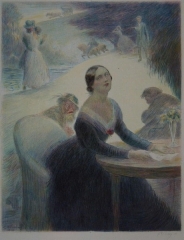 Illustration for frontispiece of 'Madame Bovary' by Charles Léandre (1931) - Credit: Charles Léandre (1862-1934)
EMMA BOVARY is the main character in a novel by Gustave Flaubert (1821-1880) entitled Madame Bovary. At the time of its first publication (in serial form in 1856), it caused quite a stir in French society, and was the subject of an obscenity trial in 1857.
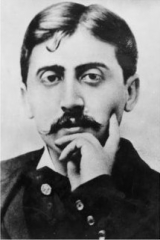
MADAME DE GUERMANTES is a character in Vol. 3 of an autobiographical novel in 7 volumes by Marcel Proust (1871-1922) entitled À la recherche du temps perdu (sometimes translated as Remembrance of Things Past and sometimes as In Search of Lost Time'). The third volume is entitled Le Côte de Guermantes, translated as The Guermantes Way.
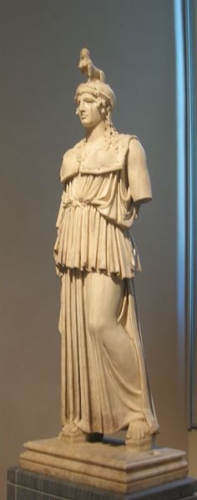 Copy of Phidias' statue of Athena (130-150 A.D.) Prado Museum, Madrid - Credit: Shakko, Wikimedia Commons
Athena is a goddess in Greek mythology after whom the city of Athens, the capital of Greece, is named.
Odalisque is the term used for a female harem* slave during the period of the Ottoman Empire.
(*women-only quarters).
Women in Athens, and in ancient Greece generally (with the exception of Sparta), are believed to have been extremely subservient to men and to have lived highly restricted lives.
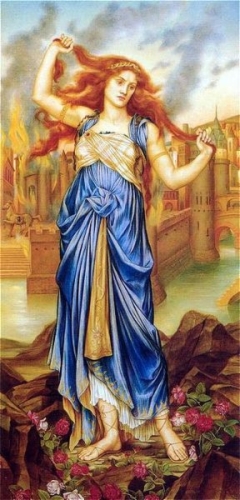 'Cassandra' by Evelyn de Morgan (1898) - Credit: Evelyn de Morgan (1855-1919)
CASSANDRA (meaning 'she who entangles men') is a figure in Greek mythology: the daughter of King Priam and Queen Hecuba of Troy. She was reputed to be able to 'hear the future', a common theme in Greek mythology. However, when she failed to return the love of the god Apollo, he put a curse on her so that her predictions were never believed.
Cassandra appears as a character in the drama Agamemnon by Aeschylus (525/4 BC - 456/5 BC).
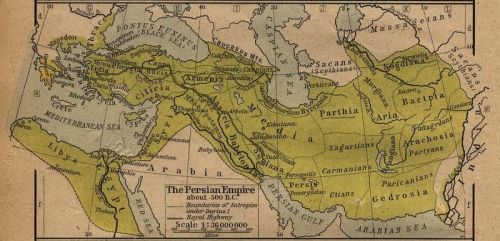 Historic Map of the Achaemenid Empire (1923) - Credit: William R. Shepherd (1871-1934)
ATOSSA was a Queen of the Achaemenid (Persian) Empire (550-330 BC) who lived from 550 BC to 475 BC.
She is one of the main characters in Aeschylus' drama The Persians.
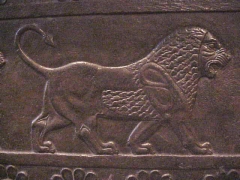 Persian wall relief from Persepolis (522/465BC) - Credit: Mary Harrsch, Flickr
MEDEA is an ancient Greek tragedy by Euripides (480BC-406BC) based on the myth of the husband and wife, Jason and Medea.
These are the words of F.L Lucas, the author of the quotation which is the footnote to this page.
F.L. Lucas is Frank Laurence Lucas (1894-1967). He was a literary critic, poet, novelist and playwright who was a Fellow of Kings's College, Cambridge. He is well known for having criticised the poetry of T.S. Eliot during the 1920s.
The footnote quotation comes from one of his works entitled Tragedy which was published in 1927. In his text, the fact that "misogynist" is in inverted commas suggests that the author does not necessarily agree with this view of Euripides. Lucas was, in fact, the author of a book about the Greek playwright, entitled Euripides and His Influence (1924)
Many of Euripides' plays portray powerful and individualistic women, but whether he was a 'misogynist' (i.e. a hater of women) remains a subject of debate.
Watch an extract from a film version of Euripides' The Trojan Women:
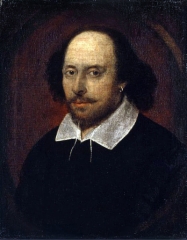
WILLIAM SHAKESPEARE (1564-1616), the Elizabethan poet and dramatist, is generally considered as one of the world's greatest playwrights.
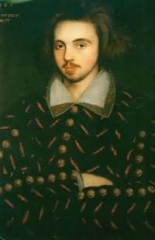
JOHN WEBSTER (c.1580-c.1634) was a contemporary of William Shakespeare. He was a dramatist whose plays The White Devil and The Duchess of Malfi are considered masterpieces of early 17th. century theatre.
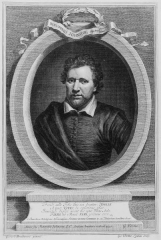 Ben Jonson - Vertue after van Honthorst - Credit: George Vertue(1684-1756) after Gerard van Honthorst (1590-1656)
BENJAMIN (BEN) JOHNSON (1572-1637), yet another contemporary of Shakespeare, was a dramatist, poet and actor. He is particularly well-known for his plays The Alchemist and Bartholomew Fair.
Jean Racine (1639-1699) was a playwright, who ranks with Molière and Corneille, as one of the most important of the French dramatists. He is best known for his tragedies.
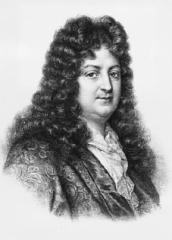
Hermione and Andromaque are female characters in Racine's play Andromaque which was first performed in 1667.
Andromaque is based on Euripides' play, Andromache and on the third book of Virgil's Aeneid.
BÉRÉNICE is the main female character in Racine's tragedy Bérénice, first performed in 1670.
ROXANE is one of the main female characters in Racine's tragedy Bajazet first performed in 1672.
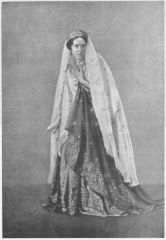 The French actress, Rachel, in the title role in Racine's 'Phèdre', McClure's Magazine (1906) - Credit: unknown
ATHALIE is the main female character in Racine's tragedy Athalie, published in 1691.
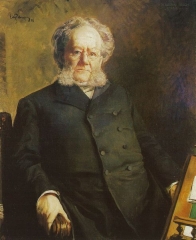 Henrik Ibsen by Eilif Peterssen (1895) - Credit: Eilif Peterssen (1852-1928)
Henrik Ibsen (1828-1906) was an important Norwegian dramatist whose work challenged many established aspects of Victorian society.
Amongst his best-known works are: Peer Gynt (1867); A Doll's House (1879) and Hedda Gabler (1890).
SOLVEIG is an important female character in Ibsen's play Peer Gynt which was published in 1867.
Edvard Grieg, the Norwegian composer, wrote incidental music for the play which was later revised and published in the form of the two Peer Gynt suites.
Listen to Solveig's song on Spotify
NORA is the main female character in Ibsen's play A Doll's House (1879). Its questioning of a woman's traditional role in marriage meant that it caused some controversy when first performed.
HEDDA is the main female character in Ibsen's Play Hedda Gabler first published in 1890. The complexity of the character Hedda means that she has been portrayed in different ways by different actresses, and that interpretations of the play overall have varied considerably.
HILDA WANGEL is one of the main female characters in Ibsen's play The Master Builder which was first performed in 1893.