
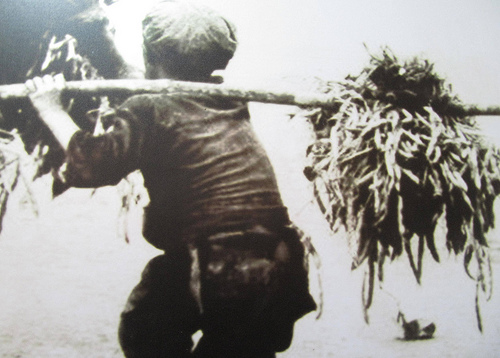
 Farming during the Cultural Revolution - Credit: ivanwalsh.com
The "city youths" were participants in China's Down to the Countryside Movement of the late 1960s and early 1970s. This policy was instituted by Chairman Mao to re-educate young urban people by sending them to remote rural and mountainous areas in China. There they were expected to learn from local farmers and villagers. Many of these city youths missed the opportunity to attend college and, as a result, are sometimes referred to as China's "lost generation" or the Rusticated Youth of China.

 Subconjunctival Hemorrhage (blood spots) - Credit: FiP
This is a subconjunctival hemorrhage, which occurs when a blood vessel bursts and blood leaks into the eye resulting in bloody spots. Although it is disturbing, the condition itself is rarely painful or harmful. It is usually caused by trauma or high blood pressure.
It is possible that the village headman's blood spots contribute to his role as the leader of the village. They may signify some exceptional facet of his character and therefore qualify him as a leader.
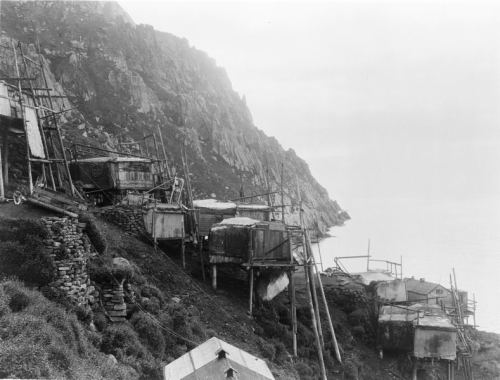
 A House on Stilts - Credit: Edward S. Curtis
Stilts are also an effective way to keep out vermin, and they provide a convenient place for storage below the house.
Stilt houses are found throughout the world.
Propaganda films were made during the Cultural Revolution to sway the public's view of Communism. As well as films, the government often used posters, music and subliminal messaging to influence the public.
Comrade means "friend", "colleague", or "ally". The word comes from the French camarade.
In Chinese, the word for Comrade literally translated means, "people with the same spirit, goal, ambition, etc." It was first introduced in the political sense by Sun Yat-sen to refer to his followers. The term was promoted most actively by the Communist Party of China during its struggle for power. It was used both as a noun and as a title for effectively anyone in China after the People's Republic of China was founded.
Wolfgang Mozart (1756-1791) was a famous musician and composer. He was a major influence on Beethoven and Western Classical music in general. His piano sonata in C is a famous piece.
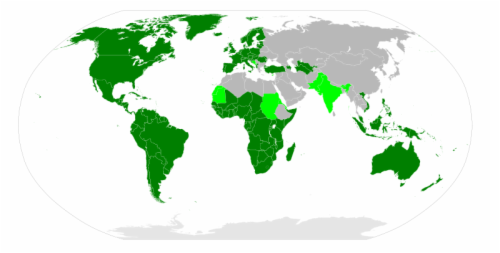 Countries in the world that use the Latin Alphabet - Credit: Canuckguy
The term Western is used in Asia to describe anything from Europe and America.
Typically, the term had negative connotations in China during the Cultural Revolution because it was seen as intellectually wrong and harmful to the rebirth of China. Both China and the Soviet Union outlawed some Western goods.

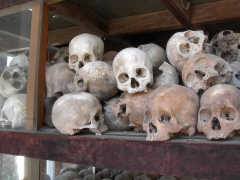 Victims of Khmer Rouge - Credit: Anonymous
Pol Pot was the Cambodian revolutionary who, as leader of the Khmer Rouge, the Radical Communist party in Cambodia, was responsible for the deaths of between two and four million Cambodians. He banished citizens to the countryside to work in forced labor camps where many were executed and buried in mass graves.
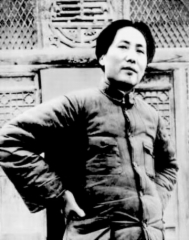 Chairman Mao - Credit: Unknown
Mao Zedong, commonly referred to as Chairman Mao, was a Chinese Communist revolutionary, guerrilla warfare strategist, Marxist political philosopher, and leader of the Chinese Revolution. He was the architect and founding father of the People's Republic of China (PRC), which he controlled from its establishment in 1949 until his death in 1976.
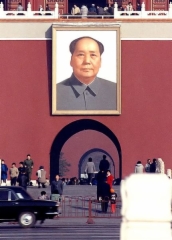 Mao Portrait at the Gate of Heavenly Peace - Credit: Raimond Spekking

 Red Guards - Credit: Villa Giulia
As Mao Zedong grew more powerful, he became increasingly paranoid and he initiated several changes to secure his own position within the party. One of these was the disbandment of the Red Guards in 1968. Mao ordered the Chinese People's Liberation Army to put an end to the Red Guards.
Below is the Red Guards Battle Song. Throughout the video, one can see the Red Guards taking down "Old" elements of Chinese culture, including signs written in Traditional Characters. One of the main results of the Cultural Revolution was the Communist Redesign of the Chinese language. Old characters (traditional) were destroyed while new ones (simplified) replaced them. Traditional characters are still used in Taiwan and Hong Kong. Many lament that simplified characters lack depth and beauty.

From 1966 to 1976, China was in the grip of the Cultural Revolution, a movement instituted by Mao Zedong to eliminate traditional Chinese culture, combat capitalism and promote revolutionary communist ideals. This led to a prolonged wave of intense violence, as well as the destruction of priceless cultural artifacts and historic sites.
Many Chinese accused of real or imaginary crimes were paraded and humiliated in public, and subjected to physical and verbal abuse by watching crowds. Teachers and school administrators were forced to march through the streets in dunce hats.
Meanwhile the children of the urban middle class were sent to re-education camps in remote rural areas to learn from farmers and workers in the Down to the Countryside Movement.
 Sylvester Stallone - Credit: Gage Skidmore
Sylvester Stallone is one of the most successful actors of all time, famous for his roles in the Rambo and Rocky series. The narrator's comparison of the worker with thick arms to Stallone is appropriate; he regularly brandished his biceps in his roles.
The interesting issue here is that the narrator is making a reference to Stallone in hindsight, as he would not have been well known in 1971 (Rambo didn't come out until 1976). This is evidence of the narrator reflecting on his experience, which also helps to classify the novel as Scar Literature.
To promote understanding of his "Revolutionary" policies, Mao Zedong published a book containing many of his ideas and quotes. In the Western World, this became known as the "Little Red Book." In China, citizens were required to carry the book on their person at all times. Failure to do so would result in severe punishment, and the miscreant would be labeled a "Counter Revolutionary" or "Capitalist Roader."
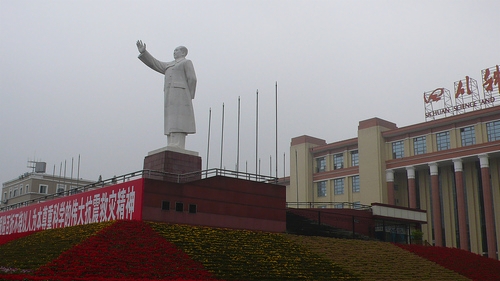 Mao statue in Chengdu - Credit: Augapfel, Flickr
Chengdu is the capital of Sichuan province in Southwest China. Chengdu is one of the most important economic, transportation, and communication centers in Western China. Its population is currently upward of seven million, according to the 2010 census.
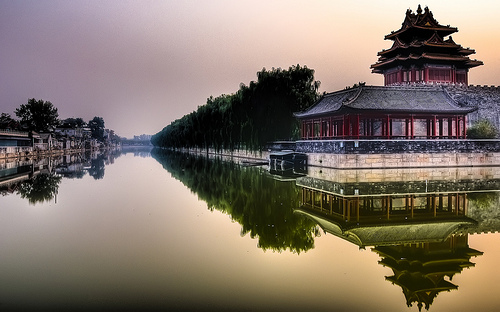 The Forbidden City, Beijing - Credit: Francisco Diez
Beijing, formerly known as Peking, is the capital of the People's Republic of China (PRC). Located in a basin in Northeastern China, Beijing is subject to harsh winters and stifling summers. In Chinese, Beijing literally means "Northern Treasure."
Today, Beijing is one of China's biggest and most urbanized cities, having benefited from China's economic miracle. The city hosted the 2008 Summer Olympics. Unfortunately, Beijing also ranks among most polluted cities in the world.
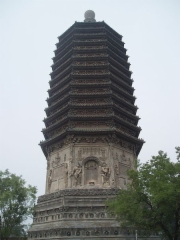 Old Beijing - Credit: Angus Cepka
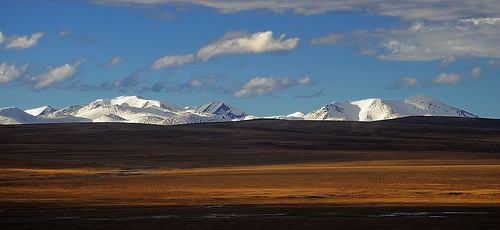 Tibet - Credit: Jan Reurink
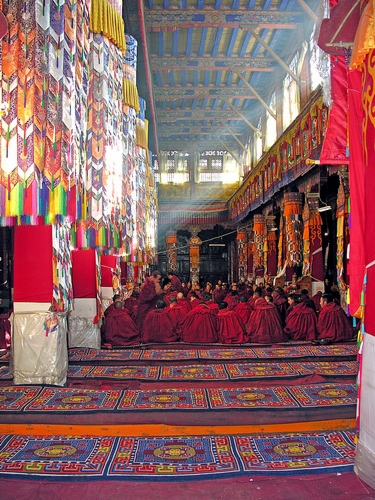 Drepung Monastery, Tibet - Credit: Dennis Jarvis
According to the People's Republic of China, Tibet is a "Special Adminstrative Region" of the PRC, meaning that Tibet is Chinese Territory in the same way that Hong Kong and Macau are. However, Tibetans consider themselves a separate political entity. Located to the Southwest of China, Tibet features rugged terrain (including Mount Everest) and harsh climates. Tibet is the original home of the exiled Dalai Lama, and is a major religious site for Buddhists. Recently, Tibet has been rocked by violence, as riots opposing Chinese encroachment intensify.
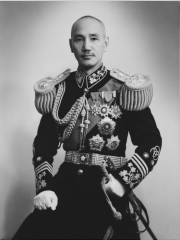
Chiang Kai-shek was a political and military leader of 20th century China. He is known as Jiǎng Jièshí. Chiang was an influential member of the Nationalist Party, the Kuomintang (KMT), and was a close ally of former president Sun Yat-sen. He became the Commandant of the Kuomintang's Whampoa Military Academy, and took Sun's place as leader of the KMT when Sun died in 1925. In 1926, Chiang led the Northern Expedition to unify the country, becoming China's nominal leader. A major split between the Nationalists and Communists occurred in 1927; under Chiang's leadership, the Nationalists fought a nation-wide civil war against the Chinese Communist Party (CCP).
After American-sponsored attempts to negotiate a coalition government failed in 1946, the Chinese Civil War resumed. The CCP defeated the Nationalists in 1949, forcing Chiang's government to retreat to Taiwan, where Chiang imposed martial law and persecuted people critical of his rule in a period known as the "White Terror". After evacuating to Taiwan, Chiang's government continued to declare its intention to retake mainland China. Chiang ruled the island as the self-appointed President of the Republic of China and Director-General of the Kuomintang until his death in 1975.
This was known as a struggle session.
The term Reactionary means one who wants to return to a previous state, usually political. The term was coined in the 20th century to denote a person who opposes the principles of socialism and communism. Often times in socialist or communist countries, it was used as an insult and reason to punish people meaninglessly. Many of these ideas were originally Marxist.
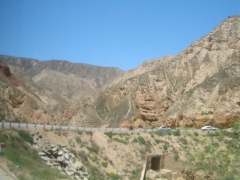 Hilly terrain of Yongjing - Credit: Vmenkov
There is a town called Yongjing in western Gansu province, on the Yellow River (Huang He), north of the Liujiaxia Reservoir, or Bingling Lake. It is in a mountainous and hilly region. However this is some way from Sichuan and Tibet, so it is not clear whether this is the town Dai Sijie had in mind.
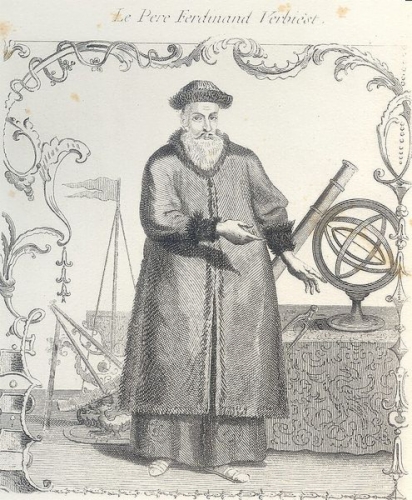
Father Michel was part of a larger movement by the Jesuits to spread Christianity across the world. These missionary efforts occured around the time of the Protestant and Catholic Reformations, as well as the Enlightment. In China, the Jesuits focused primarily on converting elite Dynasty officials. Ultimately, they were unsuccessful, as the Jesuits had little to offer that the then technologically advanced Chinese lacked. Furthermore, several missionaries made insulting remarks toward the emperor, which did not help their cause.
The Society of Jesus is a male religious order that follows the teachings of the Catholic Church. It was established in 1534 by Ignatius of Loyola.
 Jesuit Symbol - Credit: Moranski
Pulmonology deals with respiratory diseases, and is sometimes called “chest medicine”.
Some diseases commonly treated by pulmonologists are pneumonia, asthma, tuberculosis, and emphysema.
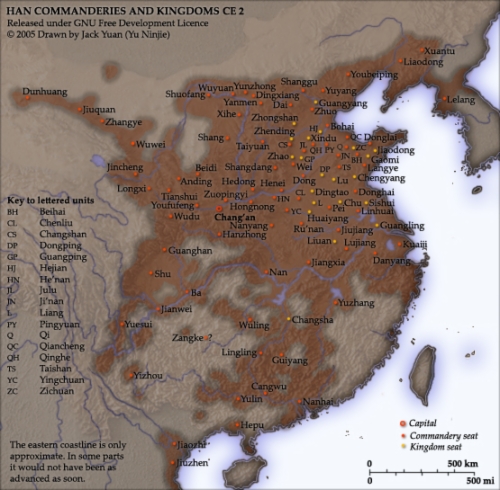
 Han Dynasty - Credit: Yu Ninjie
It was founded by the rebel leader Liu Bang, and came to an end when Cao Pi, King of Wei, usurped the throne. The Han Dynasty was an age of economic prosperity for China.
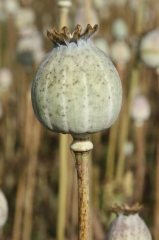 Opium - Credit: Richard Croft
Opium is the dried latex of the opium poppy. It contains about 12% morphine and is used to make heroin.
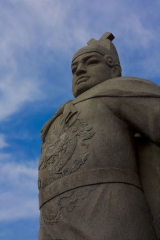 Grand Eunach Admiral Zheng He - Credit: Hassan Saeed
One of the most famous Eunuchs was Zheng He, who in the 15th century commanded naval expeditions in giant ships right across the Indian Ocean.
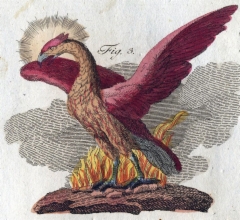 Phoenix - Credit: Friedrich Johann Justin Bertuch
Johannes Brahms (1833-1897) was a German composer and pianist, and one of the leading musicians of the Romantic period. Brahms spent much of his professional life in Vienna, Austria. He composed for piano, chamber ensembles, symphony orchestra, and for voice and chorus. Brahms is often considered both a traditionalist and an innovator. His music is firmly rooted in the structures and compositional techniques of the Baroque and Classical masters. Some of his famous pieces include Academic Festival Overture, Tragic Overture, and A German Requiem.
Listen on Spotify: Piano Concerto No.1 in D minor
 Beethoven - Credit: Joseph Karl Stieler
Listen on Spotify: Sonata No.9 in A "Kreutzer"
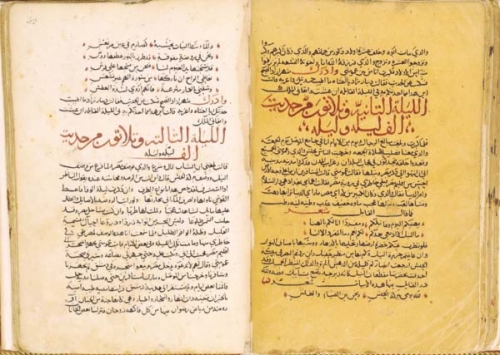
One Thousand and One Nights (also known as The Arabian Nights) is a collection of stories, songs, and poems composed during the Isalmic Golden Age. Popular stories from the collection include Aladdin, The Seven Voyages of Sinbad, and Ali Baba and the Forty Thieves. One Thousand and One Nights has provided contemporary scholars with an illuminating perspective on the culture of the Islamic Golden Age.
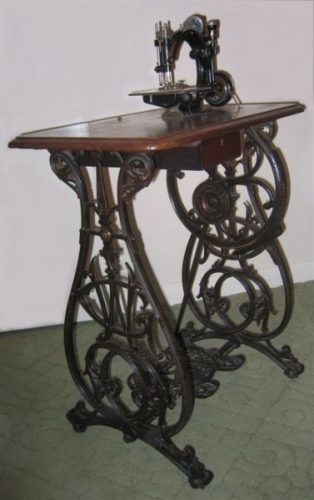 Sewing machine with treadle - Credit: Panjigally
The treadle is a foot pedal that powers older machines.
Chinese New Year is the most important of the traditional Chinese holidays. In China, it is known as "Spring Festival," since the spring season starts with lichun, the first solar term in a Chinese calendar year. It marks the end of the winter season, analogous to the Western carnival.
Within China, regional customs and traditions vary widely. People will spend heavily on presents, decoration, material, food, and clothing. It is tradition that every family thoroughly cleans their house to sweep away ill-fortune and make way for good incoming luck. Windows and doors will be decorated with red color paper-cuts and couplets with popular themes of "good fortune" or "happiness", "wealth", and "longevity". On the Eve of Chinese New Year, a feast is held. The family will end the night with firecrackers. Early the next morning, children will greet their parents by wishing them a healthy and happy new year, and receive money in red paper envelopes. The Chinese New Year tradition is to reconcile, forget all grudges and sincerely wish peace and happiness for everyone.
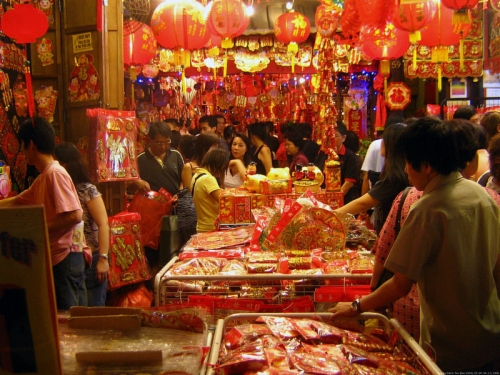 Chinese New Year - Credit: Calvin Teo
A sedan chair, or litter, is a mode of transport in which a wealthy individual or dignitary is carried by servants. At one point, sedan chairs were the only form of public transportation in Hong Kong.
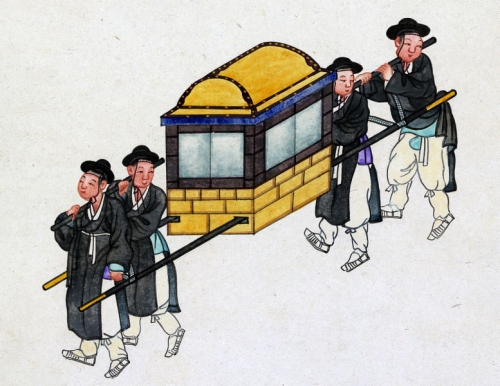
Sedan chairs are particularly useful on hilly and precarious roads such as those around the Phoenix of the Sky.