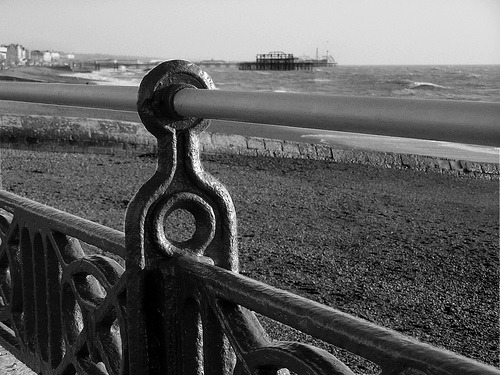
 Brighton seafront - Credit: Neilhooting
'Kolly Kibber' is Greene's variation on 'Lobby Lud', a fictional character invented by the Westminster Gazette in 1927 to promote the paper. Lobby, played by an employee, was sent to a seaside resort for the day and anybody who successfully spotted and challenged him would win a cash prize.

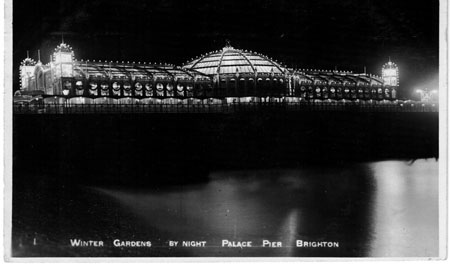
 Place Pier - Credit: The Royal Pavilion and Museums, Brighton & Hove’
Brighton's iconic Palace Pier was opened in May 1899 and continues to offer a host of traditional seaside attractions, although the much loved theatre was dismantled in 1986 and replaced with an amusement arcade.


This is an extract from the ballad 'She Wore a Wreath of Roses' by the 18th century poet Thomas Haynes Bayly.
Orange blossoms are believed to symbolise good fortune throughout the world, and are often chosen by brides as their wedding flowers, worn in the hair or carried in a bouquet.
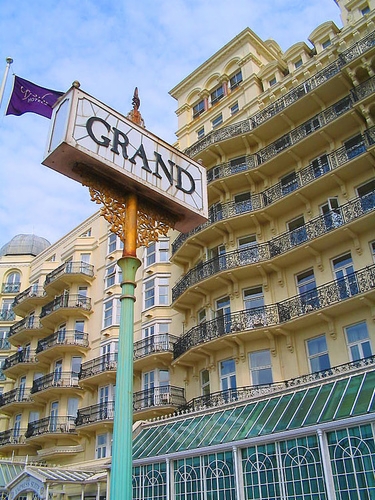 The Grand - Credit: catchesthelight
The fictional Cosmopolitan is based on De Vere Grand, Brighton's most famous hotel. Built in 1864, The Grand was designed with the upper classes in mind, and boasts a glass fronted terrace, spectacular sea views and luxury afternoon tea service.
In October 1984, five people were killed when an IRA bomb exploded at the hotel, where a Conservative Party conference was being held. Prime Minister Margaret Thatcher narrowly survived the blast.


 Striped deck chairs - Credit: John Winfield
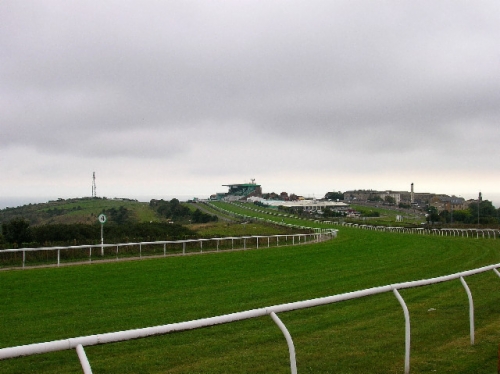 Brighton Racecourse - Credit: Simon Carey
Brighton Racecourse, the base for Pinkie's protection racket, is situated two miles outside the city on Race Hill. Gang culture first emerged in the racing world during the 1920s, with various London mobs struggling for contol of the racetracks. The years of violence that followed culminated in the arrest of the notorious Hoxton Mob in 1936.
Greene's inspiration for the novel was a case being tried at Lewes Assizes in July 1936. James Spinks, or 'Spinky', was sentenced to five years in prison for his part in an armed attack on a bookmaker and his clerk by a 'race gang'.
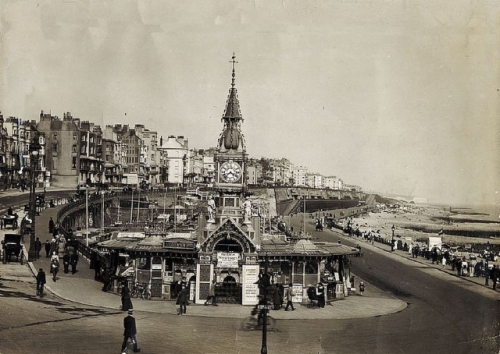 Brighton Aquarium - Credit: Royal Pavilion & Brighton Museums
Black Rock, the boundary of Brighton until 1928, is situated close to the Marina and is an undeveloped area of the sea front, oft associated with 'dubious activity' thanks to its relative isolation. A lido built there in 1936 proved very popular, but was closed in 1978.
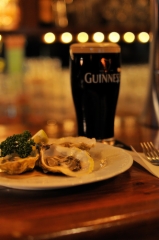 Guinness and oysters - Credit: cipher
Guinness Irish stout has traditionally been paired with oysters since the 18th century. They were particularly popular amongst the working classes, thanks to their low price and prevalence in public houses. However by the 20th century, oyster stocks were in decline and punters tended to favour pale ale, meaning the combination became increasingly rare.