
 The Atlas Bone - Credit: Gray's Anatomy of the Human Body, 1918
 A scythe - Credit: The Clip Art Book
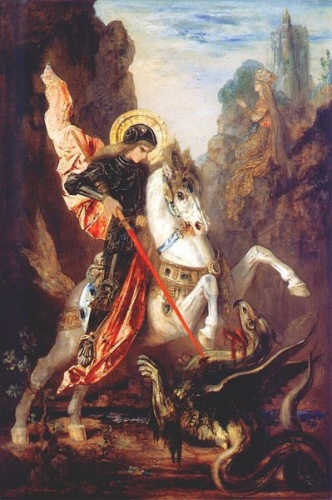 A typical quest is to kill a monster - Credit: Gustave Moreau
Quests are most commonly found in the RPG (role-play games) genre of games, in which players take the role of a fictional character in a fictional world. Quests are usually assigned by talking to a non-player character, who will give the player a specific task to carry out. Often the quest will be recorded in a log book or journal, and ticked off when completed. In MMOs (massively multiplayer online games) quests can often be completed in pairs or groups, allowing players to interact with other players. In many games if a quest is failed, the player will be sent back to the beginning and given the chance to try again. This appears to be the case here.

 Graveyard - Credit: Dennis Turner on Geograph
A common feature of MMOs is the ability to resurrect when dead. This means that the player can get back up and continue with the game without having to repeat levels or start again. In some games this will happen automatically at a specific checkpoint or the place where the player died. In others, the player will be transported to a graveyard or resurrection point (in this case a ‘soul-tree’). In this game Rick appears as a ghost and has to travel back to his body before he can resurrect. This is similar to the game World of Warcraft, in which the player can either run back to their body, or choose to resurrect at the graveyard for a penalty of lost gold and experience. This feature means that in player versus player games it is harder for other players to ‘corpse camp,’ which means waiting at the spot where the player died in order to kill them over and over again while they are weak. In these games the player cannot continue the game or fight while they are a ghost, which is why the Maze will not let Rick continue until he has touched his body and resurrected.
 A computer graphics bug - Credit: Rory Hyde on Flickr
Rick is talking about a computer bug, a programming error that causes the game to run incorrectly in some way. For example, a bug in a non-player character’s dialogue might make it impossible to hand in a particular quest. Not all bugs are detrimental to the game, however, and some can even be beneficial to players. For example, a bug might allow players to walk through a section of wall, thereby avoiding a particular monster or trap. Although these bugs are not part of the game and are not supposed to be there, players often consider it fair game to use them to their advantage until they are fixed or removed. Information about the existence of these bugs will often be passed on through word of mouth and in gaming forums, and will sometimes become the established method to complete a particular quest or challenge.
 Trees killed by acid rain - Credit: bdk/wikimedia commons
Acid rain is rain which is unusually acidic, caused when carbon dioxide, sulfer dioxide and nitrogen oxide emissions react with the water molecules in the air. Acid rain is very harmful to plants and animals, and corrodes structures and buildings. This story envisions a future in which the rain has become so acidic that it is dangerous for people to walk around unprotected.
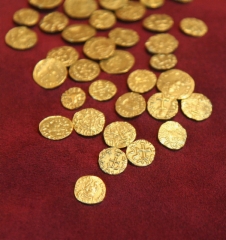
 Gold coins - Credit: Ian's Shutter Habit on Flickr
Loot is a term used to refer to all the things that can be taken from an enemy kill or treasure chest in a video game. This usually consists of a few items of low value and some money (often gold coins, here gilt), and sometimes a magical item, special weapon, piece of armour, or a quest item.

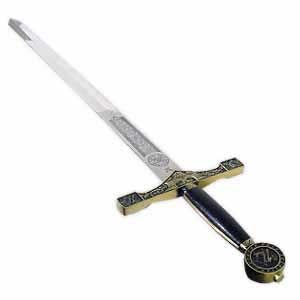 A powerful weapon might be worth real money? - Credit: ciashop/wikimedia commons
The idea that someone would pay a lot of real money for an item that only exists in a fake game world might seem like fantasy, but this really does happen. Acquiring rare or high level in-game items, weapons and armour can be a very long and difficult process. It might require a lot of in-game money or special materials which can only be found by killing certain enemies or completing certain quests. This means that players often have to repeat re-playable quests or kill the same creatures over and over until they have enough to afford the special weapon or armour they have been saving for. This process is known as ‘grinding’ and most players find it very tedious.
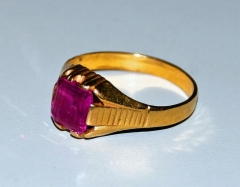
 A magic ring could be worth real money? - Credit: Sujit kumar/wikimedia commons
Even rarer items might have a random chance of appearing as loot, and cannot be bought. This means that the player has to rely on being lucky, and might never acquire the special item no matter how much they play. These rare items could dramatically improve a player’s chances of advancing to more difficult missions or being able to beat harder enemies, and so can significantly increase a player’s enjoyment of the game. As such, some players make the decision to buy these items, or the in-game gold needed to purchase them, for real money. Some players are even willing to pay hundreds of dollars for particularly special items.
 'Gold farming' is big business - Credit: tao_zhyn on Flickr
This process of selling in-game items and gold for real money is called RMT (real money trade). RMT became very popular with the famous MMO EverQuest, in which it was calculated that a player could make an average of $3.50 an hour. With a minimum wage of $3.50, if EverQuest had been a country it could have been considered the 77th richest in the world! As RMT became more popular, real world sweatshops began to emerge, in which businessmen in poor countries hired workers to ‘farm’ gold and items in the game to sell for real money. This all has a serious affect on the in-game economies of many MMOs, which work in much the same way as real economies and will suffer for sudden influxes of money, which devalue it for everyone involved. In some games RMT is forbidden and is considered a breach of contract. In others it is ignored, or even encouraged. World of Warcraft forbids RMT in its terms and conditions, but this does not prevent gold sellers from hawking their wares on the general chat in the game. Blizzard will attempt to deal with this issue in Diablo 3 by introducing an official auction house, controlled by the game company itself, in which players can exchange in-game items for real money and Blizzard will take a cut. Eve Online tackles the problem of RMT by allowing players to exchange in-game money for an item that gives them more playtime.
- Wikipedia article about virtual economies.
- An explanation of ‘epic’ (very rare) items on World of Warcraft.
- Guardian Games Blog. An article about Blizzard’s decision to authorise RMT in Diablo 3.
- My MMO shop. A website that sells in-game gold and items for real money. The homepage includes a very interesting explanation of the history of RMT. Warning: if you are an MMO player, check the terms and conditions of your game before buying anything on this site, as you may be in breach of contract if you do.
 A lightning strike with branching paths of electricity - Credit: David Selby/wikimedia commons
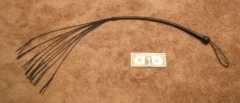 A cat-o'-nine-tails - Credit: OwenX/wikimedia commons
‘Gamemaster’ (often abbreviated to GM) is the name given to officials in MMOs who help players with various issues such as bugs or problems with other players. They also deal with disputes, players who are misusing the game, and players who are disobeying the terms of use.
In MMOs all players are part of a persistent world, which is the same for each player and in which actions are to some extent permanent. When the player exits the game, the world still exists and continues without them, and can change while they are not playing. However, most MMOs also have areas which are separate from this persistent world, in which a new version of the area is created each time a player or group of players enters. This means that each player or group of players gets to tackle the area on their own without interference from others. This also ensures that each player or group gets a chance at the same loot without a rival player or team taking it first. These are known as instances. In some MMOs such as World of Warcraft, instances come in the form of ‘dungeons.’ These are areas that a group of players need to fight their way through, killing enemies that are harder than normal, and facing very difficult unique enemies known as ‘bosses.’ Other MMOs such as GuildWars separate all quests into instances, meaning that players can interact in cities and shops, but not when they are fighting enemies or completing tasks. This also seems to be the case with the Maze, as Rick states that all solos are instances, and earlier noted that his quest had an entrance. He also says that the Roots are not an instance. This means that while he is in them, he can kill or be killed by another player.
A video tutorial about dungeon instances in World of Warcraft:
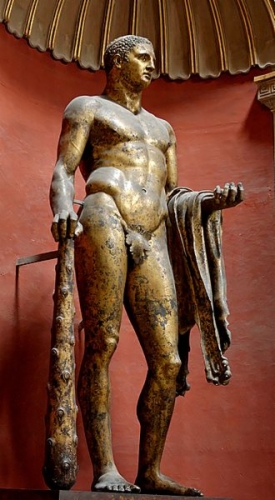 A Roman statue of Hercules - Credit: Jastrow/wikimedia commons
Herkules refers to the Greek hero Heracles (more commonly known as Hercules), who famously completed twelve seemingly impossible tasks and was elevated to Mount Olympus to become a god. Herakles was the son of Zeus, king of the Greek gods, and is the most famous hero in classical mythology. This is why Daed is not very impressed with the originality of the name.
In MMOs, players usually have to create a character whose role they will take as they play the game. They are required to choose a unique name so that their character will never be confused with another. Many players choose to name their characters after heroes from mythology or characters in films and books. If a name has been taken already, often players will respond by changing the spelling slightly or adding numbers onto the end, creating a name that is unique but somewhat missing the point in doing so.
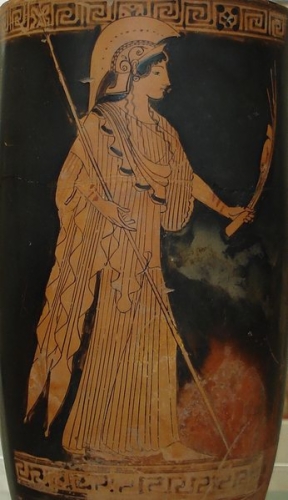 Athene on an ancient Greek pot - Credit: One dead president/wikimedia commons
Athene is the goddess of wisdom in Greek mythology. The girl who plays this character has managed to make the name more unique by adding ‘Glaukos,’ which means ‘shining’ or ‘gleaming.’ This shows that she has either put some effort into researching Athene, or has more than a passing knowledge of Greek mythology. ‘Glaukopis’ means ‘flashing eyes’ or ‘bright eyes,’ and is the common epithet given to Athene in Homer’s writing. Glaux is also the ancient Greek word for owl, named for its large, fierce eyes, and Glaucus is the owl of Athene. Athene is often portrayed with this owl on her shoulder in classical art.
More information about Athene and her epithet can be found on the Book Drum profile for Homer’s Odyssey.