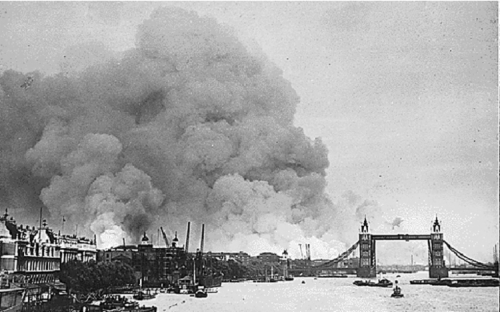
 The Blitz - Credit: New YorkTimes Paris Bureau Collection
In Lord of the Flies, the origin of the boys is suggested with the mention of the Home Counties. These are the counties in close proximity to London, England: Herfordshire, Essex, Kent, Surrey, Buckinghamshire, Berkshire and Middlesex.
The book takes place in a fictional atomic war, either during WWII or possibly soon afterwards. There are strong parallels with the situation in England during WWII. Major cities were heavily bombed, not for military purposes but to lower morale. During the Blitz, many children were evacuated to the countryside to escape the war. Here, they are being evacuated from Britain altogether.
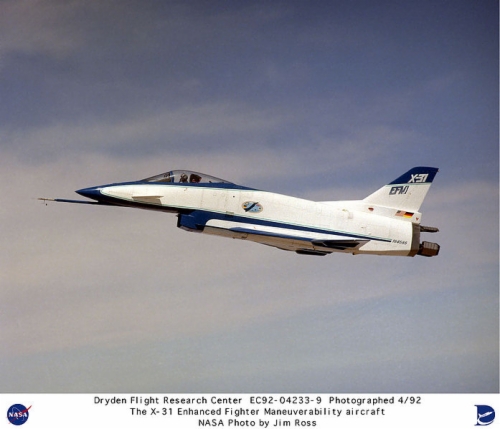 Aircraft Fighter - Credit: NASA
Fighter aircraft were used during WWII for air-to-air combat. They became particularly prominent during the Battle of Britain (1940), when British fighters had a decisive impact in the skies over Southern England.

 Asthma Inhaler - Credit: Magnus Manske
Asthma is an inflammatory disorder of the airways, which causes wheezing, shortness of breath, and coughing.


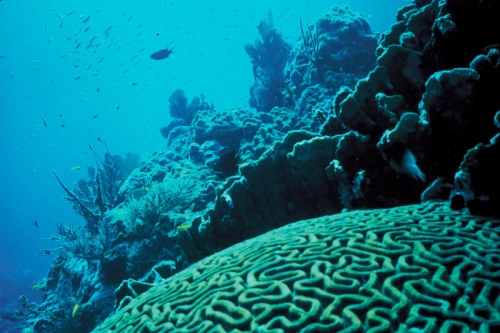 Coral Reef - Credit: Jerry Reid
A coral reef is a marine structure built up of coral and other organic material. There are two distinct regions in which coral reefs are primarily found: the Wider Caribbean (Atlantic Ocean) and the Indo-Pacific (from East Africa and the Red Sea to the Central Pacific Ocean). Coral Reefs are home to over 25 percent of all marine life, and are a fragile and endangered ecosystem.


 Lagoon - Credit: Nils Rinaldi
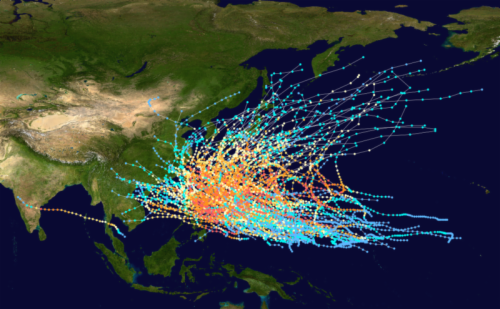 Typhoon - Credit: Bobby 122
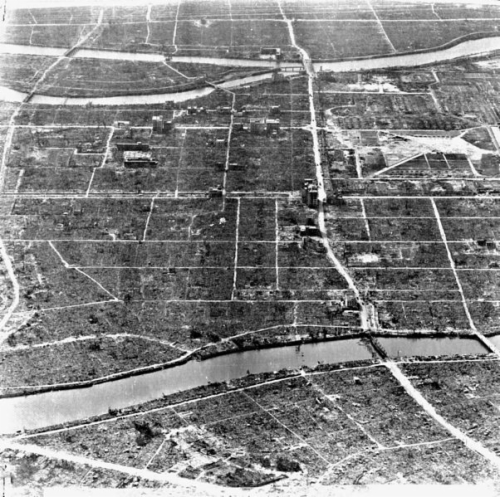 Bombing of Hiroshima - Credit: US Navy
One of the most controversial acts of World War II was the decision to drop the newly invented atomic bomb on Japan.
Prior to WWII, Albert Einstein wrote to the President of the United States, Franklin D. Roosevelt, describing Germany's efforts to purify uranium-235, which could be used to build an atomic bomb. The United States Government authorised the Manhattan Project, which had as its objective the design and construction of a viable atomic bomb.
The United States had been at war with Japan since the latter's attack on Peal Harbor, Hawaii, on 7 December 1941. The war had been intensive, very costly, and very destructive to both sides. To bring it to a swift end, the decision was made to drop atomic bombs on two Japanese cities. On 6 August 1945, a fifteen-kiloton atomic bomb destroyed the centre of Hiroshima, instantly killing more than 100,000 people and injuring many more. Three days later, a second bomb exploded over Nagasaki, resulting in 70,000 additional deaths.
Not only did the United States kill thousands of Japanese civilians and demolish two major cities, but the radiation they unleashed caused serious medical consequences for the survivors and future generations. However, the two bombings did directly lead to Japan's unconditional surrender, avoiding further killing on the battlefield. The morality of the decision is still debated.
The bombing referred to in Lord of the Flies is fictional, but for early readers it rang true so soon after the Japanese bombings.