


The list of various noises includes the all too familiar 'clink' made by pattens, a type of metal contraption worn on the shoe to elevate it from the dirt of the street.
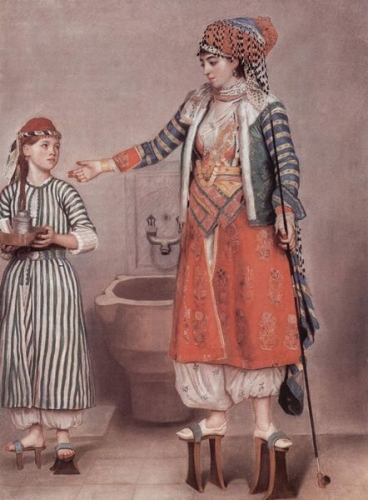
 Pattens - Credit: Jean Etienne Liotard
Pattens had come into use as far back as the middle ages, as a shoe for the outdoors worn over regular footwear. Initially made of wood or leather, by the time Austen is writing 'pattens' referred to a metallic addition to the bottom of the shoe, rather than the vertiginous contraptions pictured above. They were worn mainly by women in Austen's day, as male fashion included durable boots.
Camden Place in Bath was a place of highly desirable lodgings for people as aspiring of notice as Miss Elliot and Sir Walter. Excellent examples of elegant Georgian architecture dating from the late 18th century, these buildings would have pleased the Elliots' vanity as well as Lady Russell's and Anne Elliot's aesthetic sensibilities.
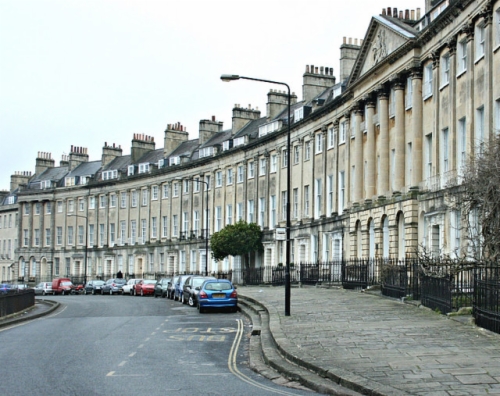
 Camden Crescent, Bath - Credit: Maurice Pullin


Gowland's Lotion was a skin cream marketed to both men and women that was meant to enhance the look of skin by decreasing blemishes and skin disorders. It contained lead and mercury (also known as quicksilver) and with repeated, prolonged use was poisonous. Mercury is still sometimes found in cosmetics.
Anne Elliot's disinclination to use the cream is a foil against which we can see Sir Walter's vanity.
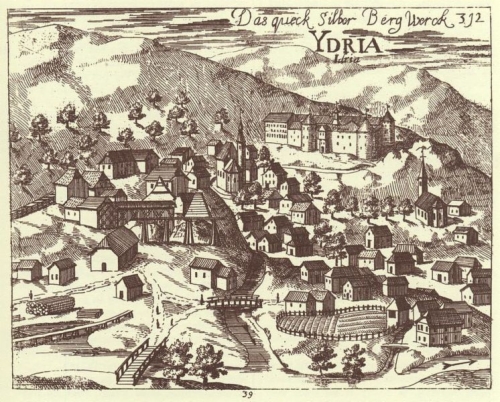 Mercury Mine, 1689 - Credit: Janez Vajkard Valvasor
 Laura Place - Credit: Nikater
Laura Place was a fashionable section of Bath that attracted the English aristocracy, and it spoke to the status of the Viscountess and her circle. Sir Walter and Elizabeth Elliot are thrilled to display visiting cards from Laura Place because it is a double coup. Not only do they have friends in Laura Place, but friends who also happen to be higher in the English hierarchy than themselves.
Visiting cards were akin to today's business cards.