

Jane Austen lived and wrote under the reign of King George III (including the period of the Regency during George III's illness).
Georgian England, between the close of the 18th and beginning of the 19th centuries, experienced great social and political change, including the end of the Enlightenment, England's loss of the American colonies, the Abolition of the slave trade, the French Revolution and the long years of the Napoleonic Wars.

 Georgian Architecture - Credit: Graeme Smith
Georgian architecture, of which the city of Bath provides many fine examples, spread throughout England: a Palladian, neo-classical style which is still celebrated for its elegance. The era saw the birth of the Romantic movement in culture and art, introducing the works of Byron, Shelley, Blake and Keats. In music this was the time of Beethoven, Mozart and Handel, and in painting Gainsborough, Turner and Constable were all active.
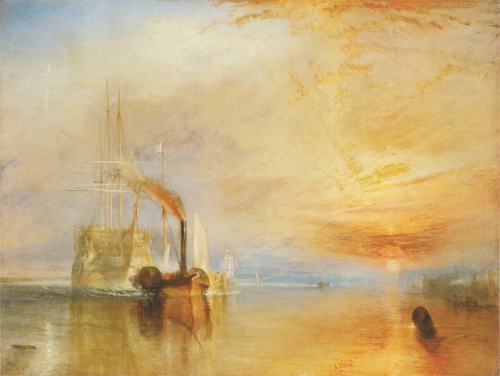
 The Fighting Temeraire by JMW Turner
Austen was writing twenty years after Mary Wollstonecraft published A Vindication of the Rights of Woman (1792), an influential work of early feminist philosophy. However, women were still assigned traditional, domestic roles in Georgian society, and their main chance to improve their quality of life lay through marriage.
The Napoleonic Wars form an important backdrop to Persuasion. As many of the main characters serve in the Royal Navy, their lives are directly affected by this long, on-off conflict with France.
 Napoleon with his Generals by Ludwig Elsholtz
Following the French Revolution of 1789-99, Napoleon Bonaparte rose to power in France. His ambition was to create a French Empire, and he swiftly conquered most of Europe, provoking a war with England and a shifting coalition of other European nations. After France's ill-advised invasion of Russia in 1812, Napoleon was defeated and exiled to the Island of Elba, from which he escaped to resurrect his imperial offensive the following year. He was defeated again at the Battle of Waterloo in 1815 and re-exiled to Saint Helena, where he died in 1821.
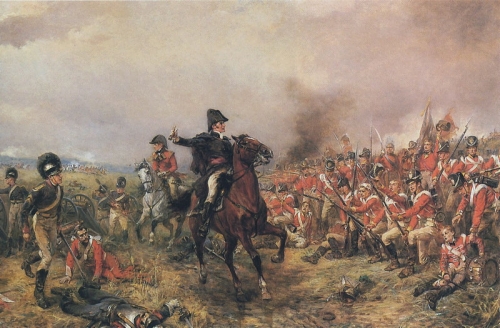 Wellington at Waterloo by Robert Alexander Hillingford
 Poster celebrating victory at the Battle of Trafalgar - Credit: JW1805
The Napoleonic Wars feature in many works of literature including, most famously, Tolstoy's War and Peace.

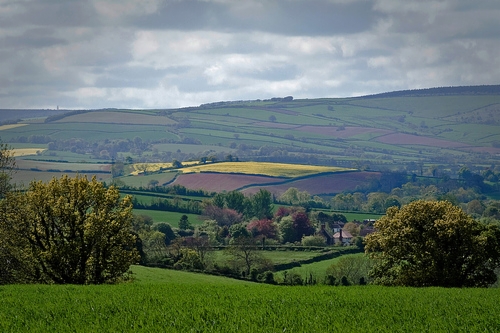
 Somerset - Credit: Mark Robinson
Set in South West England in the early years of the 19th century ("the summer of 1814"), Persuasion's action begins in the Somerset countryside, around the fictional Kellynch Hall and Uppercross.
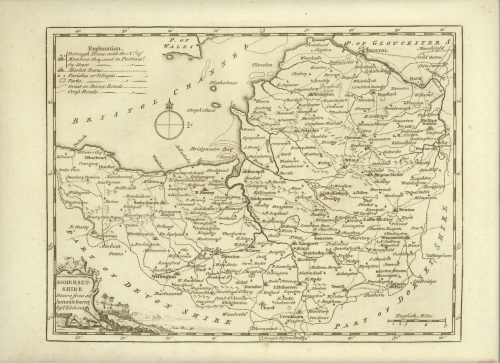
Somerset is a hilly, rural county, home to the town of Glastonbury, known for its famous yearly music festival and its associations with the legendary King Arthur.
Famed for its stunning examples of neoclassical architecture, Bath was originally a Roman city called Aquae Sulis ('the waters of Sulis').
By the late 18th century, it had become a spa resort for pleasure and health. One went to Bath to 'take the waters', a reference to the famous Roman Baths that were said to improve the health of those who bathed in them or drank from them at the Pump Room.
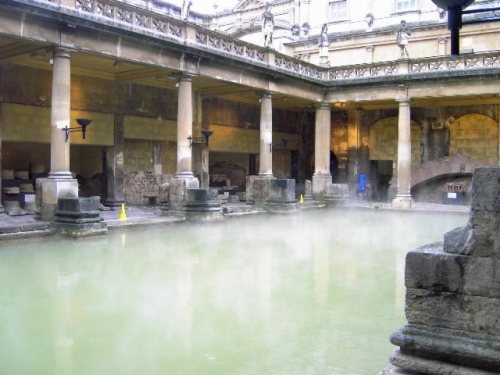 Roman Baths - Credit: Lee Jones
Jane Austen lived unhappily in Bath for part of her life (1800-1806); she preferred the countryside, and her stay ended with the death of her father.
 Gay Street - Credit: Wikimedia Commons user NotFromUtrecht
At one point Jane Austen lived in Gay Street, where Admiral and Mrs Croft make their Bath home. The house, number 40, is now the Jane Austen Centre.
Gay Street is near The Circus, famous for its Georgian architecture. The Circus was completed less than fifty years before Jane Austen's Persuasion.
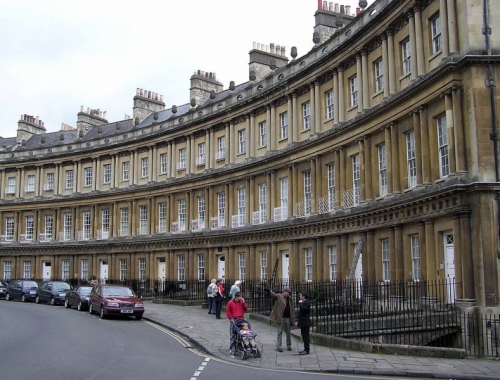 The Circus, Bath - Credit: Arpingstone
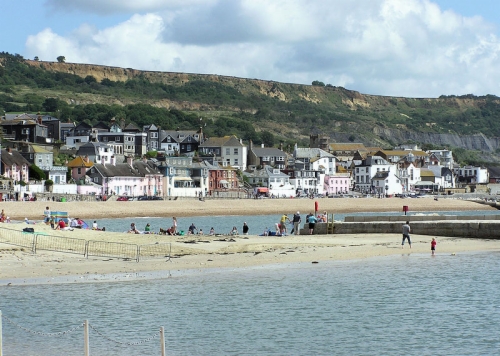
Lyme Regis lies on the Dorset coast, 25 miles from Exeter. It is known as the 'pearl of Dorset' for its picturesque town and beaches and its setting among beautiful, fossil-studded cliffs.
For a small seaside town, Lyme Regis has attracted more than its share of historical and literary associations. Besides the Jane Austen connections, Lyme Regis is also the setting for the 1969 novel by John Fowles, The French Lieutenant's Woman, which was made into a film starring Meryl Streep. Its historical interest comes from its past as a haven for smugglers, as the launching point for the Duke of Monmouth's rebellion in 1685, as the point at which news of the Battle of Trafalgar first arrived in England, and as a key location for the scientific discovery of fossils.
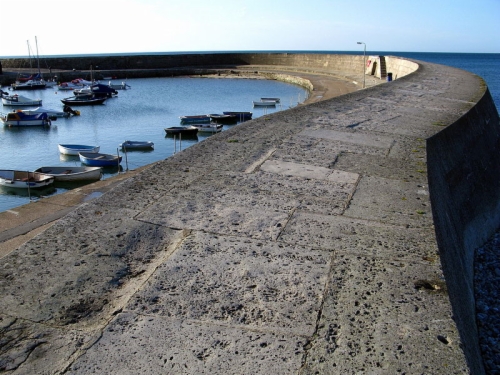 The Cobb: scene of Louisa Musgrove's accident - Credit: Joadl
Jane Austen visited Lyme Regis with her parents and her sister Cassandra in 1803 and 1804. At the time it was a fashionable sea spa. An incident involving a broken teapot led Austen to meet the now-famous Mary Anning, Lyme Regis's pre-eminent fossil hunter and paleontologist.
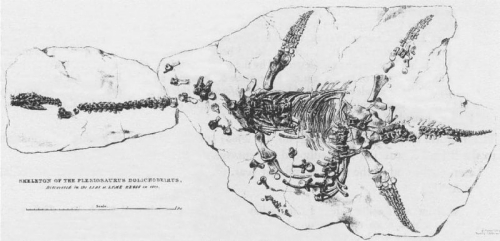 Fossil of a plesiosaur discovered by Lyme Regis paleontologist Mary Anning