


 Hazel Tree - Credit: Nikanos
The hazelnut, from the hazel tree, is a particularly choice nut for confections and, like most nuts, is made into a fine butter and oil.
Interesting traditions from folklore and myth associate the use of hazelnut limbs with water divination, and the tree itself as protective from thunder and lightning storms. The nuts are associated with fecundity and forecasting marital longevity.
When Captain Wentworth jokingly compares Miss Musgrove to a hazelnut, he is flattering her strength of will, and the reading audience most likely would have known of its associations. As the narrative progresses this is shown to be ironic.
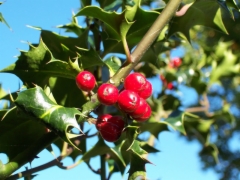 Holly Tree - Credit: Jurgen Howaldt
Holly, an evergreen with dark green leaves and brilliant red berries, is a familiar decorative element at Christmas. An ancient symbol associated with the sacred in pagan beliefs and rituals, it is said to ward off evil and was believed to represent or provide protection.
 Stoat - Credit: Frode Inge Helland
The mustelidae family, which includes the weasel, stoat, ermine, mink and ferret, are fascinatingly quick and intelligent hunters of small mammals, and farmers will often hunt them as pests.
The weasel, famously, will often dance for, or because of, its prey.
 Gig, Tilbury Carriage - Credit: Joseolgon
 Stile - Credit: Rob Burke
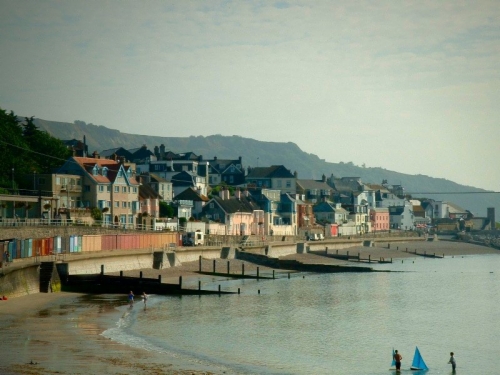
 Lyme - Credit: Mattana
Fossil-rich Lyme Regis is a coastal town in Dorset, which was important at that time as a shipping/naval stop with a famous breakwater, the Cobb (below). It is still an idyllic town, and much visited by tourists (as it was by Jane Austen in the early years of the 1800s). Once ship size exceeded the space available in the harbour, however, the town decreased in naval importance.
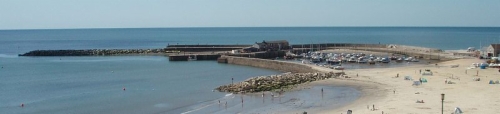 Lyme Regis - Credit: Bass fishing physicist
The epic Marmion (published 1808) and narrative poem The Lady of the Lake (published in 1810 and later given a musical voice by Franz Schubert, see below) were penned by Sir Walter Scott.
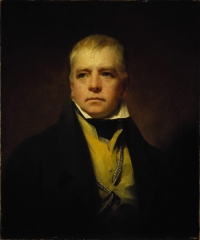 Sir Walter Scott - Credit: Sir Henry Raeburn
Scott, who was an admirer of Austen's writing, was popular at the time Persuasion was conceived. A respected poet and novelist from Scotland, Scott's two poems, mentioned here, were well-received by readers (if not critics) and sold like proverbial hot-cakes. Austen's bookish characters display their awareness and appreciation of contemporary literature, as does Austen.
The Bride of Abydos and Gaiour (1813) were written by the far more controversial, if eminently fascinating, George Gordon, Lord Byron, a giant of the Romantic period.
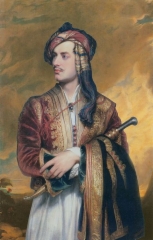 Lord Byron - Credit: Thomas Phillips
Casting off convention and expectations, Byron mined the imagery of the exotic for his poetry, including a reference to vampires in Giaour. His more sensual poetry has outlasted Scott's in the taste of readers and critics, but, at the time, both poets were successful, if not consistently respected.
An excerpt from The Bride of Abydos:
Know ye the land where cypress and myrtle
Are emblems of deeds that are done in their clime,
Where the rage of the vulture, the love of the turtle,
Now melt into sorrow, now madden to crime?
Anne and Captain Benwick also discuss how Byron's Giaour was to be pronounced. Byron himself acknowledged the unpronounceability of the word, although he claimed in was said with a soft g, and rhymed with 'power': 'jower'. See here for details.
Online editions: Marmion, The Lady of the Lake, The Bride of Abydos.
Franz Schubert set The Lady of the Lake to music, by accident creating one of the most famous of Christian tunes. Although his original song was a German translation of Scott's text, it began with the words "Ave Maria", leading to the idea of setting the Latin prayer Ave Maria to the same melody.
Listen on Spotify: the original Ellens Gesang III and the Latin prayer Ave Maria