

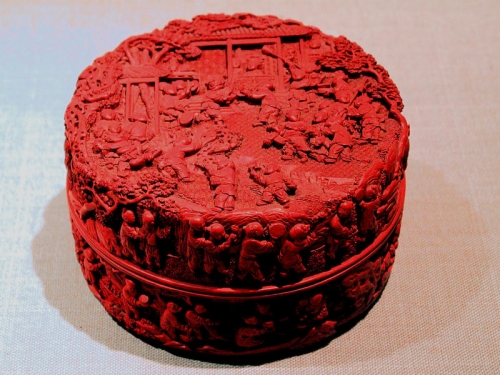
 Qing Dynasty Lacquer Box - Credit: Andrew Lih
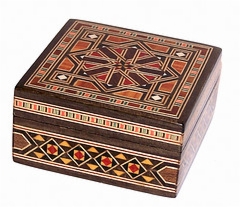
 Middle Eastern Decor Infiltrated Britain in the Victorian Age - Credit: Eurok at Flickr.com
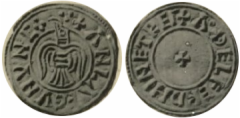
 An English Penny from an 1899 Book by Herbert Appold Grueber - Credit: Herbert Appold Grueber
Prior to decimalization in 1971, Britain used a system of pounds, shillings and pence introduced by King Henry II. The currency was denoted '£sd' or 'LSD' (L latin word libra; d coming from the latin word denarius).
One pound equalled 20 shillings and one shilling equalled twelve pennies. A guinea was 21 shillings. Two and six, abbreviated 2s 6d, was half a crown; a crown was five shillings. According to the National Archives, one pound seventeen in 1890 would have had the same purchasing power today as £112.29 (around $173). Two and six back in 1890 would be worth £7.49 today (around $11.60).

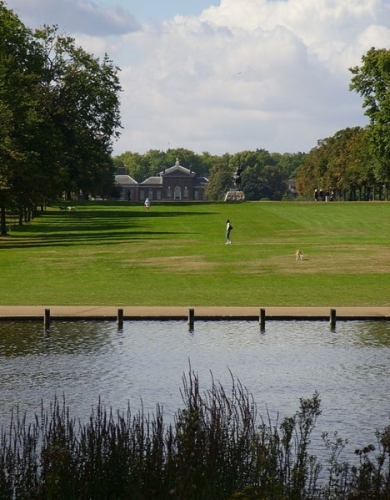 Kensington Gardens - Credit: Iridescent
Kensington Gardens consists of 275 acres of manicured lawns, trees and flower beds. It is the site of Kensington Palace, home to the late Princess Diana and, now, Prince William and Catherine. The free Diana Memorial Playground is Peter Pan-themed. Over 750,000 children enjoy the park annually, playing with pirate ships and beaches.
On May 01, 1912, a statue magically appeared in Kensington Gardens. J.M. Barrie placed this statement in The Times:
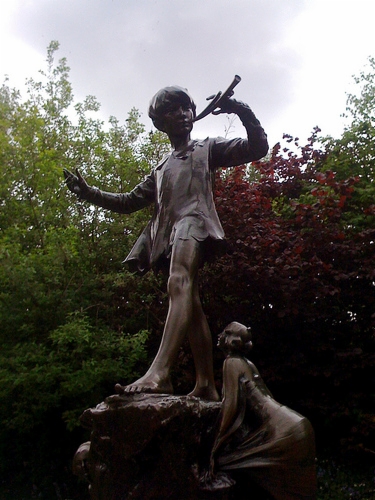 Peter Pan in Kensington Gardens - Credit: Ben Leto
The Times concluded:
"Men were enraged on Monday and yesterday in placing the work of the sculptor in position behind drawn curtains. These will be removed during the night, and the children will just find Peter Pan there as if he had grown out of the turf on May morning. It was the wish of Mr. Barrie and of Sir George Frampton that there should be no formal unveiling, and the Office of Works fell in with a happy idea."
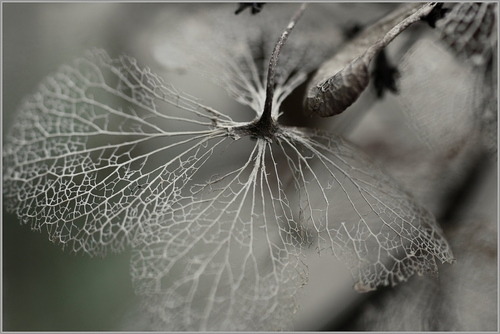 The Skeleton of a Hydrangea Leaf - Credit: Looking Glass
Making skeleton leaves was a Victorian pastime that amused and absorbed bored housewives. Used in elaborate decorations, the leaves would be stripped to the veins using a technique known as maceration. This essentially involved soaking the leaves to soften them and allow the veins to reveal themselves.
The process called for flawless, mature leaves, which were placed in a container and covered with rain water. The container was then kept outside in the sunshine, and topped up with more water as needed. After two weeks or so, the flesh of the leaves would deteriorate and become pulpy, allowing for its removal with a soft brush.
Free of flesh, the skeleton leaf would be floated in diluted bleach and then dried in a warm place. The leaves remained relatively malleable, making them ideal for use in floral decorations. The maceration process has been adapted and perfected since the Victorian era; here is a guide.
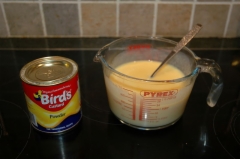 Bird's Custard is Still the Number One Custard in the UK - Credit: Benjah-bmm27
British children used this term to ridicule a person who acted "yellow" or displayed signs of fear. As for custard, this British delicacy has been around since the 14th century. In fact Bird's Custard, established by Alfred Bird in 1837, remains the number one custard powder sold in the UK.
In 1899, Percy B. Green included this rhyme in A History of Nursery Rhymes:
"Cowardly, cowardly custard, Eats his mother's mustard."
Both custard and English mustard are yellow.