

Siddhartha is a tale of Ancient India in the sixth century BC. Buddhism emerged as a reform movement against Brahmin orthodoxy in the Indian subcontinent (contemporary North India and Nepal) during the sixth century BC. The Sakya prince, Siddhartha Gautama (623-543 BC), who was known as the Gautama Buddha after attaining enlightenment, was the leader of this religious movement.
Buddha’s lifetime falls within the Vedic period of ancient Indian history, and his teachings absorbed many concepts of the Upanishads. When Vedic religion came to be dominated by the priesthood, and acquired a ritualized form with great emphasis on class and the supremacy of the Brahmins, who advocated sacrifice and rituals as the only way to salvation, the commoners started to look for a simpler spiritual way of life. Buddhism originated as a reaction to Hindu doctrines and as an effort to reform them.
The book, Science of the Sacred compiled by David Osborn provides insight into the Vedics civilization.

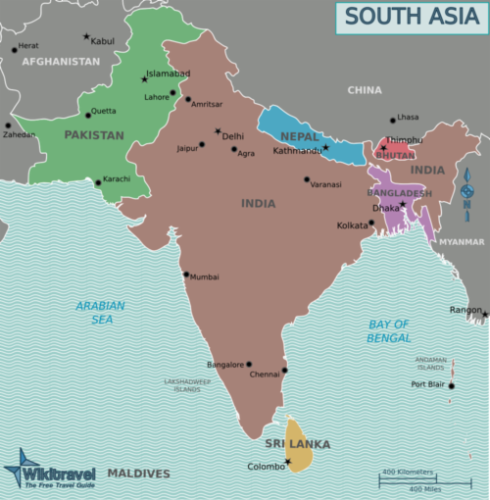
 Indian Subcontinent - Credit: Cacahuate
The Indian subcontinent comprises the South Asian regions of India, Pakistan, and Bangladesh, and also Nepal, Bhutan, and offshore Sri Lanka. It may also be said to include Afghanistan and The Maldives. India constitutes the major portion of the Indian subcontinent, with the northern and northeastern states partially situated in the Himalayan Range.
The fertile Indo-Gangetic Plain encompasses most of northern and eastern India, the most populous parts of Pakistan, parts of southern Nepal and virtually all of Bangladesh. The region is named after the Indus and the Ganges, the twin river systems that drain it.
Watch a Geo-project video on the Indo-Gangetic plain:
The Federal Democratic Republic of Nepal is located in the Himalayas and is bordered to the north by the People's Republic of China, and to the south, east, and west by the Republic of India. Lumbini, the birthplace of the Buddha, is in Nepal.
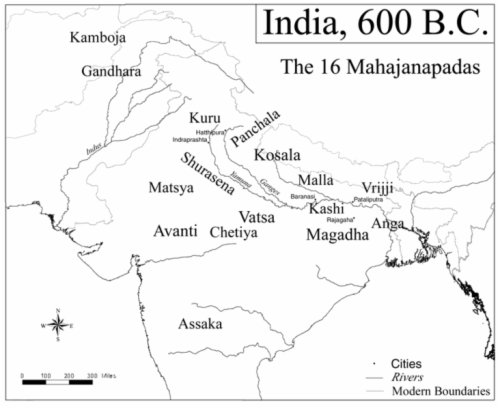
 Mahajanapadas - Credit: Kmusser
In the time of Buddha, 16 territorial states called Mahajanapadas existed. The 16 ancient kingdoms were:
- Anga
- Kosala
- Kamboja
- Magadha
- Vajji (or Vriji)
- Malla
- Chedi
- Vatsa (or Vamsa)
- Kuru
- Panchala
- Machcha (or Matsya)
- Surasena
- Assaka
- Avanti
- Gandhara
Amongst the 16 Mahajanapadas, the kingdom of Magadha rose to prominence under a number of dynasties and peaked in power in the reign of Asoka Maurya, one of India's most legendary and famous emperors.
Located in the present day Uttar Pradesh state, Kosala (Sanskrit: कोसल) region had three major cities, Ayodhya, Saket and Shravasti, and a number of minor towns. The kingdom was bounded by the river Ganges in the south, the river Gandhak in the east, and the Himalayan Mountains in the north.
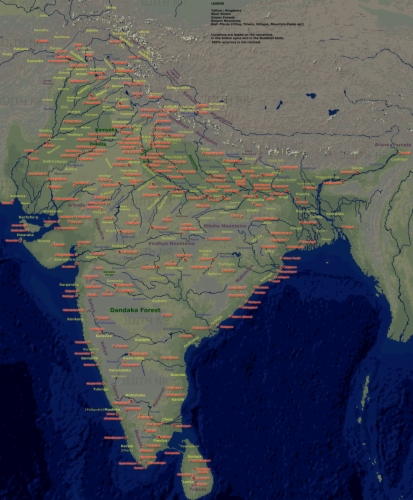 Epic India Cities - Credit: Jijithnr
Kosala was one of sixteen Mahajanapadas at the time of the Buddha, ruled by King Pasenadi, who became a follower of the Buddha. As the legend goes, the first time the king met the Buddha, he asked, "How is it that Master Gotama claims he has gained full enlightenment? Master Gotama is both young in years and young as a monk."
The Buddha's response reflected his wisdom, "Great King, there are four things that should not be looked down upon and despised because they are young. They are a noble warrior, a serpent, a fire and a bhikkhu (monk). An enraged young warrior may ruthlessly cause harm to others. The bite of even a small snake may kill. A little fire may become a huge inferno that destroys building and forests. Even a young monk may be a saint."
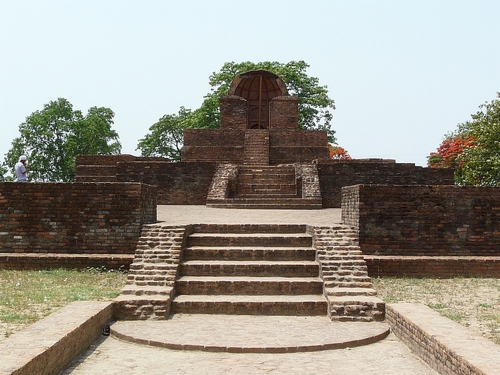 Śrāvastī - Credit: Varun Shiv Kapur
The fair capital of the Kosalans
Excite the mind, charms the eye,
Gives the ear the ten sounds
And provides food enough for all."
- Paramatthajotika 10
Sravasti, the capital of Kosala is an important Buddhist center. According to legends, Gautama Buddha displayed a million fold manifestations of himself - seated on a lotus (with thousand petals), with fire and water radiating from His body.
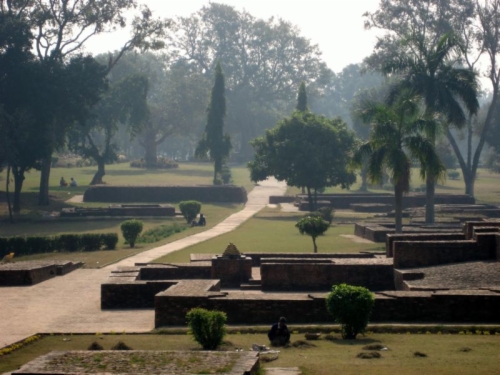 Jetavana - Credit: Bpilgrim, Wikimedia Commons
Jetavana, one of the most renowned Buddhist monasteries in India, is located just outside the old city of Śrāvastī. It was donated to Buddha by his chief lay disciple, Anathapindika ("feeder of the orphans or helpless") who came to be known for his generosity.
The Buddha spent most of the rainy-seasons (vassa) at Jetavana. The Jetavana was heavily wooded with a mango-grove on the outskirts of the monastery. In front of the gateway the disciple Anāthapindika planted the Bodhi-tree which was later called the Anandabodhi.
Jetavana is currently a historical park, with remains of many ancient buildings including monasteries and huts.
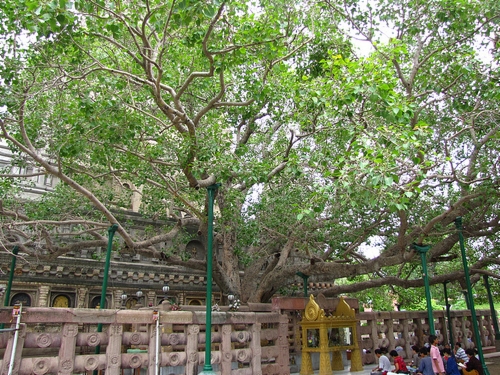 The Bodhi Tree - Credit: Man Bartlett
The Bodhi Tree in Bodh Gaya is a descendant of the tree under which Siddhartha Gautama attained enlightenment after 49 days of meditation. The Mahabodhi Temple is a sacred stupa that marks the site of the Buddha's enlightenment and dates from the 2nd century AD but has been restored over the years.
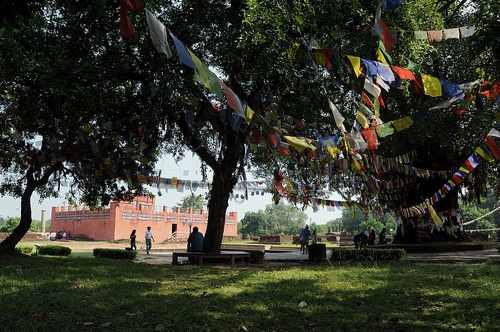 Lumbini - Credit: Nomad Tales
Lumbini, the birth place of Buddha, is one of the most important Buddhist pilgrimage sites in the world.
Lumbini is a UNESCO World Heritage Site; the site has ruins of ancient monasteries, a sacred Bodhi tree, an ancient bathing pond, the Asokan pillar and the Mayadevi temple, where the precise place of birth of Buddha is located.
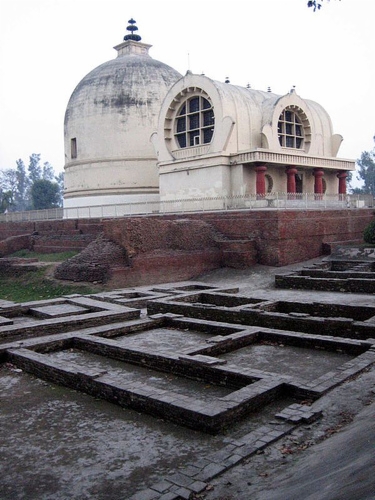 Kushinagar - Credit: Prince Roy, Flickr
Gautama Buddha attained Parinirvana (passed away), and was cremated, near the Hiranyavati river in Kushinagar (कुशीनगर). In ancient times, it was known as Kushavati and was a small city, "a branch-township with wattle-and-daub houses in the midst of the jungle."
The Mauryan emperor Asoka contributed to significant construction at this site. After Buddha's cremation, the ashes were collected and relics of the Buddha, including the skull bone, teeth and inner and outer shrouds were distributed into eight shares amongst the representatives of the other eight Kingdoms which constituted ancient northern India. King Asoka further divided these relics today these are enshrined them in stupas, across Asia.
The present temple in Kushinagar was built by the Indian Government in 1956 as part of the commemoration of the 2,500th year of the parinivana). The temple houses the famous Reclining Buddha gold plated sculpture, lying on a stone couch.
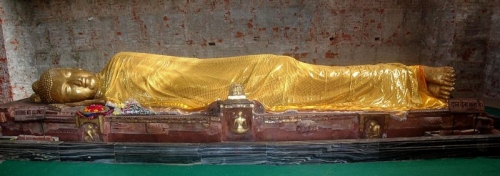 Image of Buddha attaining Parinirvana - Credit: Bpilgrim, Wikimedia Commons
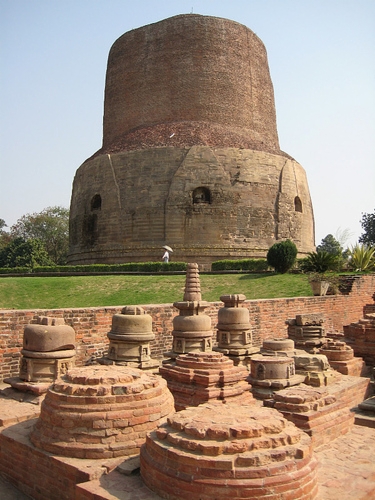 Sarnath - Credit: snikrap, Flickr
The celebrated Mantra, 'Buddham Sharanam Gachhami', originated at Sarnath. On the day before his death Buddha included Sarnath along with Lumbini, Bodh Gaya and Kushinagar as the four places he thought to be sacred to his followers. It makes Sarnath one of the most venerated Buddhist places. Besides Buddhism, Sarnath is also connected with Jainism.
The stupas and pillars erected by Emperor Asoka, in the third century BC, were excavated by a British amateur archaeologist in the nineteenth century. Later archaeologists discovered the shrine where the Buddha apparently had sheltered from the rains. A temple built by the Sri Lankan Buddhist Anagarika Dharmapala now stands in place of the shrine. The ruins of the monasteries lie amid vast green lawns, and include a deer park and a zoo.