

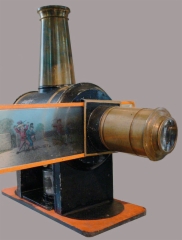
 Magic Lantern - Credit: AndreasPraefcke
First mentioned in 16th century literature, magic lanterns such as this one were very popular in the late 19th century, and were used to project images of famous landmarks, foreign lands and famous people. By the early 20th century when Nabokov was growing up, however, the moving picture was rapidly replacing this early slide projector, and perhaps Nabokov is disdainful of the machine because it reminded him of the archaic past. Or perhaps he found magic lantern projections to be a 'philistine' or bourgeois occupation. (see Nabokov's Lecture "On Philistines and Philistinism")
It may be worth mentioning that magic lanterns featured heavily in Marcel Proust's childhood, as described in A la Recherche du Temps Perdu. Is Nabokov trying once again (see bookmark to page 75) to hitch his childhood to the French literary giant's? Or is he once again playing with the reader's knowledge of literary classics?
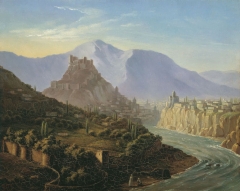
Nabokov is here refering to Lermontov's narrative poem Mtsyri (The Novice), written in 1840 and generally regarded as the epitome of the tradition of the Russian Romantic narrative poem.
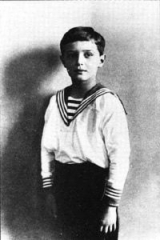
The fashion for dressing children in sailor suits was started in England in the 1860s, and became a craze once Queen Victoria's sons, and even her daughters, started wearing them. By the 1870s and until the 1940s, sailor suits were very popular in Europe and the United States for boys mainly of six to eight years, but even up to the age of 12. They were worn with a wide-brimmed straw sailor's hat and they came in a variety of styles. Tsarevich Alexei was often pictured wearing his sailor suit.
Nabokov also wore one as a young boy, as he describes on page 24, "With a sharp and merry whistle that was part of my first sailor suit"...
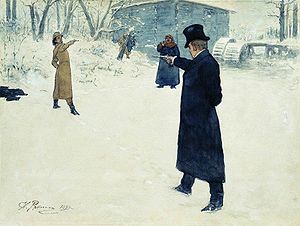
Although very much a cachet of 19th century Russian life and its literature, duels continued to be fought until the early 20th century. Two parliamentary debates between politicians - one in 1907 and another in 1909 - led to duels, while the last known duel of poets was fought in 1909 between Nikolay Gumilyov and Maksmilian Voloshin, over a non-existent woman, also a poet.
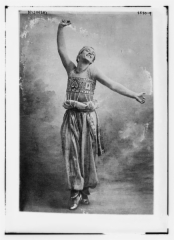
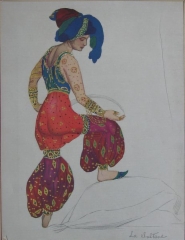
 La Sultane, Leon Bakst - Credit: Julo
The portrait of Nabokov's mother by Leon Bakst, done at the family home in 1910, is apparently stored in the State Russian Museum in St Petersburg, along with watercolour sketches made for the ballet Scheherazade, left behind by the Nabokov family when they fled St Petersburg in 1918. The Nabokovs also collected works by other contemporary artists, many of them friends of the family, including Alexandre Benois and Konstantin Somov. The celebrated landscape painter Msistislav Dobuzhinsky was hired by the Nabokovs to teach young Vladimir to draw.
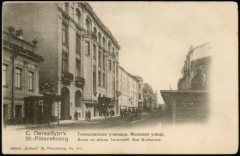
See the bookmark to page 193, about Denikin's Volunteer (White) Army
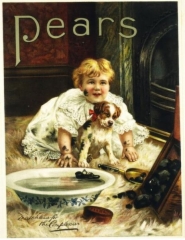
Nabokov has written earlier of his family's Anglophilia (p.63) "The kind of Russian family to which I belonged [...] had, among other virtues, a traditional leaning toward the comfortable products of Anglo-Saxon civilization." They imported Pears Soap, English toothpaste and Tate and Lyle's Golden Syrup among other things. The fact that they owned a Wolseley car is not only a testament to the family's Anglophilia and their considerable wealth, but also to their attention to fashion; the Wolseley Motor Company was only founded in 1901. It was incorporated into larger companies after 1935 but remained a luxury brand until 1975.
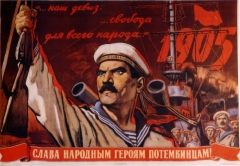
The 'First Revolution' was the Revolution of 1905, which coincided with the end of the Russo-Japanese war of 1904-5. The uprising on the Battleship Potemkin, of the Imperial Russian Navy's Black Sea Fleet in June 1905 was a watershed for the revolutionary movement, and was commemorated by Sergei Eisenstein in his film The Battleship Potemkin. The mass strikes, uprisings, and rise in terrorism that swept the Russian empire from 1904 led to the establishment of the State Duma of the Russian Empire, a multi-party system, a limited constitutional monarchy, and the Russian constitution of 1906.
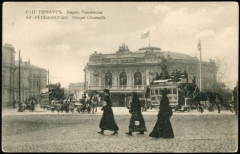
Cinizelli's Circus was St Petersburg's first resident circus, and opened in 1877 in a purpose-built building on the Fontanka Canal, now the site of St Petersburg's current circus. It was founded by Italian circus actor and entrepreneur G. Cinizelli (1815-1881), and featured such outstanding actors as the equestrian James Fillis, the animal-trainer Mazzelli, and the clowns Prais and Fratellini. In 1897, the International Championship for Wrestling (mentioned by Nabokov) was launched at Cinizelli's Circus. Like many other artists, the Cinizelli family left Russia in 1918, and the circus changed its name to the Petrograd Circus, the Leningrad Circus and finally the St Petersburg Circus.
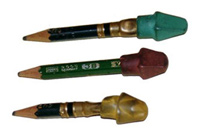
 Nabokov's pencils - Credit: Nabokov Museum
Nabokov never learned to type, relying instead on his wife Vera to transcribe his manuscripts. He wrote in pencil on index cards, a habit that is well illustrated in the publication in 2009 of his last, unfinished novel, The Original of Laura in which each pencil-scrawled index card is faithfully reproduced, and can be punched out of the page. See also the bookmark to page 32.