

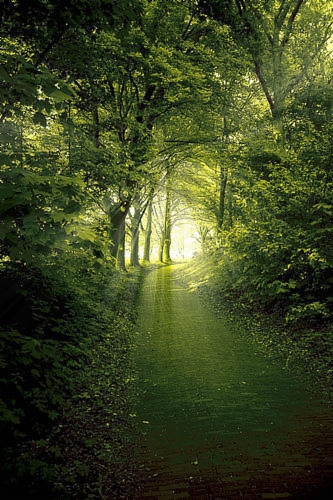
 Into the Light - Credit: mindfulness at Flickr
Arda is the name of Tolkien’s world. It is often mistakenly thought that Middle-earth refers to the entire world, whereas it is actually the name of a continent. It is in Middle-earth that everything in The Hobbit and The Lord of the Rings takes place; the name ‘Arda’ did not become known to readers until the publication of The Silmarillion. As many readers are not familiar with the concept of Arda, the term ‘Middle-earth’ is often used quite loosely.
As well as Middle-earth, Arda holds the realm of Númenor (now sunk beneath the sea), and Aman, also known as the Undying Lands (including Valinor where the Valar dwell).
Arda was created by the Valar, angelic beings/spirits who entered the universe that they helped Ilúvatar (God) to create. The Valar now live on Valinor, which is inaccessible to all but the elves. It is to Valinor that the elves sail from the Grey Havens when they are tired of their lives in the mortal lands. The Valar watch over the inhabitants of Middle-earth, and have sent the wizards (including Gandalf) to aid them in the coming war against Sauron.

 Switzerland scenery - Credit: Cédric Trachsel/Wikimedia Commons
Middle-earth is the mainland on which mortal life was first awakened. It is here that men dwell amongst elves, hobbits, dwarves, and other strange creatures. Middle-earth was created by Tolkien as an alternate mythological past for our own world. At first it was taken to exist in the distant past, but Tolkien rejected this idea, explaining that it exists instead “at a different stage of imagination.” Though people have attempted to connect the places mentioned in Tolkien’s stories to the real geography of our world, Tolkien stated that he did not intend them to match.
The maps provided in the book, and the story of The Lord of the Rings, cover only the north-western part of Middle-earth.
The story of The Lord of the Rings begins in the year 3001 in the Third Age of Middle-earth, when Bilbo turns eleventy-one (111). Most of the events of the book take place in the years 3018-19.

 Eriador (Swiss mountains) - Credit: Martin Abegglen
Geography
In The Fellowship of the Ring, the entire first half of the book takes place in Eriador, the land to the west of the Misty Mountains. After forming the Fellowship in Rivendell, the party then travels under the Misty Mountains, to Lothlórien, then down the River Anduin. See below for more about these places.
The Dark Lord Sauron lives in the land of Mordor to the south, in the bottom-right of the map. Mordor is a black and barren land surrounded by mountains (more about Mordor below).
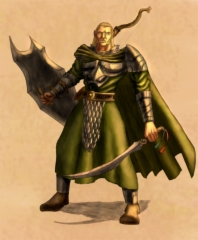 Elf warrior - Credit: Markus Röncke at Elfwood
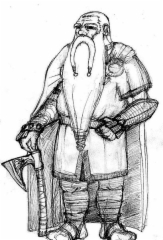
 Dwarf - Credit: Rotox/Wikimedia Commons
Peoples
Elves are noble and immortal beings. They have lived a long time in Middle-earth, and many are now leaving for their final journey to the Undying Lands. The few remaining elves can mainly be found at Rivendell, the home of Elrond; at Lindon, where the Grey Havens are located; in Mirkwood, where Legolas is from; and in Lothlórien, where Galadriel dwells.
Dwarves are short, stocky, bearded people who love gold, metal, mining and blacksmithing. They live mainly underground in the mountains. Evil creatures such as goblins and orcs might also be found in the mountains, and dwarves will often come into conflict with these monsters.
Hobbits are short, unassuming people who live in the Shire (see below).
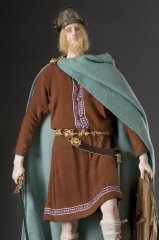 Alfred the Great (9th century Anglo-Saxon king) - Credit: Peter d'Aprix/Wikimedia Commons
Men can be found in Eriador (though the once-powerful kingdoms here have been destroyed), in Rohan, and in Gondor. Since Sauron’s return after his defeat at the end of the Second Age, the kingdoms of men have been threatened and are dwindling.
Technology
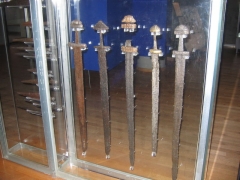 Viking Age swords - Credit: Berig/Wikimedia Commons
Though Middle-earth is a fantasy setting, it does borrow elements from the real history of our world, including Norse, Saxon, and Medieval influences. While there is no specific time-period associated with Middle-earth, the setting can be understood as reflecting the technology, weapons and society of the Dark Ages and Early Middle-Ages of Europe. Thus, there is no electricity, no guns or steam trains, and full plate armour and crossbows are not mentioned. Here are some images of weapons, armour and clothing found during the Early Middle Ages. These can be taken as indications of what might be seen in Middle-earth, but as with all fantasy settings the reader’s imagination has the final word!
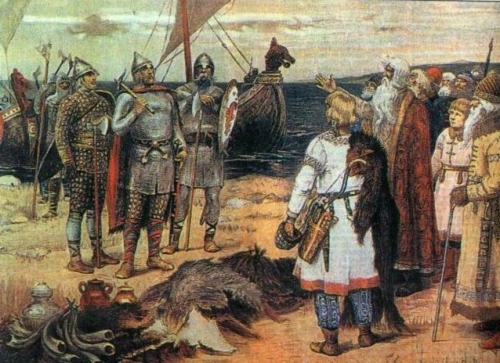 Armour and clothes - Credit: wikimedia commons
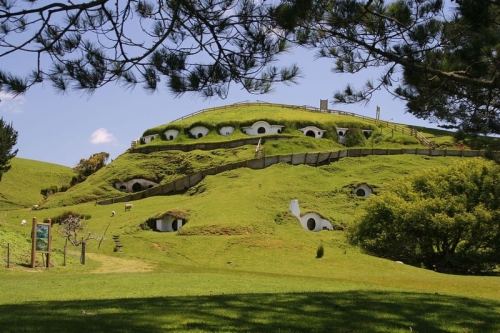 Hobbiton - Credit: Rob & Jules/Wikimedia Commons
Homeland of the hobbits, founded by them in the year 1601 of the Third Age, in the north-west of Middle-earth.
The part of the Shire where Bilbo and Frodo Baggins live is called Hobbiton Hill. It overlooks the town of Hobbiton, in the central region of the Shire.
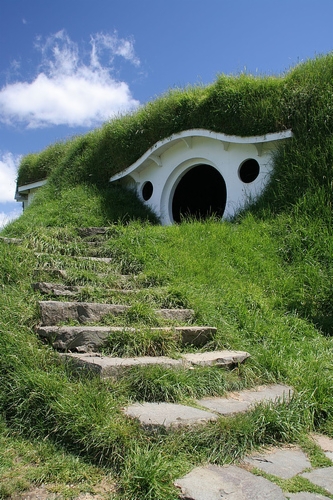 Bag End - Credit: Rob Chandler/Wikimedia Commons
Bag End is the home of Bilbo and Frodo Baggins, and is basically a hole in the ground. However, as described in the opening paragraph of The Hobbit, it is "not a nasty, dirty, wet hole, filled with the ends of worms and an oozy smell, nor yet a dry, bare, sandy hole with nothing in it to sit down on or to eat: it was a hobbit-hole, and that means comfort."
The Green Dragon is one of the many inns of the Shire. Frequented by Samwise Gamgee, it is famous as the starting point for Bilbo's adventures in The Hobbit.
Brandy Hall sits on the banks of the Brandywine River in Buckland, in the Shire. It is the ancestral home of the Brandybuck family.
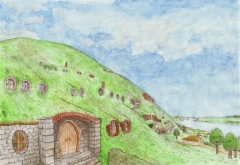 Brandy Hall - Credit: Matěj Čadil/Wikimedia Commons
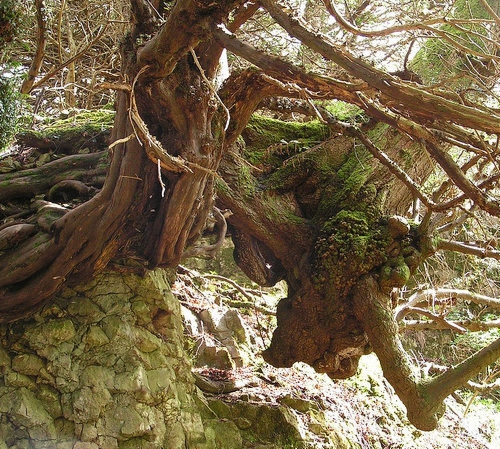 Tangled Woods - Credit: Dave & Lynne Slater
The Old Forest lies on the eastern border of the Shire; it is a remnant of the primordial forest that covered most of Middle-earth in ancient times. It is the land of Tom Bombadil and Goldberry, as well as being home to some very sinister and malevolent trees.
The Barrow Downs are low grassy hills to the east of the Shire that were once used as an ancient burial ground for men. The barrows, or burial mounds, are now inhabited by evil creatures called Barrow-Wights, sent by the Witch King of Angmar. The Barrow Downs have become known as a dark, fearsome place, and hobbits fear to tread there.
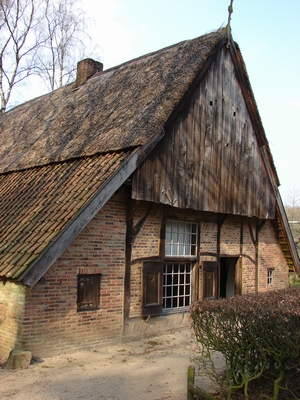 Saxon house - Credit: Arch/Wikimedia Commons
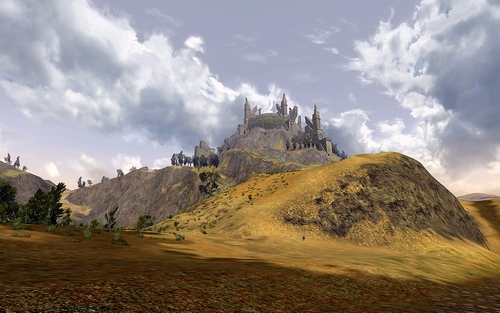 Weathertop? - Credit: AFK Gamer at Flickr
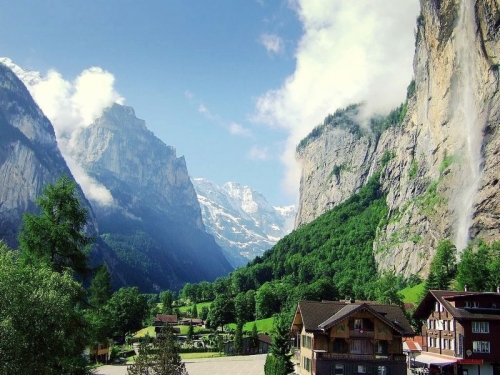 Lauterbrunnen - Rivendell? - Credit: Halsteadk/Wikimedia Commons
Rivendell is home to the Half-Elf Elrond, and is one of the few remaining places where elves now dwell. Also called Imladris, its name means ‘deep valley of the cleft.’ It sits at the foot of the Misty Mountains, in the far east of Eriador. Rivendell is a beautiful place, where Frodo and his friends rest before continuing on their journey with the newly formed Fellowship.
Tolkien stated that Rivendell and Hobbiton are intended to be placed at roughly the same latitude as Oxford is in our world, the city where he taught and lived. The inspiration for the look and feel of Rivendell apparently comes from the Lauterbrunnen in Switzerland, where Tolkien holidayed in 1911.
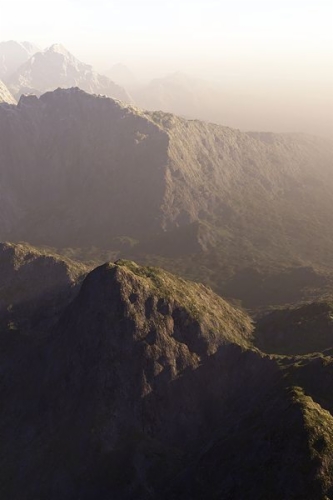 Misty Mountains - Credit: MaximKartashev/Wikimedia Commons
 The High Pass in the Misty Mountains - Credit: Neral/Wikimedia Commons
 The door of Moria - Credit: Petar Petrov from Sliven/Wikimedia Commons
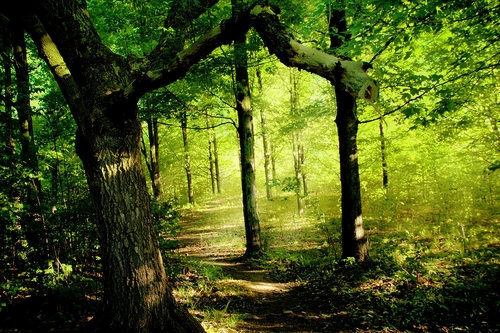 Magical Forest - Credit: Ordered Chaos at Flickr
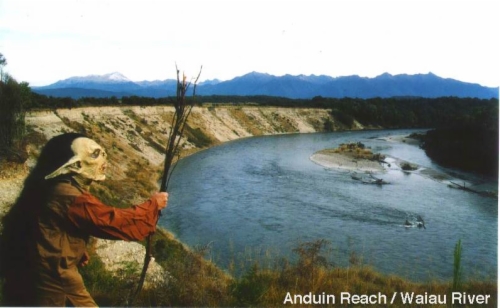 The River Anduin - Credit: Motorau/Wikimedia Commons
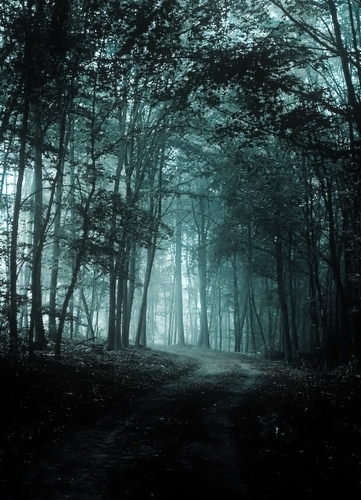 Cold Forest - Credit: bogenfreund at Flickr
This mighty forest, once known as Greenwood the Great, lies to the east of the River Anduin. Legolas is a Prince of Mirkwood, coming from a small part that still remains uncorrupted and is inhabited by wood-elves. Greenwood the Great is now known as Mirkwood, named thus because of the evils that entered it when a mysterious necromancer took up residence in Dol Guldur early in the Third Age. It was later discovered that the necromancer was none other than Sauron, gathering his strength to bring evil to Middle-earth again. Though Sauron still dwelt in the fortress during the events of The Hobbit, he has now moved back to his tower in Mordor.
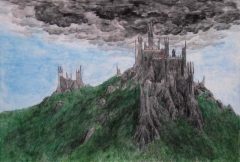 Dol Guldur - Credit: Neral/Wikimedia Commons
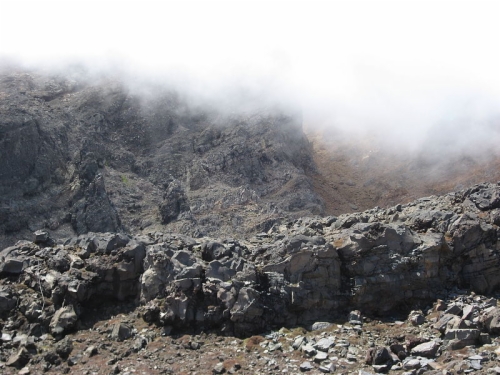 Mordor - Credit: Mrs. Gemstone/Wikimedia Commons