


1-25
|
26-50
|
51-75
|
76-100
|
101-125
|
126-150
|
151-175
|
176-200
|
201-225
|
226-250
|
251-275
|
276-300
|
301-325
|
326-348

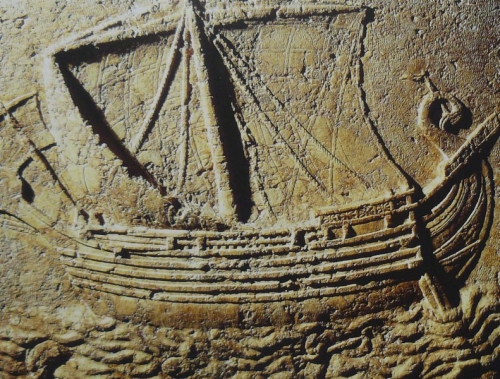
 A Phoenician Ship, from a sarcophagus, 2nd century AD - Credit: Elie plus at en.wikipedia/Wikimedia Commons
Now that Odysseus has returned to Ithaca, Athene can finally reveal herself to him and offer her help, without fearing Poseidon’s wrath. As a powerful brother of Zeus and lord of the whole domain of the sea, Poseidon was not a god to cross lightly.
Homer loves and admires this character so much that he speaks directly to the swineherd, breaking from his usual method of narration.
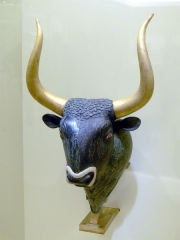
 Minoan rhyton in the form of a bull - Credit: Wolfgang Sauber/Wikimedia Commons
Crete is the largest of the Greek islands in the Mediterranean Sea. It was the centre of the Minoan civilisation, though this pre-dates the setting of this epic.
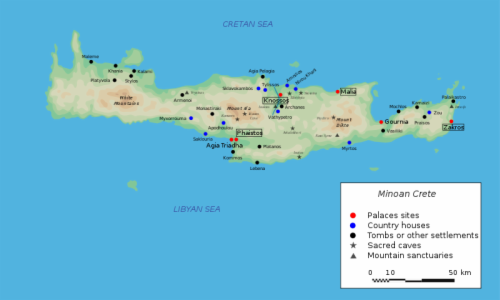 A Map of Minoan Crete - Credit: Bibi Saint-Pol/Wikimedia Commons
 A map showing Dodona and other important oracles and religious sites of ancient Greece - Credit: Marsyas/Wikimedia Commons
