

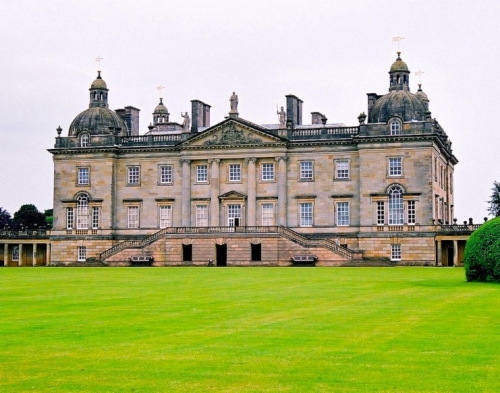
 Houghton Hall - Credit: Martin Pettitt
Darlington Hall is an archetypal "Great English House". Although fictional, it represents the many such country estates that once flourished across England. These "stately homes" employed dozens of servants: butlers and footmen; housekeepers and maids; cooks and kitchen hands; drivers and stable boys; gardeners and gamekeepers. They were consequently extremely expensive to run, depending on the proceeds from large agricultural estates, imperial trading companies or royal patronage.
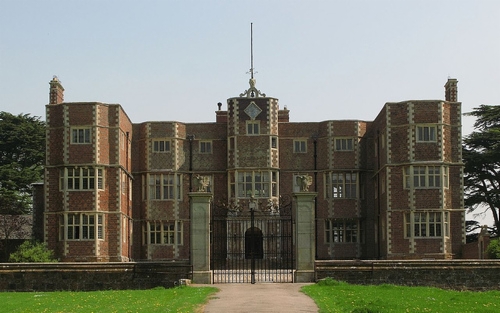
 Quenby Hall - Credit: RATAEDL, Flickr
Following World War II, the combined impact of the nation's huge war debt, the weakened economy, the shrinking Empire and the taxation policies of successive Labour governments made it financially impossible for many families to retain and maintain their stately homes. Those that managed to keep going made do with much reduced staffing. The rest gave their houses to the National Trust, demolished them, or converted them into luxury apartments, hotels or institutions of various kinds. Today, only a fraction of the nation's stately homes, amongst them Chatsworth (Duke of Devonshire) and Broadlands (Earl Mountbatten), remain in private hands.
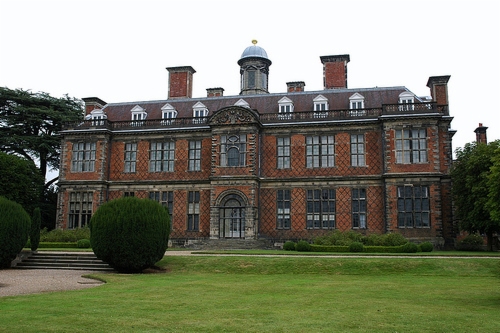 Sudbury Hall - Credit: Stephen Jones
 Somerset - Credit: crabchick, Flickr
Stevens drives from Oxfordshire through Wiltshire, Somerset, Dorset and Devon, and on to Cornwall.
 Dartmoor, Devon - Credit: Mark Coleman
Southwest England is a soft and gentle landscape, green and fertile: it's as though someone had shaken a duvet and let it settle into its natural contours. Low hills and valleys hide villages and hamlets, an embroidery of stone walls and hedges marking out the countryside.

 Fore Street, Taunton - Credit: geograph.co.uk (photographer unknown)
Evidence of Roman and Saxon settlements have been found in and around the quiet town of Taunton , making it a site of archaeological and social history interest. It lies on the River Tone, and since the Anglo-Saxon word for a town is tun, it is easy to see how its name came about.
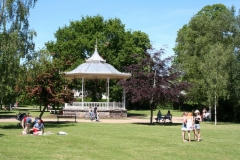 Taunton: Vivary Park - Credit: Martin Bodman
The town's main business was wool until the late seventeenth century when the industry began to decline, but once the Grand Western Canal was built in 1839, giving Taunton better access to markets, its fortunes began to change.
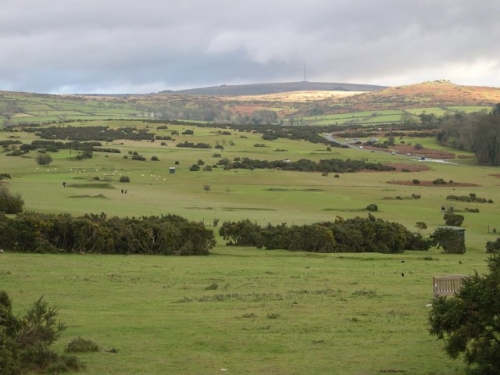 Whitchurch Down just ouside Tavistock - Credit: Tony Atkin
Moscombe is a fictional place name, but nearby Tavistock has been built up over the centuries, from prehistoric dwellings to a thirteenth century market town licensed to trade in tin from the Cornish tannaries. Tavistock has grown steadily over subsequent generations to become the pretty town it now is. Just outside Tavistock is the birthplace of Sir Francis Drake (1540-1596), the 16th century mariner who circumnavigated the globe.
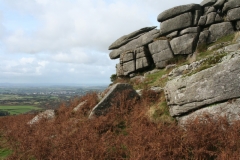 Whitchurch: on Pew Tor (looking towards Tavistock) - Credit: Martin Bodman
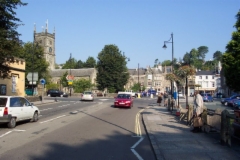 Tavistock Town Centre - Credit: Ron Strutt
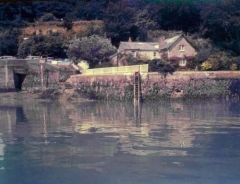 King Harry Ferry 1962 - Credit: M J Richardson
Little Compton, equidistant from Truro and Falmouth, is a tiny place tucked away in Philleigh. Just down the road is the King Harry Ferry across one of the Cornish inlets.
Weymouth is an ancient town, with a town charter dating back to the thirteenth century. Its position on the south coast made it a useful place from which to launch ships throughout its history, particularly in support of the WW2 D-Day landings. It was to Weymouth that the people of Alderney came to escape the German invasion of the Channel Islands.
The road to Weymouth passes through the Golden Triangle, an area of outstanding natural beauty, following the jurassic coast and shadowing the South West Coastal Path running along the coastline.
This is the end of Stevens' internal journey as well as the final destination of his motoring trip. After his stay in Weymouth he will return to Darlington Hall and move on to the next stage: the remains of the day, and the quiet evening of his life.
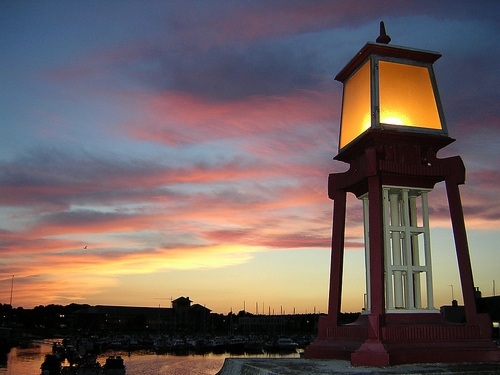
 Weymouth Harbour Sunset - Credit: