

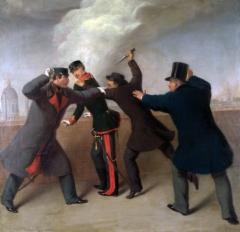
 Attempted Assassination of Franz Josef Historisches Museum der Stadt Wien
In the fifth year of his reign, Franz Josef, then 23 years of age, was walking on a bastion of the city walls when he was attacked by a Hungarian nationalist. Janos Libenyi came at the young emperor with a knife. Franz Josef was wounded but the high, stiff collar of his uniform deflected the knife. The quick actions of Imperial Adjutant Count Maximillian O'Donnell and a passing citizen, Josef Ettenreich, saved the Emperor's life. O'Donnell struck the man down with his sabre and Ettenreich helped subdue him. As a reward, O'Donnell was made a count of the Habsburg Empire and Ettenreich, a butcher by trade, was elevated to the nobility becoming Josef von Ettenreich. Libenyi was subsequently put on trial, condemned to death for attempted regicide and executed.
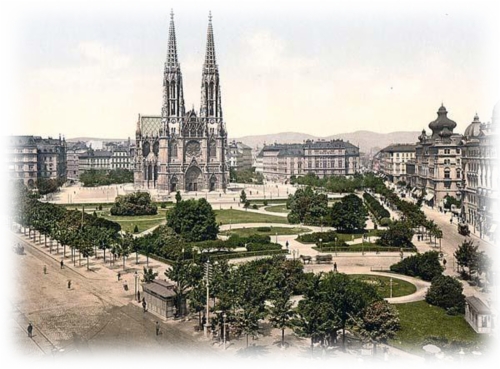 Votivkirche 1900
Library of Congress
Designed in the neo-Gothic style, work on the Votivkirche began in 1856 and was completed in 1879. The Emperor's brother, Maximillian, solicited funds from Europe's royal families for donations to build the church near the site of the attack as an offering of thanks for the Emperor's survival. It is located on the Ringstrasse, the broad boulevard encircling the Old City of Vienna, near the University.
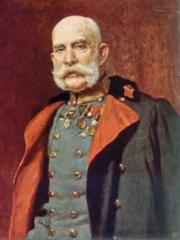 Franz Josef
 (1830-1916) became Emperor in 1848 during the tumultuous revolutions that gripped Europe. He reigned as an absolute monarch for 68 years constantly juggling his empire of many nationalities. Although very much respected, he was not a forward looking monarch. He preferred to ride in his carriage rather than in an automobile. Telephones were barely in use in the Imperial Palace. At his insistence, all correspondence was handwritten, he having forbidden the use of the newly invented typewriter. His personal life was marred by loss: his first daughter Sophie died as an infant; his brother, Maximillian, was executed after his brief, self-proclaimed rule as Emperor of Mexico; his son and heir-to-the-throne, Rudolf, committed suicide in 1889; his wife of 44 years, the Empress Elizabeth, was assassinated in 1898; and his nephew, Franz Ferdinand was assassinated in 1914 triggering World War I. Franz Josef died in Vienna in 1916, a classic case of a man who had outlived his times.
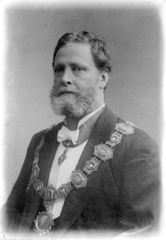 Karl Lueger
 (1844-1910) was mayor of Vienna from 1897 until his death due to complications from diabetes. Franz Josef repeatedly refused to to confirm his election as mayor. This was due, in part, because he feared that Lueger's anti-Semitism, which had propelled him into office, would undermine the laws guaranteeing equality to all citizens of the Empire. Pope Leo XIII personally interceded on Lueger's behalf. As a result, Lueger had no love for the monarchy or the monarch. Although Lueger used anti-Semitism as the basis for his popularity, once in office he appointed several Jews, replying to his critics, "I'll decide who is a Jew." Known as Der Schöne Karl/Handsome Karl, he was a popular mayor. He is credited with great improvements in Vienna's infrastructure from gas and water to public transportation. A portion of the Ringstrasse was named after him but in 2012, after years of protest against his anti-Semitism and its influence on Nazi ideology (Hitler referred to him in Mein Kampf as "the greatest German mayor of all times."), this portion of the Ring was re-named University Ring.
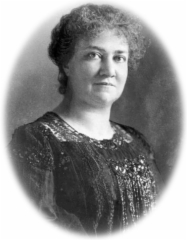 Rosa Mayreder
 (1858-1938) was a feminist, author, painter and writer. She was very active in espousing women's rights. She was a major presence in the peace movement prior to and during World War I.
 The Battle of Königgrätz by Alexander Ritter von Bensa, 1866
Heeresgeschichtliches Museum Wien
The Battle of Königgrätz in 1866 was the decisive battle of the Austro-Prussian War. Fought in Bohemia in what is now the Czech Republic, the Kingdom of Prussia defeated the Austrian Empire, clearing the path toward German unification.
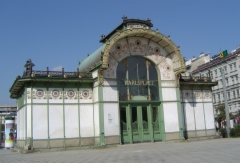
 Otto Wagner's Stadtbahn Station
Tom Ovens
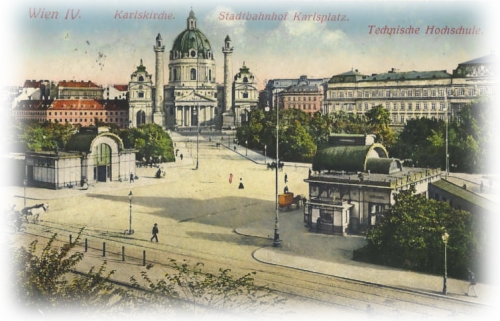 Karlsplatz in the 1890's
Initially opened in 1899, Otto Wagner's Municipal Railway stations face each other over a small square. With the construction of Vienna's subway system in 1981, the two identical stations were scheduled to be demolished. However, as a result of public outcry, in which protestors staged a sit down strike surrounding the buildings, the government gave in. Both buildings were disassembled, renovated, and then reassembled after the completion of the subway in their original locations. One of the buildings is now a cafe and the other houses a small museum devoted to Otto Wagner.
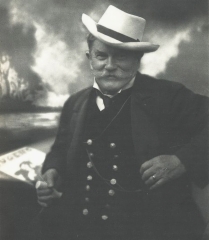 Georg Hirth,1900
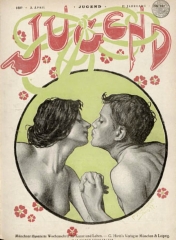 Jugend Magazine, 1897
In 1896, in Munich, Georg Hirth (1841-1916) published the first issue of his magazine of the arts, Jugend. His aim was to promote modernist ideas and art forms, specifically those of the German art nouveau movement. As a result of its immediate success and popularity, Jugenstil / "Jugend-style" became the common term for German and Austro-Hungarian art nouveau. Jugend continued publication until 1940. The University of Heidelberg has the complete run of Jugend on-line.
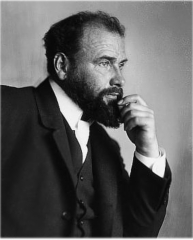 Gustav Klimt
Born on Linzerstrasse in the 14th District of Vienna, Gustav Klimt (1862-1918) was the accepted leader of the Viennese Art Nouveau movement. Klimt, along with his brother Ernst and partner Franz Matsch, were established painters of public art in Vienna. They had worked on the Empress's Hermes Villa, the new Burg Theater and the new Kunsthistorisches Museum/Art History Museum. When Klimt was 27 years old, their firm, "The Company of Artists", had been recognized by Franz Josef and been presented with "The Golden Order of Artistic Merit." As he moved away from traditional styles of painting, his works were more and more greeted with virulent protest. Klimt led the group of artists that broke away from the established authorities and formed the Vienna Secession. He was elected their first president.
The Wiener Werkstätte/Viennese Workshop was founded in 1863 by Koloman Moser and Josef Hoffman, both founding members of the Vienna Secession. Its aim was to provide a community of architects, artists and designers whose first commitment was to design art, including everyday objects, which would be accessible to everyone.
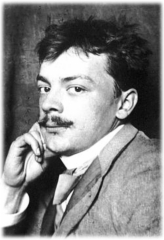 Koloman Moser
 (1868-1918), one of the founding members of the Vienna Secession, was an extremely versatile artist. He was proficient in painting, sculpture, furniture design, jewelry, and stained glass, even designing postage stamps for the Empire.
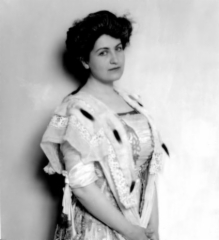 Alma Schindler, 1909
Alma Schindler (1879-1964) was born in Vienna into an artistic family. Her father was a noted painter of landscapes, Emil Jakob Schindler. After his death, her step-father was Carl Moll, one of the founding members of the Secession. She was known for her beauty and her intelligence, attracting many of the most creative men in the contemporary arts scene, among them Gustav Klimt and Oskar Kokoschka, and marrying Gustav Mahler, the architect Walter Gropius, and the author Franz Werfel. She had a recognized talent for piano and composition but gave both up upon her marriage to Mahler. After the Nazi invasion of France, she and Werfel, who was Jewish, emigrated to the U.S. Crossing, at the age of 60, the Pyrenees on foot into Spain, they reached Portugal and took ship to the U.S. where they settled in Los Angeles. After Werfel passed away, Alma moved to New York City where she lived until her death.
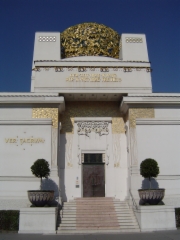 Secession Building, 2006
Tom Ovens
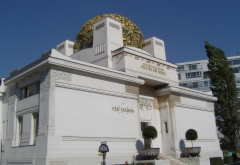 Secession Building, 2006
Tom Ovens
Named after the group of artists that broke away from the state approved art establishment, the Secession building was designed by Joseph Maria Olbrich, a founding member of the Secession. Financed by patrons such as the industrialist Karl Wittgenstein and by proceeds from their own exhibitions, the Secession opened in October of 1898 and held its first exhibition that November. It is still an active exhibition venue.
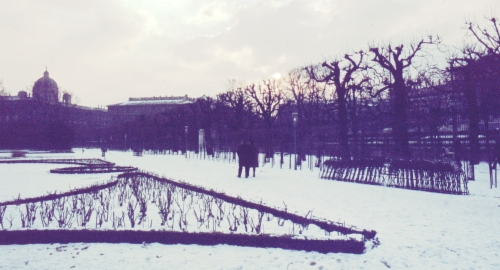 Volksgarten in Winter, 1968
Tom Ovens
After Napoleon demolished the Burgbastei - a bastion near the imperial palace - in 1809, the open space was used to create the Burggarten, which was for the exclusive use of the imperial family, and the Volksgarten/the People's Garden, which was open to the public. The garden was extended in 1857 when the remaining city fortifications were torn down.
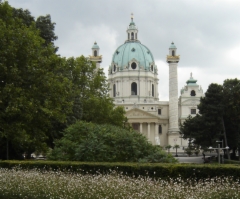 Karlskirche, 2006
Tom Ovens
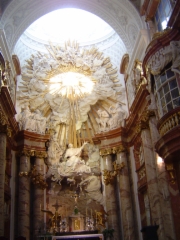 Karlskirche Alter, 2006
Tom Ovens
Designed by Johann Bernhard Fischer von Erlach, one of the premier architects of the time, Karlskirche/Charles' Church is dedicated to St. Charles Borromeo, in thanks for deliverance from the Plague of 1712. The church was completed in 1737. St. Charles was considered a patron saint of plague sufferers. The two columns, modeled after Trajan's column in Rome, depict scenes from the life of the saint which spiral up in bas-relief.
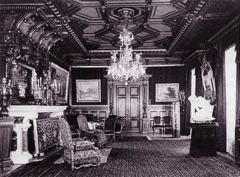 Palais Wittgenstein Salon
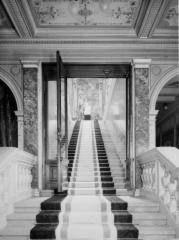 Palais Wittgenstein Staircase Österreichische Nationalbibliothek
The Palais Wittgenstein was located at Allegasse 16 in Vienna's 4th District. The street is now called Argentinierstrasse. It was built in 1871-73 by the architect Friedrich Schachner. As wealthy patrons of the arts, the Wittgensteins played host to artists such as Klimt and his fellow Secessionists; Gustav Mahler and Johannes Brahms were frequent guests, at times playing their own works. The palais remained in the Wittgenstein family until after World War II when, having been extensively damaged by American bombs, it was sold in the early 1950's to the Austrian Landerbank. It was torn down and an apartment complex built in its place.
 Karl Wittgenstein
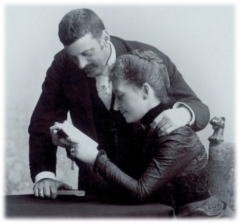 Karl and Leopoldine Wittgenstein
Kolowatring was a section of the Ringstrasse named for the one-time residence of the Bohemian politician Franz Anton Graf von Kolowat-Liebsteinsky whose palais was located there. He died in 1861. His palais was demolished in 1868 when the city walls were razed to build the Ringstrasse and this section was named in its honor. In 1928 this section of the Ringstrasse was renamed Schubertring in honor of Franz Schubert.
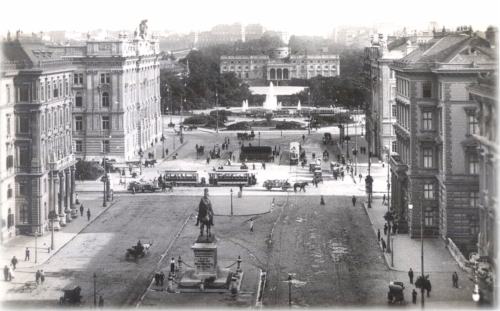 Schwarzenbergplatz, 1905
The Schwarzenbergplatz is named for Prince Schwarzenberg, Austrian Field Marshal of the early 19th century who distinguished himself in the Napoleanic Wars serving Austria under before its defeat by Napoleon, commanding Austrian troops under Napoleon's rule, and finally serving under the allies against Napoleon. His statue is in the foreground of this 1905 photograph. The view is from the Ringstrasse looking towards the Hochstrahlbrunnen, the fountain built in 1873 to commemorate the construction of the first water pipeline from the Styrian Alps to Vienna.
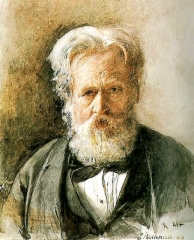 Rudolf von Alt, self-portrait, 1890
Rudolf von Alt (1812-1905) was an Austrian landscape painter. A Grand Old man of the Arts, he was knighted by Franz Josef in 1882. He earned the emnity of the artistic establishment when he championed the new artists of the Secession. In gratitude for his support, the Secession voted him their Honorary President for Life.
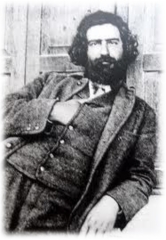 Giovanni Segantini
 (1858-1899) was an Italian painter who led a reclusive life in the northern Italian Alps, never venturing further afield than Milan. Nevertheless he came to the attention of the international community. He died the year before the events in this book but his paintings continued to be exhibited and sold at Secession exhibitions.
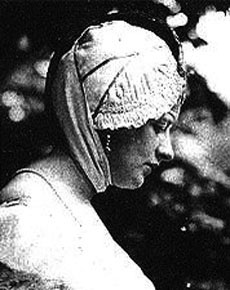 Hermine Wittgenstein, 1900
Hermine Wittgenstein (1874-1950) was the eldest of the eight Wittgenstein children. She never married, had few suitors, and cared for her parents until the end of their respective days. She continued to live in the Palais Wittgenstein after their passing. She, like her siblings, was a talented musician as well as a painter. As the Nazis grew in power, her brothers had fled the country placing most of the family fortune in Swiss banks. Although advised to leave Vienna, she refused, believing her status and the fact that her family had been Christian for three generations would keep her safe. Nonetheless, the Wittgenstein family was declared Jewish. It was only the payment of much of the Wittgenstein fortune to the government that allowed her and her sister Gretl a special exempt status from persecution. After the war, Hermine stayed in Vienna, living the half-ruined palais until she died.
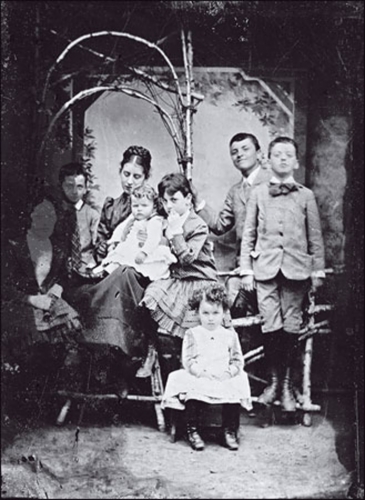 The Wittgenstein children, 1890
The Wittgenstein family started to unravel shortly after the events in this book. Karl Wittgenstein's pressure on the boys to make their mark in the business world contributed to a rebellious and self-destructive strain in them all. Hans Wittgenstein was considered a musical genius by no less a person than Gustav Mahler's teacher. He left for America in 1900 and was reported missing from a boat in Chesapeake Bay in 1902. Although never proven, it is generally accepted that he committed suicide. In 1904, in a restaurant in Berlin, Rudi emptied a vial of potassium cyanide into a glass of milk and drank it, dying within minutes. In the last days of World War I, Kurt, serving on the Italian front, shot himself rather than surrender to the Italians. Paul became a concert pianist, holding his first recital in 1913. He lost his right arm in World War I and spent a year in the hell of a Siberian prisoner of war camp. Upon his return he commissioned works for the left hand from composers such as Maurice Ravel, Richard Strauss, and Sergei Prokofiev and became an international concert pianist. Ludwig contemplated suicide throughout his life but never followed through. He gave away his considerable inherited fortune, taking teaching jobs, ending up in Cambridge where he established himself as one of the premier philosophers of the 20th century. Of the girls, Helene married, had a family and, although suffered from severe neurotic tension, seemed have had a (relatively) normal life; Margarethe married an American whom she divorced in 1923. She emigrated to America in 1940 but returned to Austria after the war; Hermine, as we have seen, continued to live in Vienna.
Ignaz Bösendorfer was a maker of fine pianos. Established in 1828, his company quickly gained status as a producer of high quality instruments. In 1830, Bösendorfer was granted the title of official piano maker to Emperor Francis I.
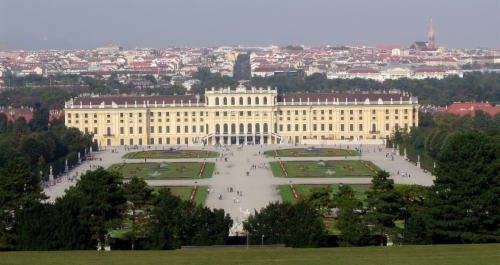 Schönbrunn Palace
Tom Ovens
Schönbrunn - the “Beautiful Fountain” - was started in the reign of Empress Maria Theresa. It was designed by Fischer von Erlach. Work began in 1697 and it was completed in 1713. His aim was to make it more beautiful than Versailles. Unfortunately, the costs of the War of Spanish Succession in 1700 took much needed funds away from the project and it was scaled down as a result. Nevertheless, it has 1200 rooms and its grounds contain what was the first major zoo in Europe.
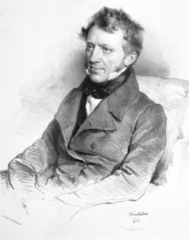 Franz Grillparzer
 Arthur Schnitzler
 (1862-1931) was an Austrian author and playwright. He received a Doctorate in Medicine from the University of Vienna in 1886 but concentrated his efforts on writing. Through his plays and novellas he explored the sexual repression that he found in Viennese society. Sigmund Freud wrote to Schnitzler that "you have learned through intuition - as a result of sensitive introspection - everything that I have had to unearth by laborious work." Reigen/The Circle is set in Vienna. Its dramatic structure consists of ten interlocking scenes between pairs of lovers. Each of its ten characters appears in two consecutive scenes, with one from the final scene, The Prostitute, having appeared in the first scene, thus completing the circle. Schnitzler circulated the play privately among friends. It was not publicly performed until 1920.
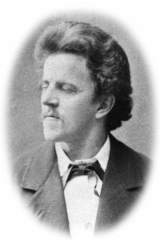 Joseph Labor