This map plots the settings and references in The Things They Carried
To start exploring, click a red pin

Most of the events in The Things They Carried take place in Quang Ngai Province, a Vietcong stronghold during the war. Situated in Central Vietnam, Quang Ngai has 130km of coastline and two large seaports at Dung Quat and Sa Ky. The province extends over 5,131 square kilometers, from Quang Nam in the North to Binh Dinh in the South, from Kon Tum in the West to the South China Sea in the East. Quang Ngai is known for its beautiful landscapes.

 Quang Ngai Farmer - Credit:
BertholdD, Wikimedia Commons
Quang Ngai is the homeland of the Kinh people and three other ethnic groups -- Hore, Kor and Kadong. Archaeological finds at Sa Huynh date back 2,500-3,000 years. More recent historic sites associated with the American and French wars include Ba To, Ba Gia, Van Tuong and Son My, the location of the My Lai massacre.
Quang Ngai is famous for specialties such as transparent candy, malt, anchovies, flounders, Nien fish, Don shellfish and sugarcane birds.
 Co Luy, Quang Ngai Province - Credit:
Adam Jones adamjones.freeservers.com
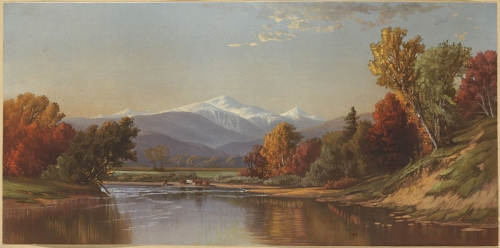
The White Mountains form a mountain range covering about a quarter of the state of New Hampshire and a small part of western Maine. Part of the Appalachian Mountains, they are considered the most rugged mountains in New England. Most of the area is public land, including the White Mountain National Forest. It is most famous for Mount Washington, the highest mountain in the Northeastern United States.
Than Khe, or Thôn Khe Xêng, is on highway 9 in Quang Tri Provence. It is located in northern Vietnam, about fifty miles from Nam Dinh. Than Khe was a smaller town rumored to have been a hiding area for the Viet Cong.
The remains of a helicopter pilot, Chief Warrant Officer 2 Donald Wann, were found near Hill 1015, or Dong Tri Mountain, about six miles southwest of Thôn Khe Xêng in 2008.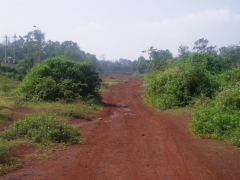
Than Khe is frequently confused with Khe Sanh, which is located nearby. Khe Sanh is famous as the location where the US Marines defended a remote air base in a vicious and drawn-out battle. This was reportedly the only time Americans abandoned a combat base due to enemy pressure.

 Batagnan Peninsula - Credit:
US Marine Corps
During the Vietnam War, the peninsula was a stronghold of the Vietcong. They built fortifications in the shape of a V pointing inland. This was the scene of several operations: Operation Piranha, Operation Bold Mariner, and Operation Russell Beach were all planned with the goal of capturing and securing the peninsula.
 Han River Bridge - Credit:
Dragfyre
During the war, the US air base established here was the highest volume airport in the world.
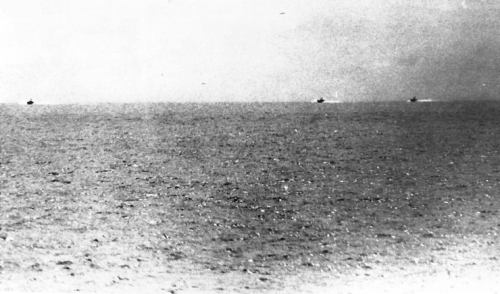
The USS Maddox was an Allen M. Sumner-class destroyer named for Captain William A. T. Maddox. She received four battle stars for World War II service, and six for Korean service.
On the night of August 2, 1964, the USS Maddox was on a signal intelligence patrol as part of DESOTO operations. The destroyer engaged three Vietnamese Navy torpedo boats, and a sea battle took place, during which the Maddox fired 280 3-5in shells. The Vietnamese boats were also strafed by USN F-8 fighter jets. One U.S. aircraft was damaged, and a 14.5mm round hit the destroyer. All three Vietnamese boats were damaged and 4 Vietnamese sailors were killed with 6 others injured; there were no U.S. casualties.
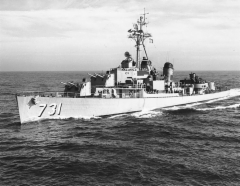
A second, similar incident was claimed to have occurred two days later, however this was later found to be untrue.
As a consequence of these two alleged incidents, the US Congress passed the Gulf of Tonkin Resolution, paving the way for massive US military escalation in South Vietnam and open warfare against North Vietnam.
Worthington was just a water station for the St. Paul & Sioux City Railway Company up untill 1871. Then, it was settled by a colony of religious freedom seekers--freedom from the sins of alcohol. Yet, along with the Homestead Act came many other types of settlers to the area.
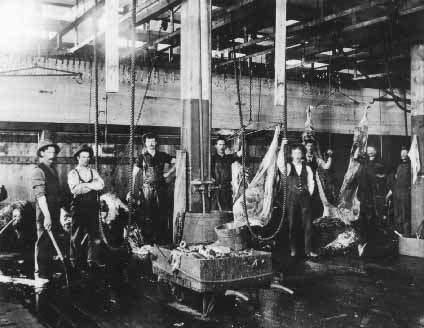
A year later, a curious event took place. On Worthington’s very first Fourth of July celebration, one of the original temperance loving settlers heard that there was a keg of beer in the Worthington House Hotel. Professor Humiston entered the hotel, seized the keg, dragged it outside, and destroyed it with an axe. A witness described the following events:
''Upon seeing this, the young men of the town thought it to be rather an imposition, and collected together, procured the services of the band, and under the direction of a military officer marched to the rear of the hotel, and with a wheelbarrow and shovel took the empty keg that had been broken open, and playing the dead march with flag at half staff marched to the flagpole in front of Humiston’s office where they dug a grave and gave the empty keg a burial with all the honors attending a soldier’s funeral.
They then, with flag at full mast and with lively air, marched back to the ice house, procured a full keg of beer, returning to the grave, resting the keg thereon. Then a general invitation was given to all who desired to partake, which many did until the keg was emptied… In the evening they reassembled, burning Prof. Humiston in effigy about 10 p.m. Thus ended the glorious Fourth at Worthington, Minn." —Sibley Gazette July 5, 1872
Bemidji is an Ojibwe word which means "lake with cross waters". Lake Bimidji lies north of the much smaller Lake Irving. This town is home to over 13,000 residents and lies in the northern central region of Minnesota.
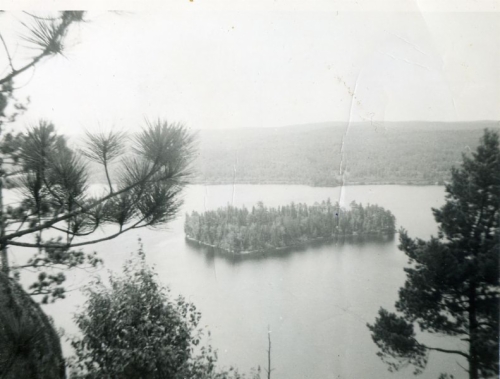
Whitefish Lake (pictured) is located in Ontario and is surrounded by forests.
There is another Whitefish Lake located just west of Glacier National Park in Montana.
My Khe village is near My Lai, where a massacre perpetrated by US forces on March 16th, 1968 cost the lives of over 500 innocent men, women and children. The following clip with journalist Seymour Hersh gives details about the incident. He also speaks of the brutality that dehumanization and conformity allows, the impact of the repression of memories, and the utter lack of authority in war--many of the same themes O'Brien deals with in the book.
When asked if there had been similar My Lai style massacres that were unreported, Hersh says, "It turns out another unit of the same task force to which Charlie Company was attached — it was called Task Force Barker — I think there were three companies — they ended up killing over a hundred people, innocent civilians in a village a couple of miles away or less — My Khe 4, My Khe-something, whatever it was called. And so, clearly, you had a pattern of very wild, indiscriminant fire."
O'Brien's platoon had previously been involved in the My Lai massacre.
About Landing Zone Gator, O'Brien wrote, "In February 1969, 25 years ago, I arrived as a young, terrified pfc. on this lonely little hill in Quang Ngai Province. Back then, the place seemed huge and imposing and permanent. A forward firebase for the Fifth Battalion of the 46th Infantry, 198th Infantry Brigade, LZ Gator was home to 700 or 800 American soldiers, mostly grunts. I remember a tar helipad, a mess hall, a medical station, mortar and artillery emplacements, two volleyball courts, numerous barracks and offices and supply depots and machine shops and entertainment clubs. Gator was our castle. Not safe, exactly, but far preferable to the bush. No land mines here. No paddies bubbling with machine-gun fire."
This video was shot on 8mm film in 1968 at LZ Gator and nearby Nuoc Mao village by Rick Herbert:
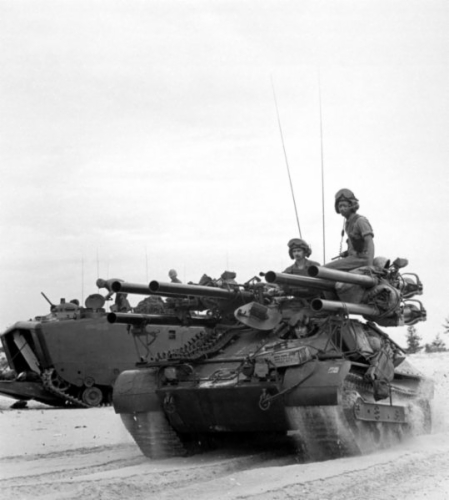

 Quang Ngai - Credit:
Vardion

Sioux City is located near Des Moines in Iowa, at the navigational head of the Missouri River.
Sioux City and the surrounding areas of northwestern Iowa, northeastern Nebraska and southeastern South Dakota are sometimes referred to as Siouxland.

The Song Tra Bong is a river that connects the East Sea to the Tra Khuc River in Quang Ngai. It flows for over 70 kilometers.
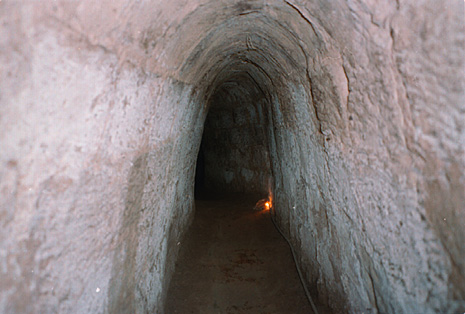
The tunnels of Củ Chi are an immense network of connecting underground tunnels located in the Cu Chi district of Ho Chi Minh City (Saigon). They are part of a much larger network of tunnels across the country.
The Củ Chi tunnels were used in several Viet Cong military campaigns during the Vietnam War, particularly the Tet offensive of 1968. They served as hiding spots during combat, as well as communication and supply routes, hospitals, food and weapon caches and living quarters for numerous guerrilla fighters.
The tunnel systems were of great importance to the Viet Cong in their resistance to American forces, and helped them achieve ultimate military success.
The mausoleum is sited where Ho Chi Minh read the Declaration of Independence.