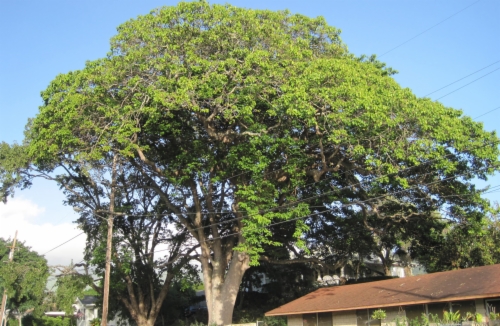
The sandbox tree, native to the West Indies, can grow up to 100 metres tall and is cultivated for shade. The native Caribbean people, the Caribs, used to make poison for their arrows from its sap (and used the arrowroot, mentioned on page 24, as an antidote).
The boy is an albino.


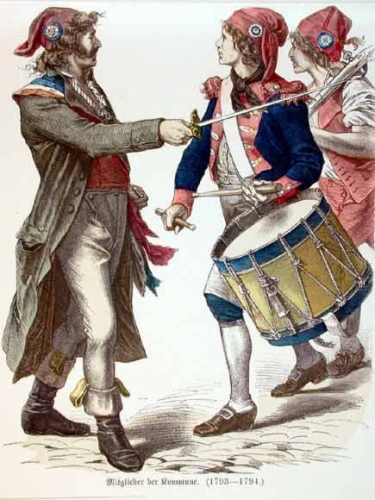
Literally, this means without knee breeches, and refers to Annette's lack of stockings (as a nineteenth century 'English' woman, she would hardly have worn knee breeches), but in the French Revolution the phrase 'sans culottes' referred to the working class radicals who wore trousers rather than the knee breeches favoured by the upper classes. Sansculottism remains a term for extreme egalitarian republican sympathies.
France had colonies in the Caribbean, and the Revolution had a massive impact on the area. For information on this, read A Turbulent Time: The French Revolution and the Greater Caribbean (Bloomington: Indiana University Press, 2003), a collection of essays edited by David Barry Gaspar and David Patrick Geggus.
The concept of the zombie is integral to Wide Sargasso Sea. In 'The Glittering Coronet of the Isles', the book that Rochester finds at Granbois, a zombie is an integral part of belief in obeah, and is 'a dead person who seems to be alive or a living person who is dead', a statement which bears similarities to Antoinette's belief in there being two deaths, the real, or spiritual, one, and the one 'everyone knows about': physical death. According to West Indian Voodoo, a dead person can be revived by a sorcerer, who will then give this zombie a new name. From that point on the zombie is enslaved to the sorcerer. When Rochester starts referring to Antoinette as Bertha she says 'that's obeah too'.
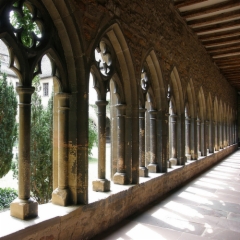
 Convent - Credit: OliBac, Flickr
The British 'Act of Toleration' of 1688 afforded 'liberty of conscience to all persons except Papists', and Catholicism was essentially outlawed until 1792, when Catholics were granted some freedom of worship. From 1798, Catholic missionaries were sent out to the British West Indies. See Floyd McCoy's article on Catholicism in Jamaica.
It was relatively common for girls of Antoinette's class to be educated at a convent. Rhys herself was. Indeed, apart from home schooling, it was one of the only forms of women's education at the time, particularly in the more limited educational sphere of the Caribbean.
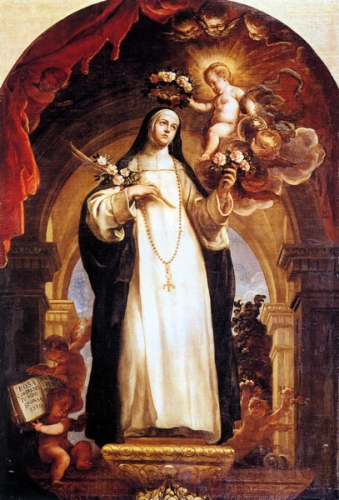
St Rose is either Saint Rose of Viterbo or Saint Rose of Lima, the first Catholic saint of the Americas. Given the stories of beauty, riches and the love of rich young men, it is more likely to be Rose of Lima, who was so beautiful that she disfigured herself.
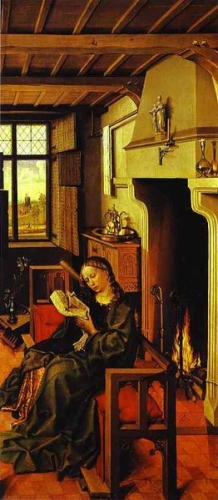
St Barbara was a 3rd century saint, persecuted by her pagan Father.
St Agnes was born to a noble Christian Roman family. When she refused to marry Prefect Sempronius's son he wanted her put to death. Under Roman law, a virgin could not be executed, so Sempronius tried to have her raped. But her hair grew to cover her body and those who tried to rape her were struck blind. Sempronius then ordered her burned to death, but the pyre would not light and she was beheaded instead.
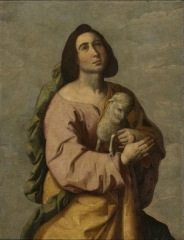
Theophilus means 'Friend of God' in Greek.
Saints and nuns are married to Christ.
Deportment refers both to acceptable behaviour and the fashionable and acceptable way to hold one's body. It was taught to young ladies in Europe of suitable rank, both through schooling and through conduct manuals.
In the nineteenth century, conduct manuals for young women, dictating acceptable feminine behaviour, were popular and influential, and were detested by proto feminists such as Elizabeth Barrett Browning, who lambasts the genre in her epic Aurora Leigh: ‘I read a score of books on womanhood / To prove, if women do not think at all, / They may teach thinking’ (I, 427).
The Young Lady's Own Book, a typical nineteenth century conduct manual from 1832, containing a chapter on deportment, is available on Google books.
For a history of deportment, tracing the changes in desirable deportment from medieval times, see here.
The Hulton Archive at Getty Images contains interesting photos of deportment lessons in the 1950s.
This, the comment Antoinette makes earlier about her hair growing back darker, and Rochester's identification of her look as distinctly un-English, suggests that Antoinette may have some black ancestry. This would not be uncommon for a white Creole family.
The term Creole is used to describe anyone, regardless of race or ethnicity, who was born and raised in the Caribbean. Both hot climates and black ancestry were believed to make one quick tempered.
Vetiver is a fragrant tropical grass. The fragrance of the oil extracted from its root is categorized as deep, sweet, woody, smoky, earthy, and balsam, and is often used in perfume.
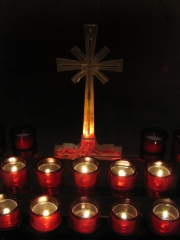 Devotion - Credit: millicent_bystander, Flickr
In the Roman Catholic church, the Morning Offering is a prayer said upon waking in order to consecrate the day to Jesus.
The morning offering was popularised in the Catholic Church by Fr. Francois Xavier Gaulrelet and his movement, the Apostleship of Prayer, founded in 1844, although it had existed beforehand. Despite the anachronous dates, Antoinette appears to be reciting Fr. Francois Xavier Gaulrelet's Morning Offering to the Sacred Heart:
O Jesus, I offer You my prayers, works, and sufferings of this day for all the intentions of Your Most Sacred Heart. Amen.
During the mid-twentieth century, a nun wrote to Pope Pius XII pointing out that the prayer's exclusion of the concept of joy was not very Christian, and the prayer was changed to 'our prayers, works, joys and suffering'.
See Joseph Albino's article on the Morning Offering for more details.
The times of day would be prayer times in the convent.
The Hail Mary contains the line 'Holy Mary, Mother of God, pray for us sinners, now and at the hour of our death'.
The Catholic Encyclopaedia contains an article on the Hail Mary.
The Hail Mary is an integral part of the Rosary:
Catholic doctrine defines sin as a morally bad act - it is how one reacts to thoughts, rather than the thought itself, that defines sin.
'for better or for worse' echoes the words of the Church of England marriage service, and offers a hint as to what has occurred in the narrative gap between parts one and two.

Massacre is a real place in Dominica. Various stories surround its name. One concerns the murder of Indian Warner (son of Sir Thomas Warner, first English governor of St Christopher's and Nevis) by his white half-brother, Philip, governor of Antigua. Another concerns the alleged massacre of native Caribs by white settlers in the place in 1674.
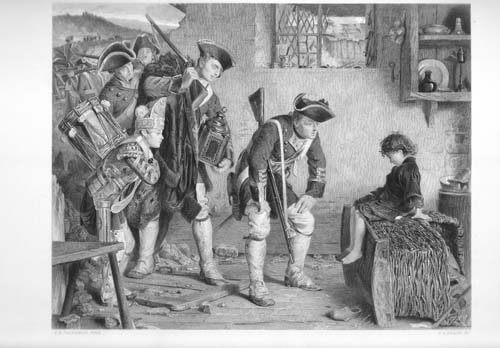
The three-cornered tricorne hat was popular in Europe during the late 17th century and 18th century, falling out of style shortly before the French Revolution. Originally military uniform, it was often also worn by civilians. Antoinette, however, is rather behind European fashion.
The tricorne hat's popularity in Europe was due to the fact that its brim guttered rain away from the wearer's head, a benefit that would also have been appreciated in Domenica, parts of which get over 350 inches of rain a year.
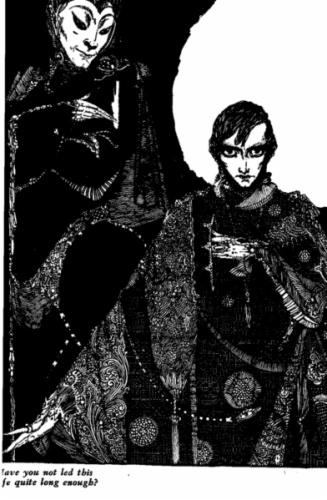
According to the British laws of primogeniture, all the father's property would be inherited by the oldest son. Younger sons could not depend upon inheritance, and had to earn their own living or marry well.
Rochester refers to the Faust legend – Faust sold his soul to the devil for knowledge. Christopher Marlow's Doctor Faustus and Goethe's Faust are reworkings of this legend.
 screw pine - Credit: Damien Dempsey
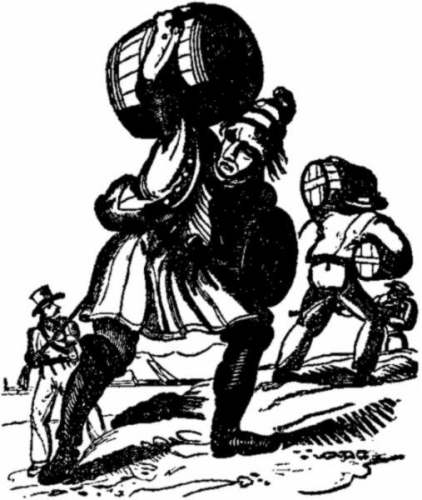
Rum is distilled from sugarcane, the Caribbean's main crop, cultivated on plantations like Coulibri.
Rum was originally drunk by slaves, who distilled it from molasses, a by-product of sugar refinement. It takes a long time to go off, and thus became phenomenally popular among sailors and pirates.
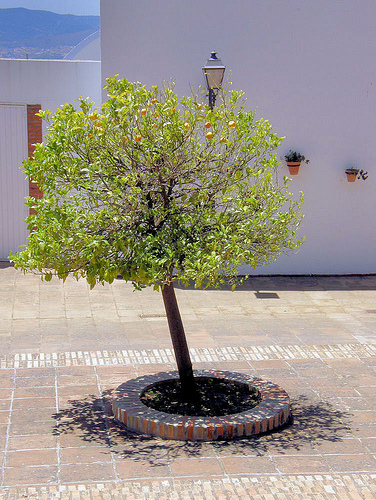 Seville orange tree - Credit: Keith Roper
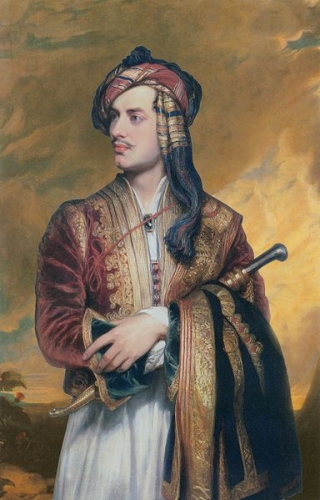
Lord Byron's poems were incredibly popular in the 1810s and 1820s, so much so that he is often regarded as the first celebrity. Major works include Childe Harold and Don Juan. Byron was a scandalous and exotic figure. He had many affairs, including, allegedly, an incestuous affair with his sister. Exiled from England for this reason, he travelled extensively and died of a fever in Greece whilst campaigning for Greek independence from the Ottoman Empire.
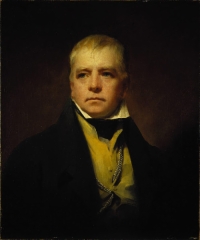
Sir Walter Scott wrote historical adventure romances, including such famous works as Ivanhoe (1819), Waverley (1814), The Heart of Midlothian(1818) and The Bride of Lammermoor (1819). He was the first English language novelist to achieve major international fame.
Confessions of an English Opium Eater was written by Romantic writer Thomas De Quincey in 1821, and was an immediate success. It detailed De Quincey's laudanum and opium addiction.
These books were the bestsellers of their time – a period several decades earlier. Together with the detail that one has been eaten away by mould, this suggests that the house has been abandoned for a long time.
Byron's poems were not officially collected together until John Middleton Murray's posthumous Collected Works in 1832. In line with Rhys's desired effect of abandonment, it is more likely that Rochester is looking at a collection of various verse publications by Byron (although pirate collections probably existed) rather than the Collected Works.
After Empress Joséphine, Napoleon's wife until 1810. She herself was Creole, coming originally from Martinique.
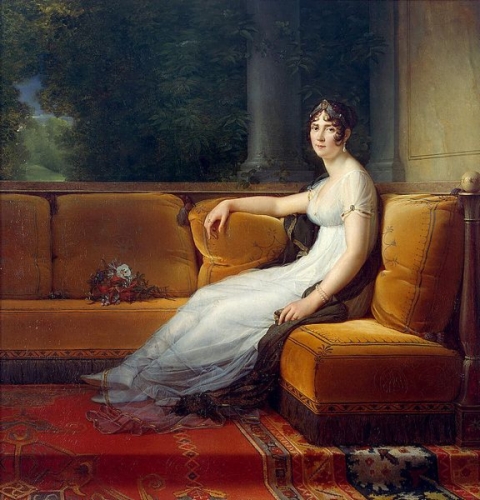
Joséphine de Beauharnais's style, particularly her white empire line dresses, were a massive influence on French regency dress.
As Josephine was divorced by Napoleon in 1810 and died in 1837, it is clear again that Caribbean Creole fashion is rather behind the European model it copies.
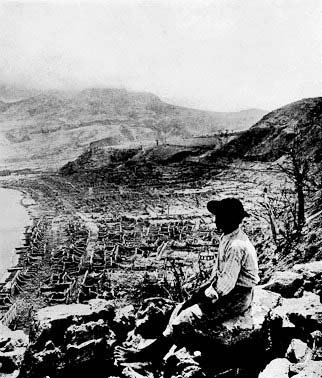
 Remains of St Pierre, 1902 - Credit: Angelo Heilprin
As the text says, the 'Paris of the West Indies'.
Much of French trade went through St Pierre, so it was ahead of the rest of the Caribbean in keeping up with French fashions. A successful trading port, its inhabitants could afford the finest clothes and European pleasures: it had a theatre modelled on the theatre in Bordeaux, and landscaped parks. Even its black population was reported to exude Gallic charm. According to a 1902 eulogy for the lost city, they were:
of the best class of negros, most of them having been educated in the schools of Paris
The city was completely destroyed by a volcanic eruption in 1902. 30,000 lives were lost.
 Antigonon leptopus - Credit: Eran Finkle
 Jamaican Jerk Chicken - Credit: Naotake Murayama
Probably a cicada, an insect similar to a cricket, found in tropical climates.