The University of Oxford is made up of 38 colleges and 6 private halls. In Zuleika Dobson, Beerbohm introduces a new one, “Judas College”, thought to be modelled on his own Merton College.
The “warden” is the head of the college.
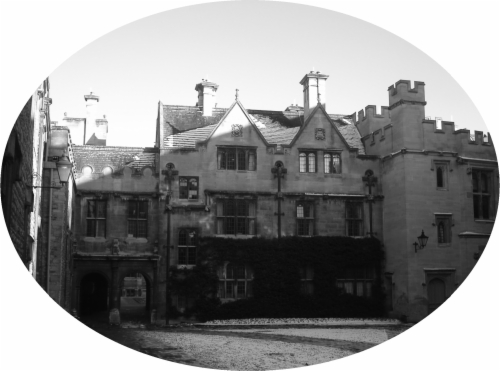
 Merton College - Credit: M.L. Costa
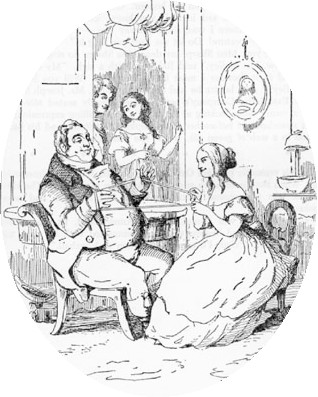
Zuleika is drawn in the tradition of other literary anti-heroines such as the infamous Becky Sharp, who appeared in the satirical novel Vanity Fair: A Novel without a Hero (1847-1848) by William Makepeace Thackeray (1811-1863).
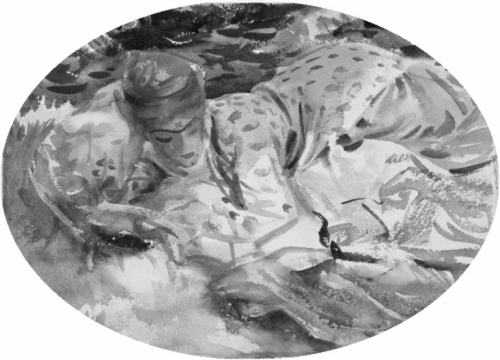
In the Book of Genesis, Joseph is sold as a slave to Potiphar. Potiphar’s wife, enraged by Joseph’s refusal to fall for her seductive charms, falsely accuses him of rape. Joseph is thrown into prison on her testimony.
Eights Week is an Oxford University annual rowing event. College crews chase each other up the Isis river, attempting to "bump" the boat ahead. Those that succeed move one place up the league in the following day's race.
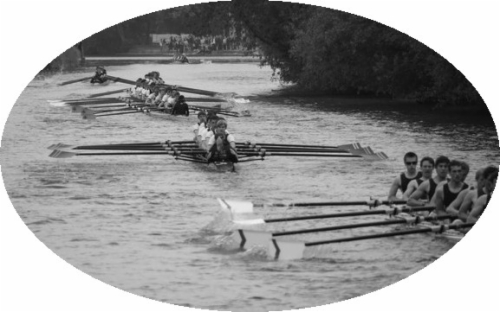
 Eights Week - Credit: Bill Boaden


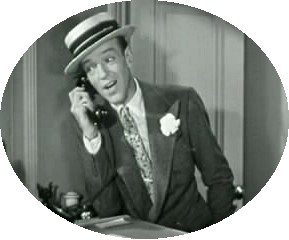
Boaters are normally constructed of sennit straw, and the ribbon around the crown represents the colours of a college or rowing crew.

 Broad Street - Credit: Ozeye
Broad Street is one of the main streets in the centre of Oxford. The Sheldonian Theatre, Blackwell’s bookshop and several colleges, including Balliol, Trinity, and Exeter, are all located on Broad Street.
Within Oxford, the street is often referred to as “The Broad.”

Hugh Latimer (c.1487-1555) and Nicholas Ridley (c.1500-1555) were Protestant bishops, executed by burning on Broad Street in Oxford during the reign of Mary I (1516-1558). Also executed in the same place, six months later, was Thomas Cranmer, the Archbishop of Canterbury.
Ironically, both Latimer and Ridley were educated at Cambridge University. Many of the intellectuals who supported the English Reformation from Catholicism to Protestantism were products of Cambridge, while the committed Catholic, Queen Mary, had been largely schooled by tutors from the more traditional University of Oxford. For example, the Catholic martyr, Thomas More (1478-1535), was among the men who shaped Mary’s education. More had attended Oxford, and was executed during the reign of Mary’s father, Henry VIII (1491-1547).
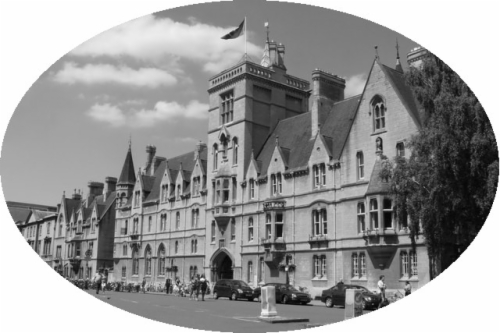 Balliol College - Credit: Peter Trimming
Balliol College, founded in 1263, is one of the oldest colleges in the University of Oxford, but in recent years, it is one of the few colleges to have abandoned the custom of formal hall. It was founded by Scottish academics, and the college holds the record among Oxford colleges for producing the most British Prime Ministers.
Trinity College, established in 1555, is next door to Balliol, and the two colleges have long had a famed rivalry. Like Balliol, Trinity also holds a connection to Scotland due to Trinity’s commitment to the Stuart line of succession. Legend holds that one college gate at Trinity is to remain permanently locked until the British throne is returned to the Stuarts; but the gate was seen to be opened in 2006 during preparations for the college ball.
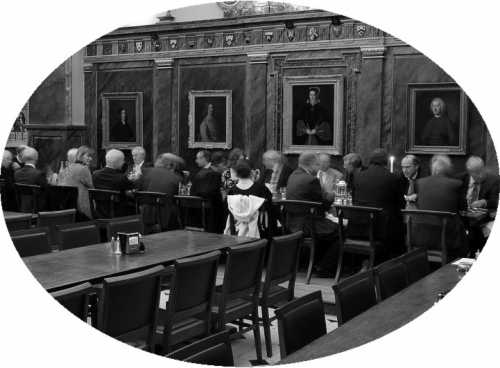 Trinity College High Table - Credit: Winky
The Ashmolean Museum was once located on Broad Street, but it is now on Beaumont Street. The museum was the world’s first university museum. It was founded in the late 1600s to house the curiosities given to the university by Elias Ashmole (1617-1692), and now holds a collection of caricatures by Max Beerbohm.
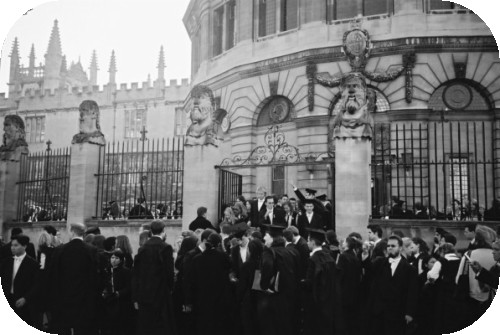 Oxford Students exit the Sheldonian Theatre - Credit: M.L. Costa
The Sheldonian Theatre was designed by the architect Christopher Wren (1632-1723), and built between 1664 and 1668. The building was named in honor of Archbishop of Canterbury Gilbert Sheldon (1598-1677). Sheldon had been a student at Trinity College, and throughout his life he took an active interest in the University. The Sheldonian Theatre was built and endowed at Sheldon’s expense; he became the Chancellor of the university in 1667.
Traditionally, the Sheldonian Theatre is used by the university for its matriculation and graduation ceremonies. The Sheldonian is surrounded by prominent busts of ancient emperors.
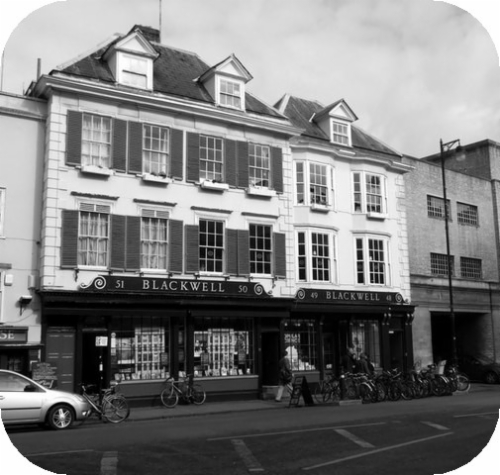 Blackwell's Bookshop - Credit: ceridwen
The Blackwell family believed in self-education through reading, and Benjamin Henry’s son, Basil Blackwell, became the first member of the family to attend university when he began his studies at Merton College, Oxford.
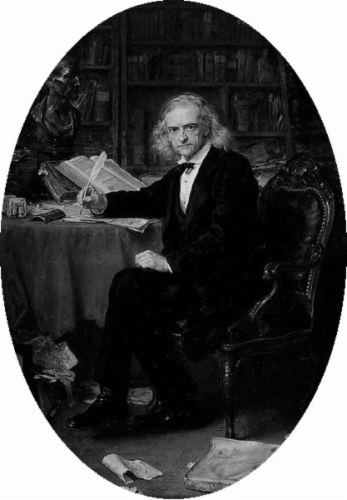
Born Christian Matthias Theodor Mommsen in Charlottenburg in the German Empire, he became a noted classical scholar and historian. He received the Noble Prize in Literature in 1902.
Although Latimer and Ridley were executed on Broad Street, the actual spot is only modestly marked with a metal cross in the street. An elaborate monument to the martyrs stands a short distance away.

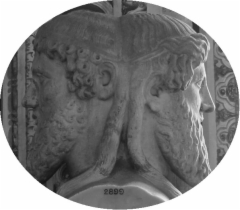
Janus was the Roman god of beginnings and transitions, gates and doors. The Temple of Janus was in the Roman Forum.
The doors of the temple were closed in times of peace but opened in times of war.
 The Railway - Credit: M.L. Costa
A quadrangle is a square or rectangular courtyard. These quadrangular courtyards are particularly associated with the medieval-style buildings of academic institutions, especially the universities of Oxford and Cambridge. But while these spaces are known as “quads” in Oxford, they are called “courts” in Cambridge.

 Four Generations of British Monarchs – Queen Victoria (1837-1901), Edward VII (1901-1910), George V (1910-1936), and the uncrowned Edward VIII (1936)
Zuleika Dobson was published in 1911, during the first year of the reign of George V (1865-1936).
The Edwardian era refers to the short reign of England’s King Edward VII (1841-1910), who succeeded his mother, Queen Victoria (1819-1901), and ruled until his death in 1910.
Edward’s only living son, George, then became king, but the years of George’s reign are not usually referred to as a Georgian period. Instead, the first years of his rule, especially those predating World War I (1914-1918), are commonly considered to fall within the Edwardian period.

Orphan characters are a recurrent theme in literature, probably due to their added vulnerability.
Orphaned children are the central characters in novels such as Anne of Green Gables (1908) by Lucy Maud Montgomery, The Secret Garden (1911) by Frances Hodgson Burnett, and the recent Harry Potter series (1997-2007) by J.K. Rowling.
The trend for this sort of character was started by Charles Dickens with his second novel, Oliver Twist (1837-1839), thought to be the first English language novel to focus on a child protagonist. Charles Dickens would create many child characters, and it is thought that his interest in writing about children was partly rooted in his desire to make sense of his own difficult childhood. This view is supported by his semi-autobiographical novel, David Copperfield (1849-1850). It is common for orphaned characters to be inspired by an author's personal experience. Burnett, who often wrote of orphaned children, is thought to have been partly driven by the deep grief she experienced upon the death of her son. Rowling has said that her longing for her deceased mother prompted her creation of the orphaned wizard.
Adult orphaned characters, such as the title character of Nicholas Nickleby (1838-1839) by Charles Dickens, are also common.
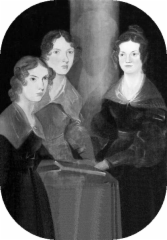
The fate of educated orphaned females was often to become a governess. Their difficult life was written about in detail by novelists such as Charlotte Brontë, who herself had worked as a governess.
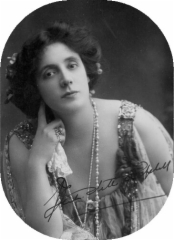 Mrs. Patrick Campbell
Psychologists might speculate that Zuleika’s need to be adored by many was born from her early deprivation of parental love, but Beerbohm is not writing the novel as a serious psychological study, so the motivation of Zuleika’s need is not extensively explored or explained.
Interestingly, although Beerbohm satirizes aspects of polite society in this novel, he does not extensively explore or explain the precarious position of a female thespian in Edwardian England. Such a woman might be received in some circles of society, as was the case with actresses like Mrs. Patrick Campbell (1865-1940), but the profession was generally considered close to prostitution. Thus, female stage performers had limited respectability, although they sometimes lived seemingly glamorous lives.
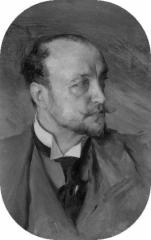
Giovanni Boldini (1842-1931) was a respected portrait painter.
The Italian artist studied his craft in Florence, where he was influenced by realist painters. His painting style won him particular success as a portrait painter in London and Paris.
During the Franco-Prussian War (1870-1871), the Prussian army marched on Paris. Prussian military successes brought about the downfall of Emperor Napoleon III (1808-1873), and the French Third Republic replaced the Second Empire.
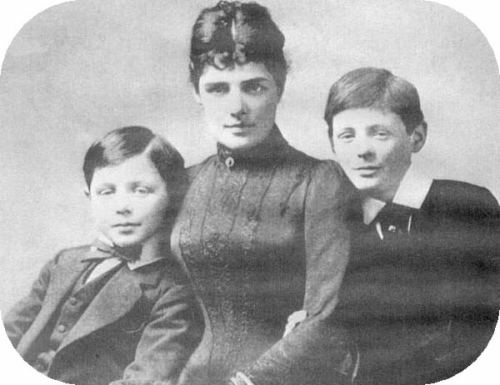
Interestingly, the American heiress Jennie Jerome (1854-1921), future wife of one of Beerbohm’s Merton College peers, Lord Randolph Churchill (1849-1895), escaped the Prussian march as a passenger on the last train out of Paris.
“Elysee” refers to the French Élysée Palace, which was used by Napoleon III as a retreat to which he took his mistresses. Since 1873, the palace has been the official residence of the President of the French Republic.
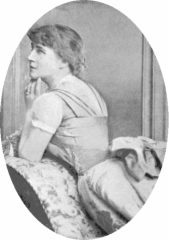
In the late 1800s and early 1900s, images were sold of the so-called ‘beauties of the age,’ such as Lillie Langtry (1853-1929).
Born Emilie Le Breton, Mrs. Edward Langtry gained her nickname, “The Jersey Lily,” from a portrait of her by Sir John Everett Millais (1829-1896). Photographic portraits of her served to popularize her image.
Langtry, who became a famous mistress of Edward VII (1841-1910), moved in similar social circles to Beerbohm, and they had a mutual friend in Oscar Wilde (1854-1900).
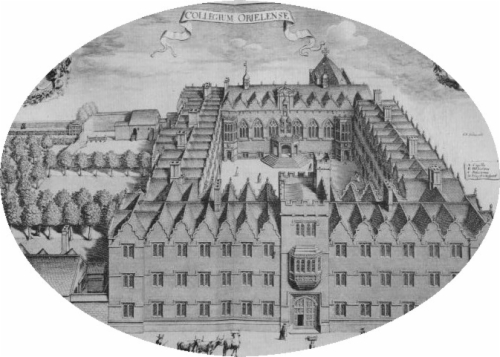
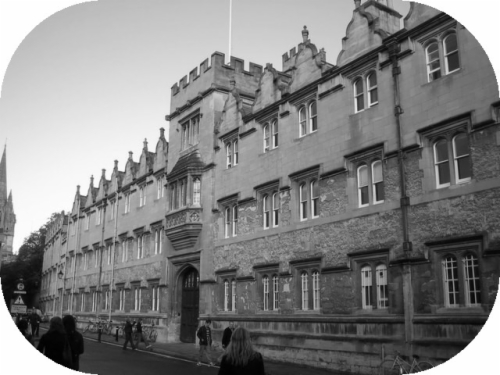 Oriel College - Credit: Nigel Cox
Oriel College was established under the patronage of the later deposed Plantagenet ruler, King Edward II (1284-c.1327). The king had established a college in Cambridge in 1317. He was the first monarch to establish colleges in Cambridge and Oxford, and his example was to be followed by a number of his successors.
Oriel College was founded in 1324. It is now considered to be the oldest royal foundation in Oxford. It is located in Oriel Square, near Christ Church, Corpus Christi, and Merton.
For a period in recent years, Oriel College gained the nickname of “Toriel” among undergraduates, due to its many students involved in Conservative or Tory politics. The college also has a strong rowing tradition.
“Don,” a traditional title for university fellows or tutors, originates from a similar term used for Catholic priests, who were the first teachers at the University.
Eton College is an exclusive school for boys aged thirteen to eighteen. Along with schools such as Harrow, Winchester, Rugby and Charterhouse, Eton is among those English boarding schools traditionally considered to be educational institutions for the nobility and the privileged.
Located near Windsor, Eton is one of the original nine English public schools to be defined under the Public Schools Act of 1868, but it was founded much earlier, in 1440, by King Henry VI (1421-1471). The establishment of Eton College and Cambridge University’s King’s College are among the most enduring achievements of Henry VI.
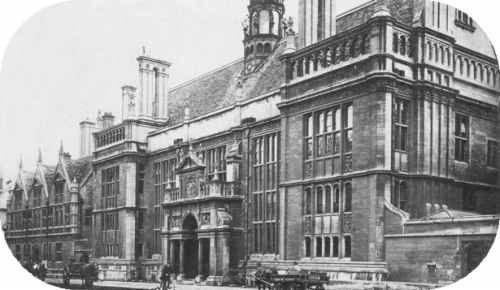 The University of Oxford's Examination Schools in the early 1900s
A “First” derives from a 1st class degree: in this context, it is the highest grade ranking in Oxford exams.
“Mods” are the exams some Oxford undergraduates sit at an early stage in the degree course. Mods are usually taken at the end of the first year.
Oxford examinations are traditionally sat in the dedicated Examination Schools. The current buildings were completed in 1882. They were designed by Sir Thomas Jackson (1835-1924), who had been a student at Wadham College, Oxford.
Students are expected to wear formal academic dress, known as Subfusc, to sit exams. Since the University of Cambridge discontinued a similar tradition, Oxford is perhaps the only remaining English university to require this formality.
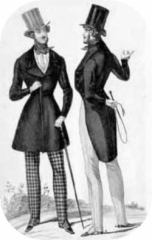
Dandyism is most closely associated with the highly fashionable Georgian figure, Beau Brummell, who introduced the modern suit and tie, reputedly took five hours to dress, and suggested boots be polished with champagne.
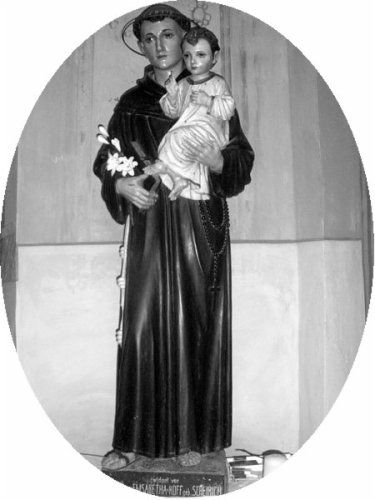 Saint Anthony holding Jesus Christ - Credit: Stebunik
He was born Fernando Martins de Bulhőes. He entered religious life at the Augustinian Abbey of St. Vincent, but later joined the Franciscans.
Saint Anthony is thought to have seen an apparition of the Infant Jesus. Although there is some dispute about this, paintings and sculptures of the saint usually depict him with Christ as a baby.
Within the Catholic Church, one of the chief roles of Saint Anthony is as giver of grace, supporting those of wavering faith and directing religious thought towards Christ. Pilgrimages are made by many to the Basilica of Saint Anthony of Padua, which houses relics of the saint.