This map plots the settings and references in Zuleika Dobson
To start exploring, click a red pin

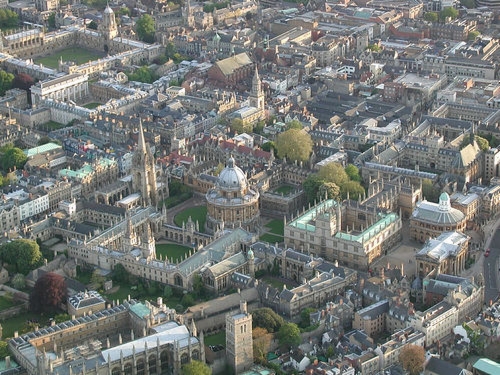

The city of Oxford is located in the South of England, northwest of London.
Oxford was established by the Saxons in the eighth century. Originally known as “Oxenaforda,” which means “Ford of the Ox,” the city originated with the formation of Saint Frideswide’s nunnery. Now, Saint Frideswide is the patron saint of the city and the university. Carfax Tower and several pubs stand as testament to the city’s early history. Since the twelfth century, however, the University has shaped the city's development.
Some of Oxford's most famous structures include the fifteenth century Merton Tower and Magdalen Great Tower, the seventeenth century Sheldonian Theatre and Tom Tower, the eighteenth century Radcliffe Camera, and the twentieth century Bridge of Sighs. All are connected to the University. Oxford is sometimes called the “city of dreaming spires”.

 Magdalen Tower, the Botanic Gardens, Magdalen Bridge, and the Isis - Credit:
Ozeye
The university brings much tourism and economic investment to the city, but the relationship between “town” and “gown” can be strained due to the university’s seeming dominance.
The River Cherwell and the Isis, an offshoot of the River Thames, run through Oxford. The city boasts botanic gardens and other green spaces such as Christ Church Meadow and Magdalen College's deer park.
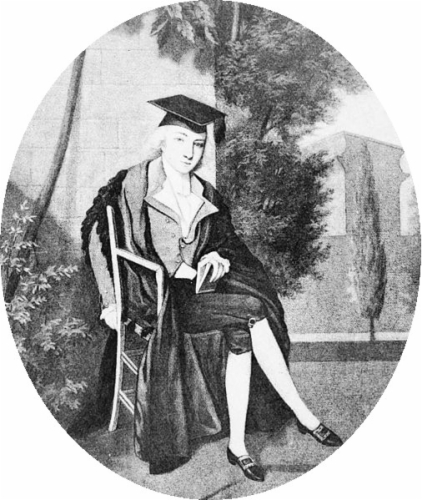
Although the exact date of the foundation of the University of Oxford is uncertain, the institution is considered to be the second oldest surviving university in the world, having existed in some form since about 1096.
By the thirteenth century, the collegiate system had become established. The university is divided into separate colleges, the base for the academic and social lives of their students. In the past, colleges were more reminiscent of cloistered communities, being enclosed by walls and gates that allowed uninterrupted study. Today's students are able to come and go far more freely.
The similarities to the monastic tradition are not surprising given the focus of early studies in theology and philosophy. Before the spread of literacy, study and intellectual understanding were considered to be the preserve of holy communities. Many of the colleges were founded with some religious purpose, such as training the clergy, and some are named in honour of a religious figure. A wealthy man might establish a college so that the college community would pray for his eternal soul.
In the early days of the University, some colleges were established to accept students from a specific area of the country or particular schools. For example, New College was initially expected to take most of its students from the public school, Winchester College.
By the nineteenth century, it had become standard practice for the sons of society families, especially the sons of aristocrats, to attend Cambridge or Oxford. The pursuit of academic excellence had to coexist with social excellence. Thus, rowing and dining societies became as central to the Oxford experience as study.
The Mitre is an historic public house in Oxford. It has been serving beer since 1261, and famous frequenters of the pub have included Sir Winston Churchill (1874-1965) and Vivien Leigh (1913-1967).

 The Mitre - Credit: M.L. Costa
The Isis, which derives its name from a goddess of Ancient Egypt, is the stretch of the River Thames that runs through Oxford.
 The Isis (background of picture) - Credit: M.L. Costa
Merton Wall is the old city wall that marks one of the boundaries of Merton College. Along this medieval wall is a path known as “Deadman’s Walk,” a walkway historically used for Jewish funeral possessions.
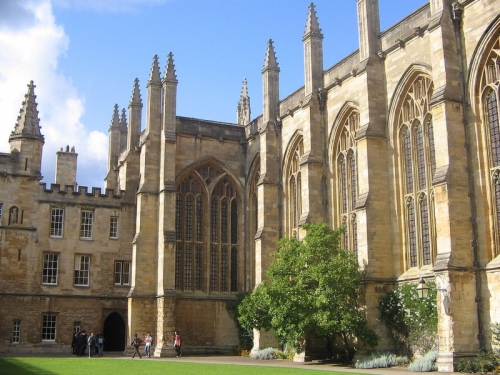
 New College - Credit: M.L. Costa
Established in 1379, New College is actually one of the older colleges of the University of Oxford. It was originally named the College of St. Mary, but as another College of St. Mary already existed, it soon became known as the New College of St. Mary.
One of the entrances of the college stands on New College Lane, a twisting narrow street between high stone walls - hence its description as a "grim ravine":